

Savvy Traveler · September 22, 2026
How Much Does Ship Size Matter in Antarctica, Really?
The expedition world treats small ships as the only serious way to see Antarctica. After eleven days aboard a 264-guest ship, and a hard look at how the 100-ashore rule actually works, we think the answer is more nuanced than the brochures admit. Here's the case for small, the case for bigger, and the question that decides it.
The reflex, and where it comes from
Ask anyone who has done a little Antarctica research which ship to pick and you’ll get the same answer within a sentence: the smaller one. It’s practically a reflex. Small ships land more, small ships are more intimate, small ships are what “real” expedition people choose. Bigger ships are for people who wanted a cruise and got talked into penguins.
I believed a version of this too, right up until we spent eleven days aboard a 264-guest ship in Antarctica and came home having seriously considered skipping a Zodiac cruise. Not because the ship was bad at expeditions. Because it was so good at being a ship.
So this is the longer answer. The small-ship case is real and I’ll make it honestly. But it rests on one rule that most people quote without reading, and it ignores the single biggest fact about an Antarctica trip: the amount of time you spend on the boat.
What the 100-person rule actually says
The International Association of Antarctica Tour Operators sets the rules every operator we book follows. The relevant ones fit in a paragraph. No more than 100 guests ashore at any one landing site at any one time. Ships carrying more than 500 guests can’t land anyone at all. Ships between 200 and 500 are “category 2” and work under tighter site-scheduling than the sub-200 “category 1” ships. Every operator, whatever the ship size, plans for two off-ship experiences a day when weather allows: a landing, a Zodiac cruise, a kayak, a polar plunge.
Here is what the rule does not say: it does not limit how many guests can be in Zodiacs or kayaks at the same time as the 100 on the beach. It caps the beach, not the bay. That distinction is the whole argument, and it’s the one that the “smaller is always better” reflex skips.
The honest case for small
A 126-guest ship like National Geographic-Lindblad’s Endurance, a 130-guest Aurora ship like Greg Mortimer, or a 152-guest Swan Hellenic ship like SH Vega has one enormous advantage: everyone fits under the cap, or close to it. The rotation is short. Landings run as one or two groups, the expedition team knows every face by day two, and when the captain spots a leopard seal on an ice floe, the whole ship can be in Zodiacs in twenty minutes without anyone consulting a schedule.
Small ships also have access to a handful of landing sites that carry vessel-size limits, and the simpler scheduling lets the ship loiter when something good is happening. If your priorities are photography, a specific wildlife target, or being on the ice as many hours as the weather allows, small is the correct answer and the brand comparison walks through those operators. We wrote about why small ships are having a moment for good reason.
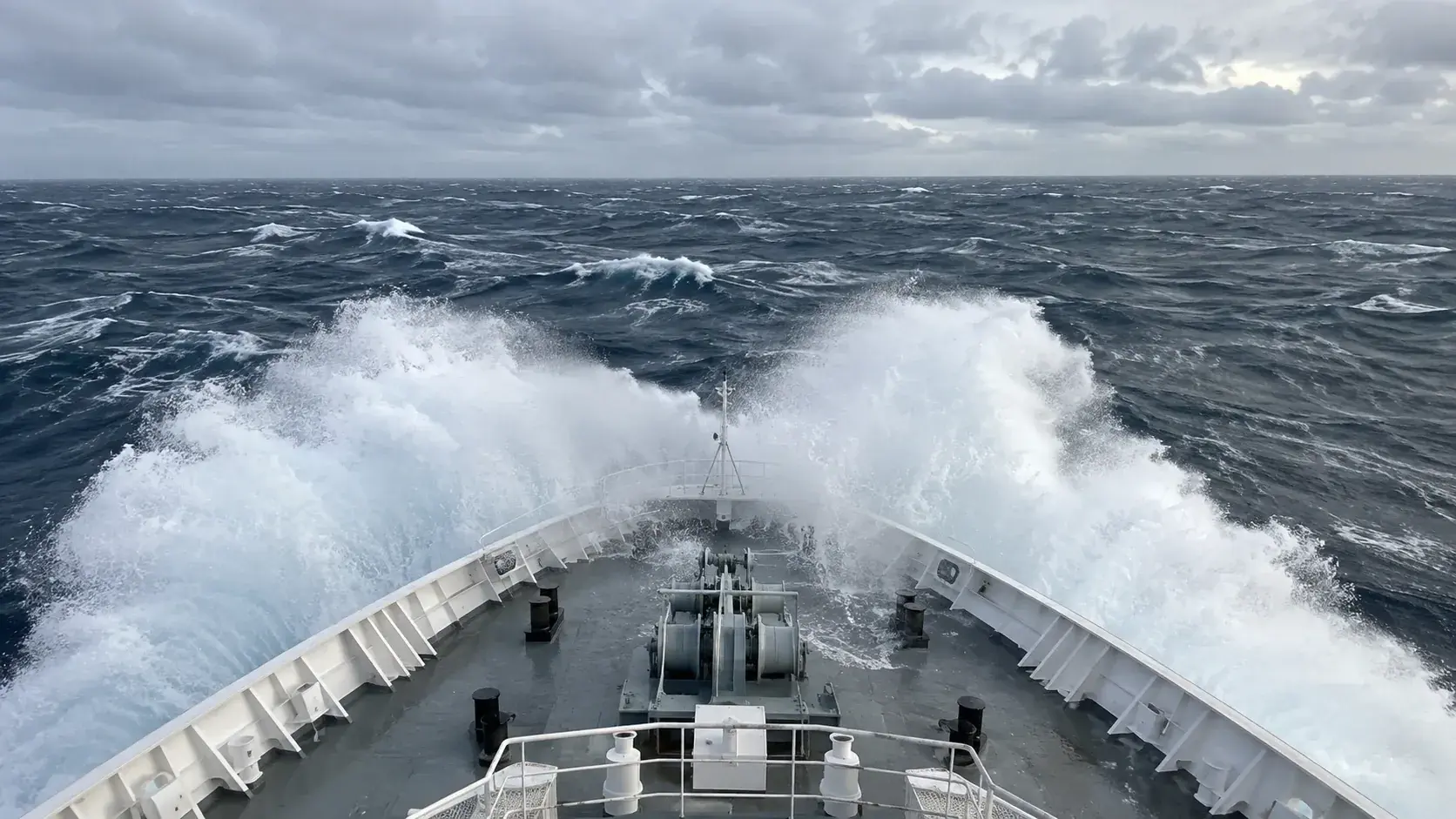
What small ships give up is the thing the brochures don’t photograph: the hours between landings. One restaurant, sometimes two. One lounge. A gym that’s a treadmill. On a short, weather-blessed itinerary that costs you nothing. On a twelve-day trip with two days of Drake on each end and a storm day in the middle, it’s the difference between a trip you loved and a trip you loved with an asterisk.
How the bigger ships crack it
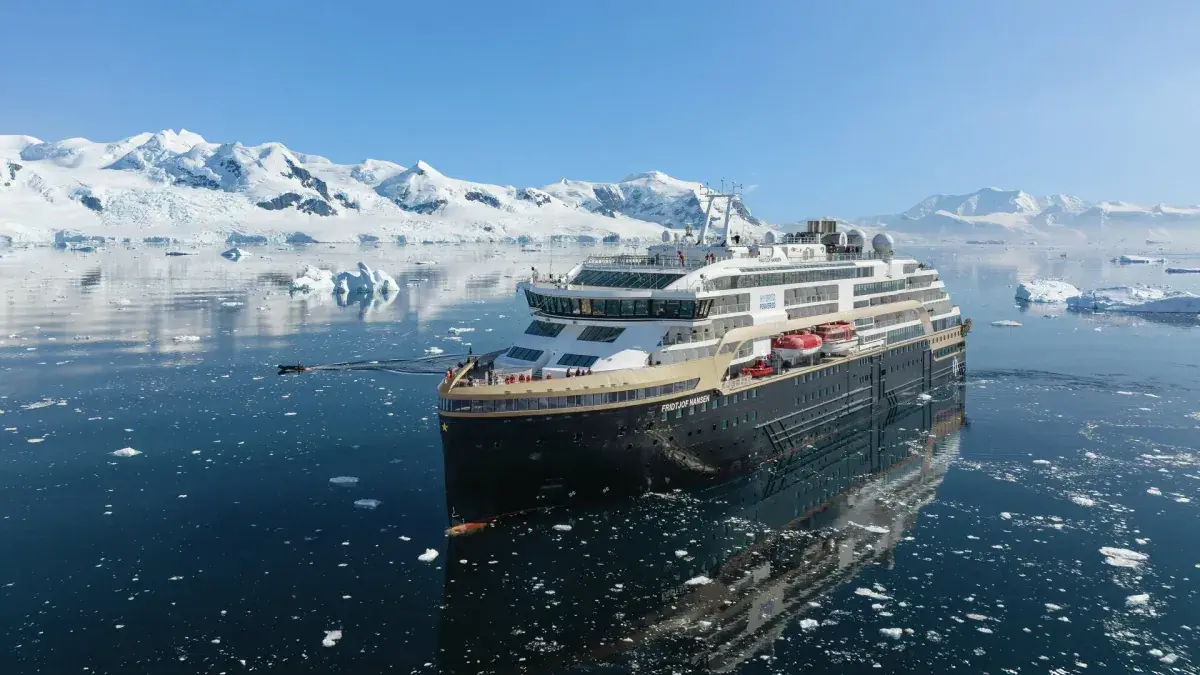
The lines that have been doing this the longest, HX at 250 and 490 guests and Seabourn at 264, didn’t build bigger ships and hope. They built the operation around the cap.
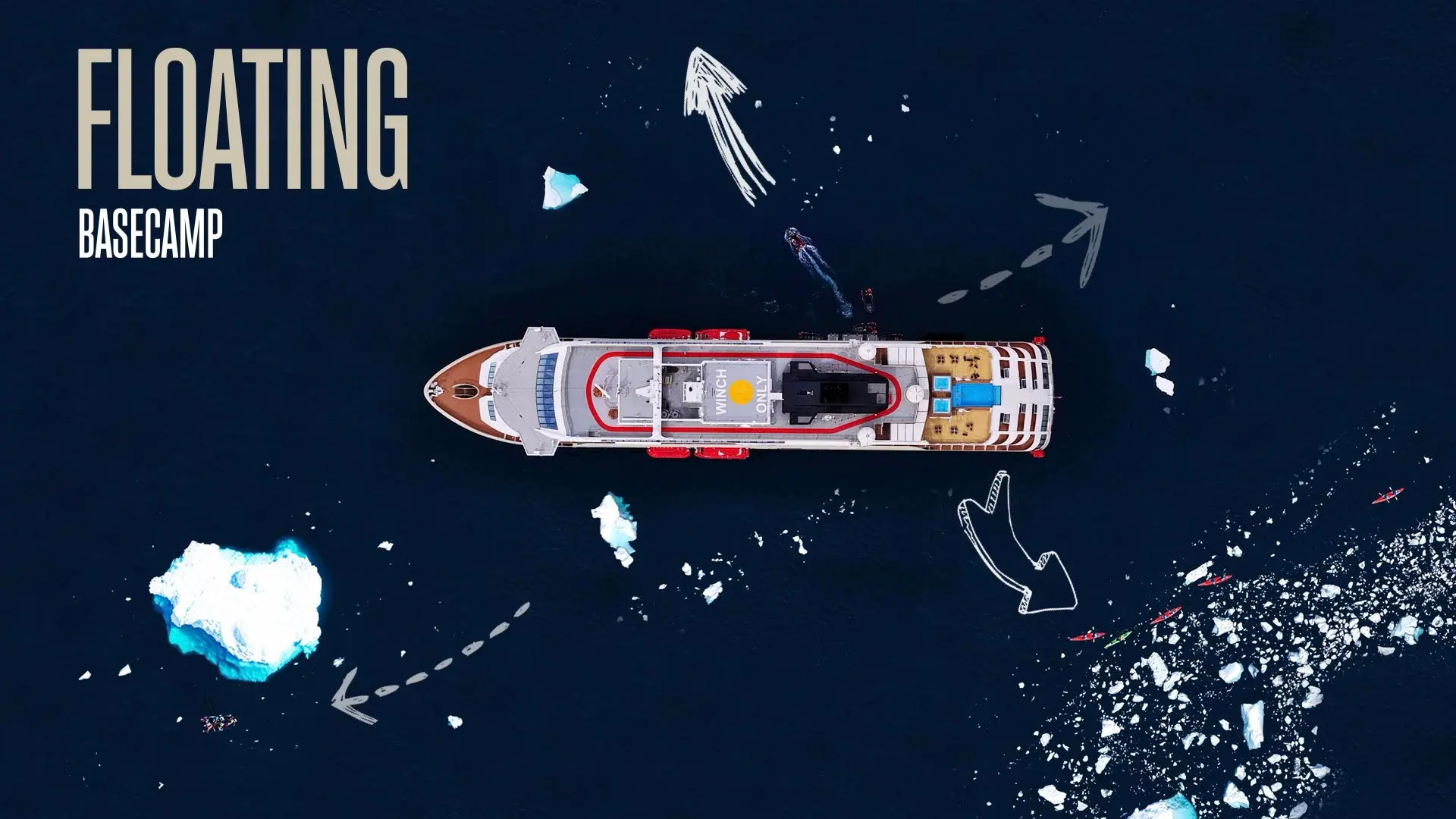
HX’s version is the one they call the floating basecamp: while one group of 100 is on the beach, another is Zodiac-cruising the ice, another is in kayaks, and the rotation swaps. Everyone gets two outings a day; the bigger ship just runs more of them in parallel. Their full explanation, in their own words, is in our HX guide, and their own illustration of it is below.
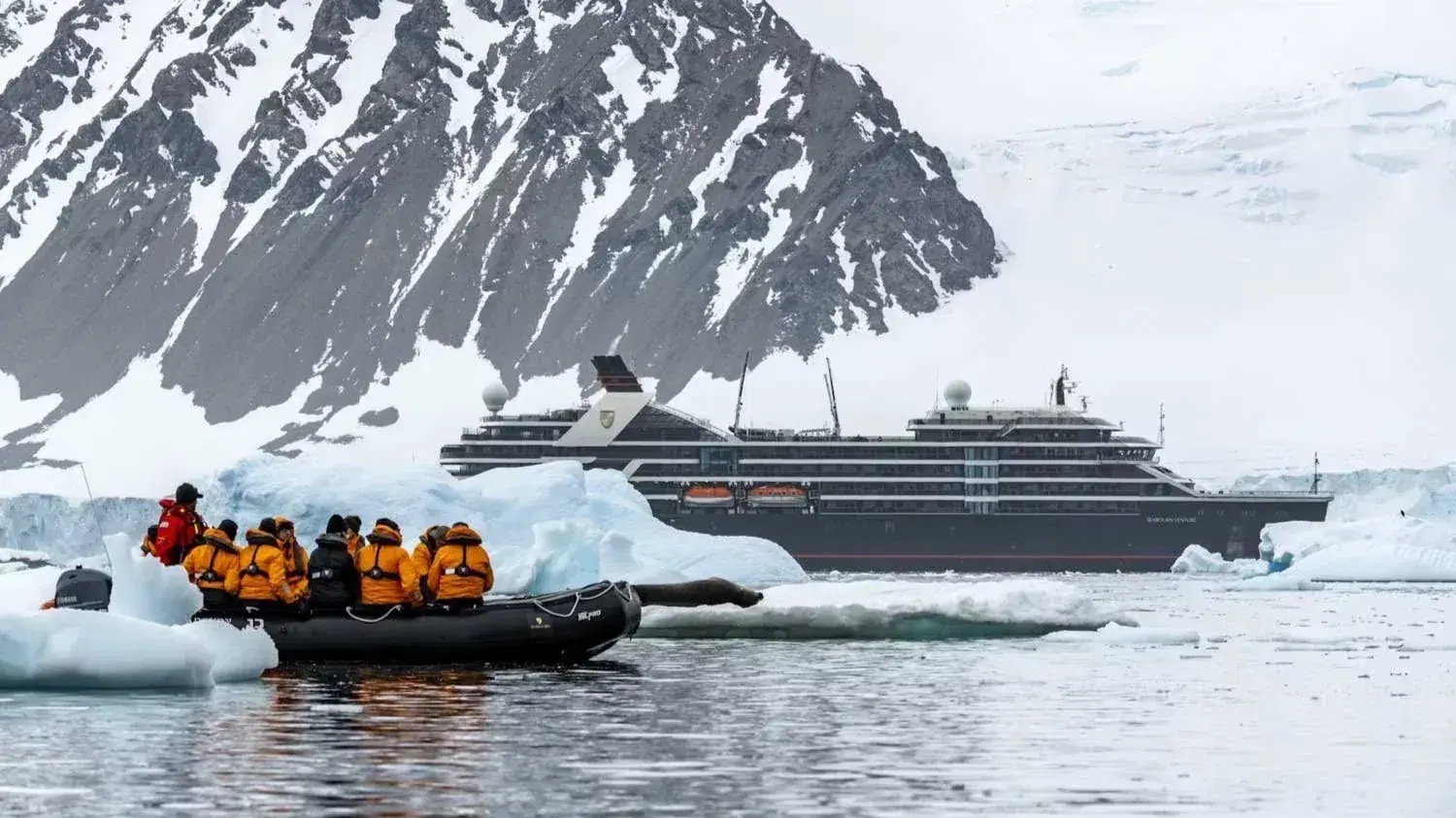
Seabourn’s version on Venture and Pursuit is the same idea with more hardware: 24 Zodiacs and a kayak fleet, plus, until early 2026, two submarines that gave a third group somewhere to be while the beach was full (Seabourn has since retired the sub program). A 24-person expedition team divides 264 guests into groups that rotate between the beach and the water across a morning. The second outing of the day is a Zodiac cruise or a kayak while another group is ashore. In practice, on our sailing, nobody came back from a landing feeling short-changed.
The part nobody prices in: you live on the ship
Do the math on a classic ten-night Peninsula itinerary out of Ushuaia. Two days crossing the Drake south, two crossing back, which is four days with zero off-ship time. Six days on the Peninsula, with two outings a day of roughly two hours each, call it four to five hours off the ship on a good day. Subtract one weather day, because there’s always one. You’ve spent perhaps 25 hours of a 240-hour trip in a Zodiac, on a beach, or in a kayak.
That’s the point. Antarctica is the most spectacular 10 percent of the trip. The other 90 percent is breakfast, briefings, the hours after a landing when you’re cold and damp and elated, the evening when the light goes on until midnight, and the two-day open-ocean crossing each way. Where you spend that 90 percent is not a detail. It’s most of the vacation.
What “onboard” felt like for us
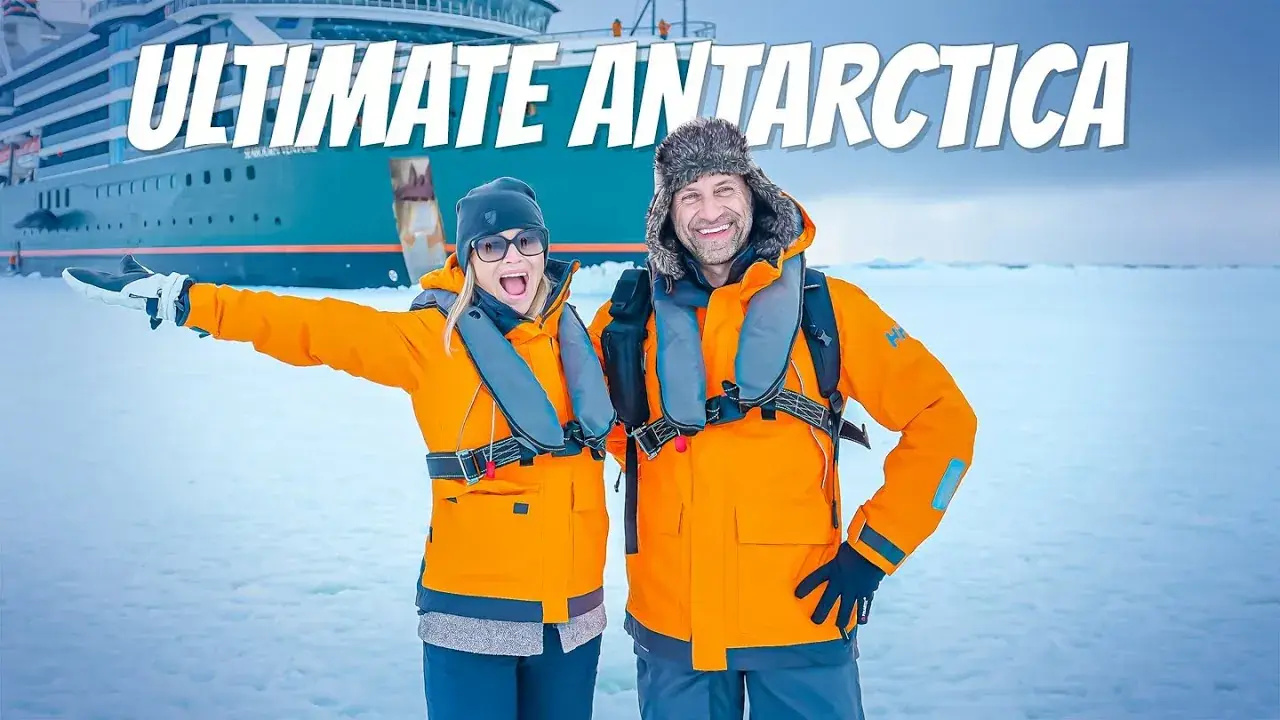
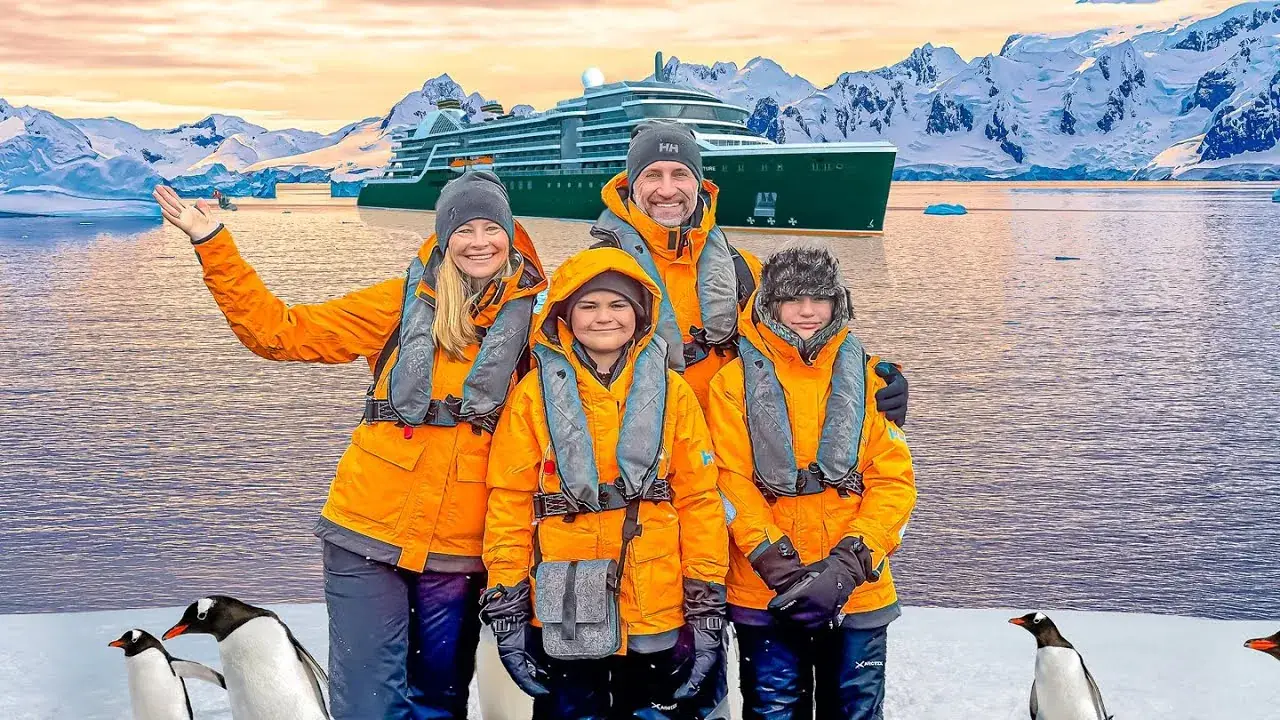
We ran our own group expedition on Seabourn Venture, twenty travelers plus our family, eleven days from Ushuaia. Here’s the ship we lived on, from the tour we filmed the first day.
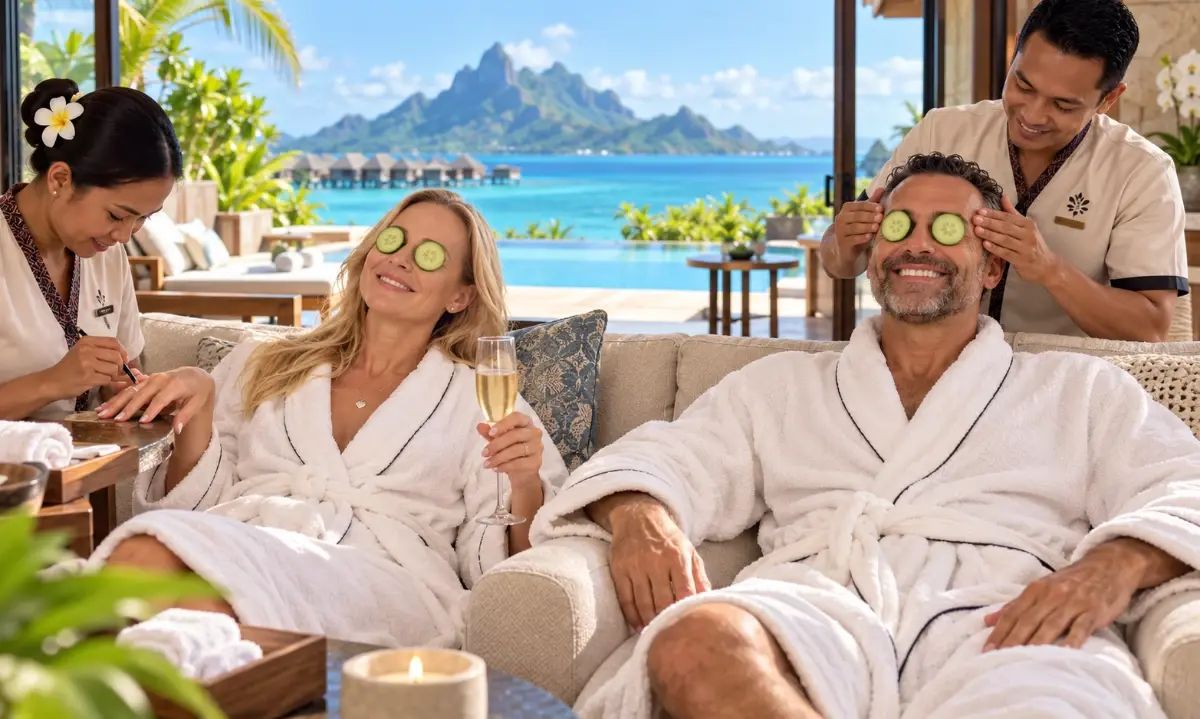
Five ways to eat: The Restaurant for the proper dinner, The Colonnade for the buffet you don’t feel bad about, a sushi bar, a cafe for the mid-afternoon reset, and room service, which Erin used in a bathrobe while watching iceberg documentaries. Several lounges and bars with different personalities, so the quiet-reading people and the Negroni-and-stories people never had to share a room. Two jacuzzis and a heated pool on the aft deck, and enough outdoor deck space, some of it heated, that you could always find an empty rail for the whales. Caviar on demand, which sounds like a gimmick until it’s 4pm on a sea day. Themed evening parties. On an eleven-day itinerary, none of that was decoration. It was the reason nobody on our group got restless.
Here’s the honest bit. We never once got off a Zodiac wishing we’d had more time on it. By day eight, the opposite was true: there were mornings when the sushi bar and the hot tub were making a real argument against the boot room. We stayed disciplined purely out of fear of missing out, because everyone knows the one Zodiac cruise you skip is the one where the humpback surfaces next to the boats. But the takeaway is the same: the excursion program on a 264-guest ship was more than we could use, not less.
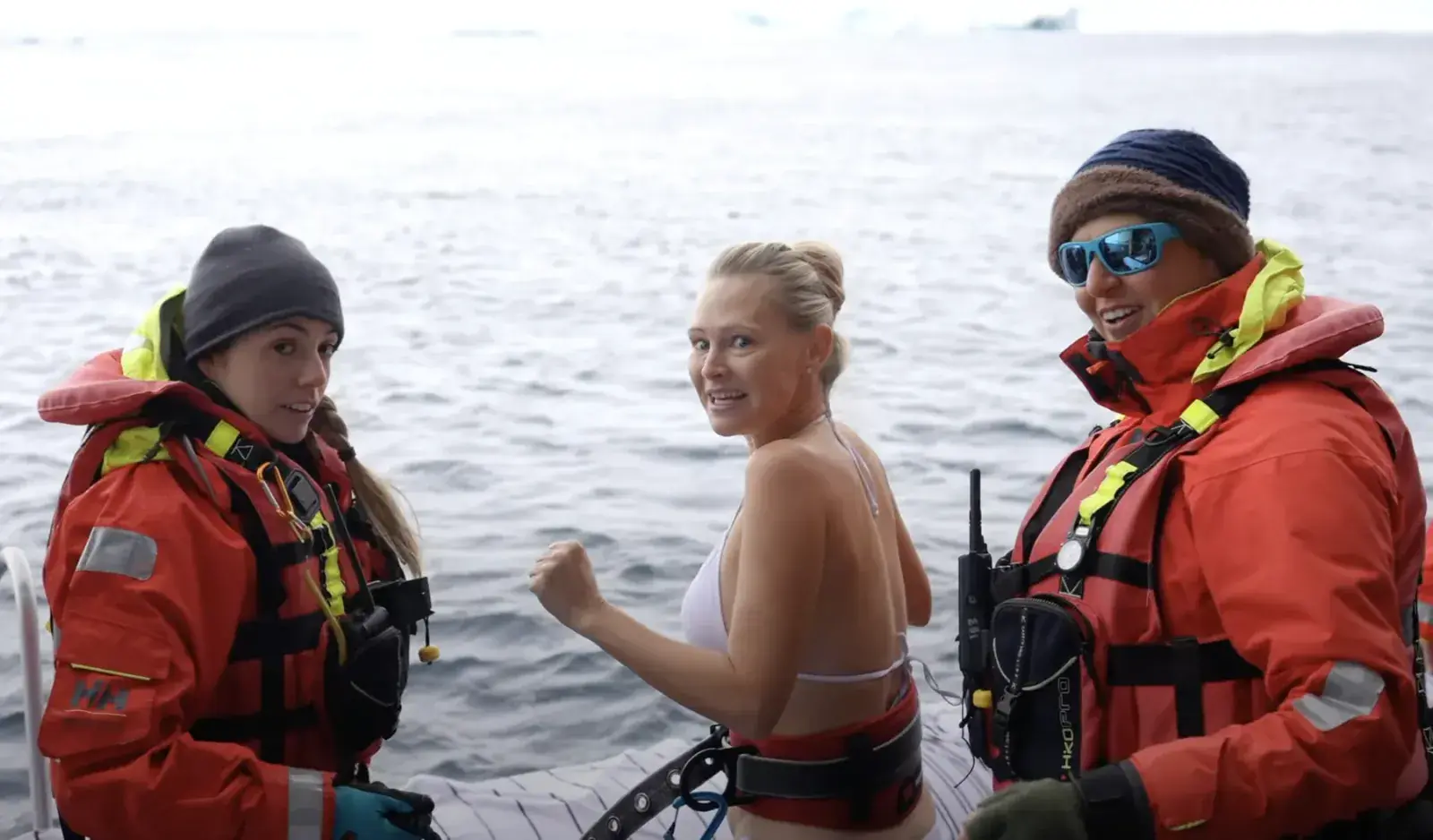
The landings themselves were everything the small-ship people promise. Deception Island’s flooded volcano, our first penguin colony, plowing through a sea of ice from the bridge, kayaking for glacier ice that became thousand-year-old cocktails back onboard. And the polar plunge, which is the same temperature from any ship.
The Antarctica ships we book, by size
Every ship below has its own page with the deck plan, the cabin categories and our take. The guest counts are the numbers those pages carry, which for the polar ships is the Antarctica capacity, not the maximum berths.
| Ship | Line | Guests |
|---|---|---|
| National Geographic Endurance, Resolution | National Geographic-Lindblad | 126 |
| Greg Mortimer, Sylvia Earle, Douglas Mawson | Aurora Expeditions | 130 |
| National Geographic Explorer | National Geographic-Lindblad | 148 |
| SH Vega, SH Minerva | Swan Hellenic | 152 |
| MV Hondius | Oceanwide Expeditions | 170 |
| SH Diana | Swan Hellenic | 192 |
| World Navigator, Traveller, Voyager | Atlas Ocean Voyages | 196 to 198 |
| Ultramarine | Quark Expeditions | 199 |
| Silver Endeavour | Silversea | 200 |
| Scenic Eclipse, Eclipse II | Scenic | 228 |
| MS Fram | HX Expeditions | 250 |
| Seabourn Venture, Pursuit | Seabourn | 264 |
| Le Commandant Charcot | Ponant | 270 |
| MS Roald Amundsen, Fridtjof Nansen | HX Expeditions | 490 |
Notice where the line falls. Almost everything we book sits between 126 and 270 guests, which is one to under three “beaches” worth of people, and every one of those ships runs two outings a day. The only ships that genuinely need the parallel-activity machine to get everyone off twice are the two HX hybrids, and they have built exactly that machine.
So which is right for you?
Choose small if you’re a photographer or a wildlife obsessive who wants the shortest possible gap between “the captain saw orcas” and “I’m in a Zodiac,” if your itinerary is short and you’ll be in bed by nine anyway, or if you like a ship where the expedition leader knows your name and your coffee order.
Choose bigger if this is a long itinerary, especially anything with South Georgia and the Falklands, where the sea days stack up; if you or your travel partner care about dining variety, a real gym, a spa, or a pool you can actually swim in; if you’re bringing a family or a group with different energy levels; or if you get seasick, because the bigger hulls with modern stabilizers take the Drake more kindly, which we wrote about separately.
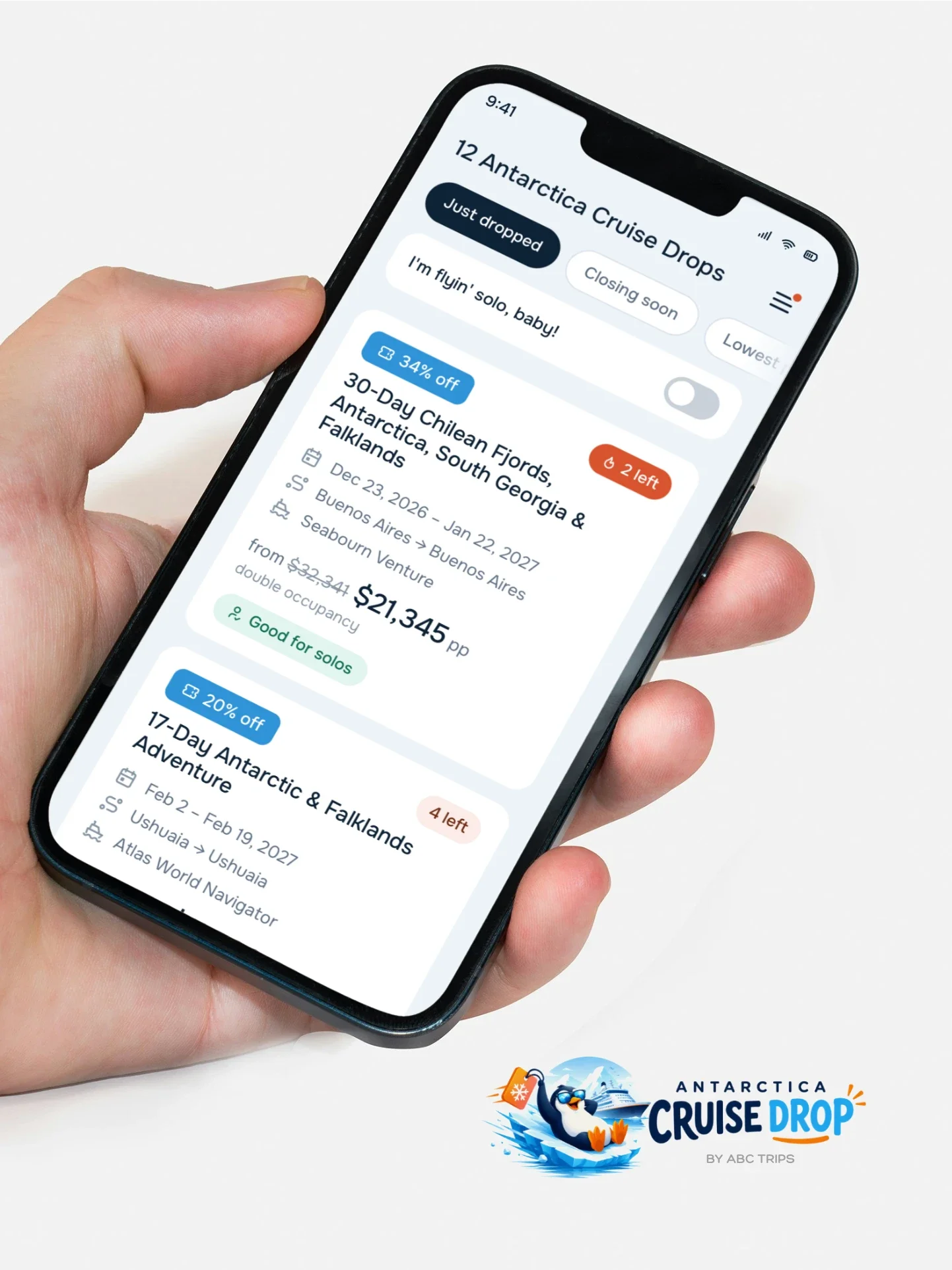
Either way, ignore the reflex. The question is not “how small is the ship” but “how does this operator run the cap, and where will I be happy for the 90 percent.” Two tools make that concrete. Our interactive Antarctica ship comparison puts every ship in the table above side by side, filterable by budget, expedition style and the features you care about. And the Antarctica Cruise Drop app shows a ship profile on every deal, so when a discounted departure lands you can see in a tap whether it’s a 126-guest photographers’ ship or a 490-guest basecamp before you decide.
Tell us who’s coming, how long you have, and honestly how you feel about a two-day ocean crossing, and we’ll say which size, which line and which date we’d choose for you. Request a quote, or if you’d rather argue the small-ship case with us first, start here.
Watch
Episodes on this

Keep reading