
Antarctica / South Georgia / Falklands / Chile
23-Day In-depth South Georgia, Antarctica & Falklands
23 days from Chile’s southernmost port through three of the most wildlife-rich destinations on earth — the Falkland Islands, South Georgia, and four days in Antarctica — aboard the ice-rated MS Fram.
WithHX Expeditions
- Wildlife Encounters
- Experiential Learning Adventure
- All-Inclusive
- Family-Friendly
- 5-star accommodation
- High staff-to-guest ratio
There’s a proverb that says the longest journey begins with a single step — but this one begins with a flight to Santiago and ends, three weeks later, with the kind of quiet that only comes from having been somewhere genuinely extraordinary. This is not a quick lap around the Antarctic Peninsula. This is the full version: South Georgia, the Falkland Islands, and four days in Antarctica itself, aboard the ice-rated MS Fram.
The Falkland Islands greet you first — windswept, surprisingly green, and teeming with wildlife that regards human visitors as mild curiosities rather than threats. Stanley’s small enough to walk across in twenty minutes and interesting enough to fill a full day. The penguin and albatross colonies nearby are the real draw, and they don’t disappoint.
South Georgia is the centerpiece. Often called the “Serengeti of the Southern Ocean,” it earns the title with authority. King penguin colonies that number in the tens of thousands. Fur seals so numerous they become part of the landscape. The wreckage of a 19th-century whaling industry preserved by the cold. And in a small cemetery at Grytviken, the grave of Ernest Shackleton — one of the most compelling human stories in the history of polar exploration, told best by the place where it ended. Four days here feels just long enough to begin to understand what the island is.
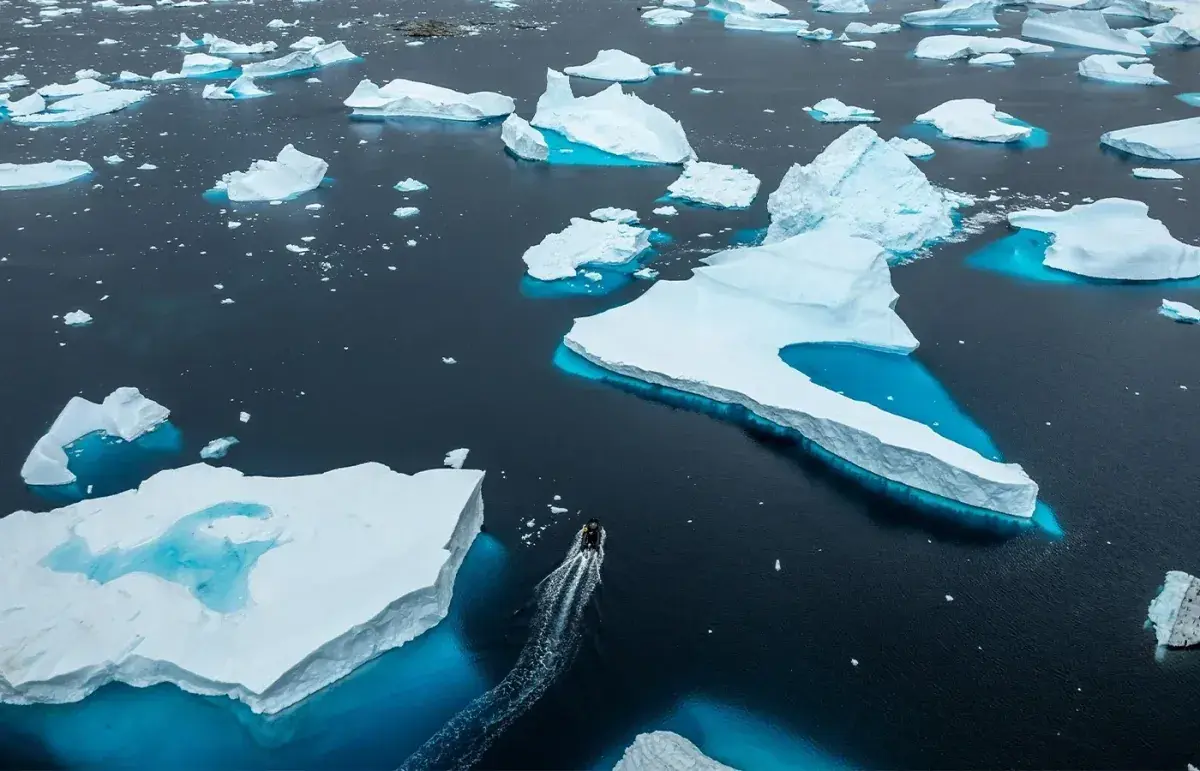
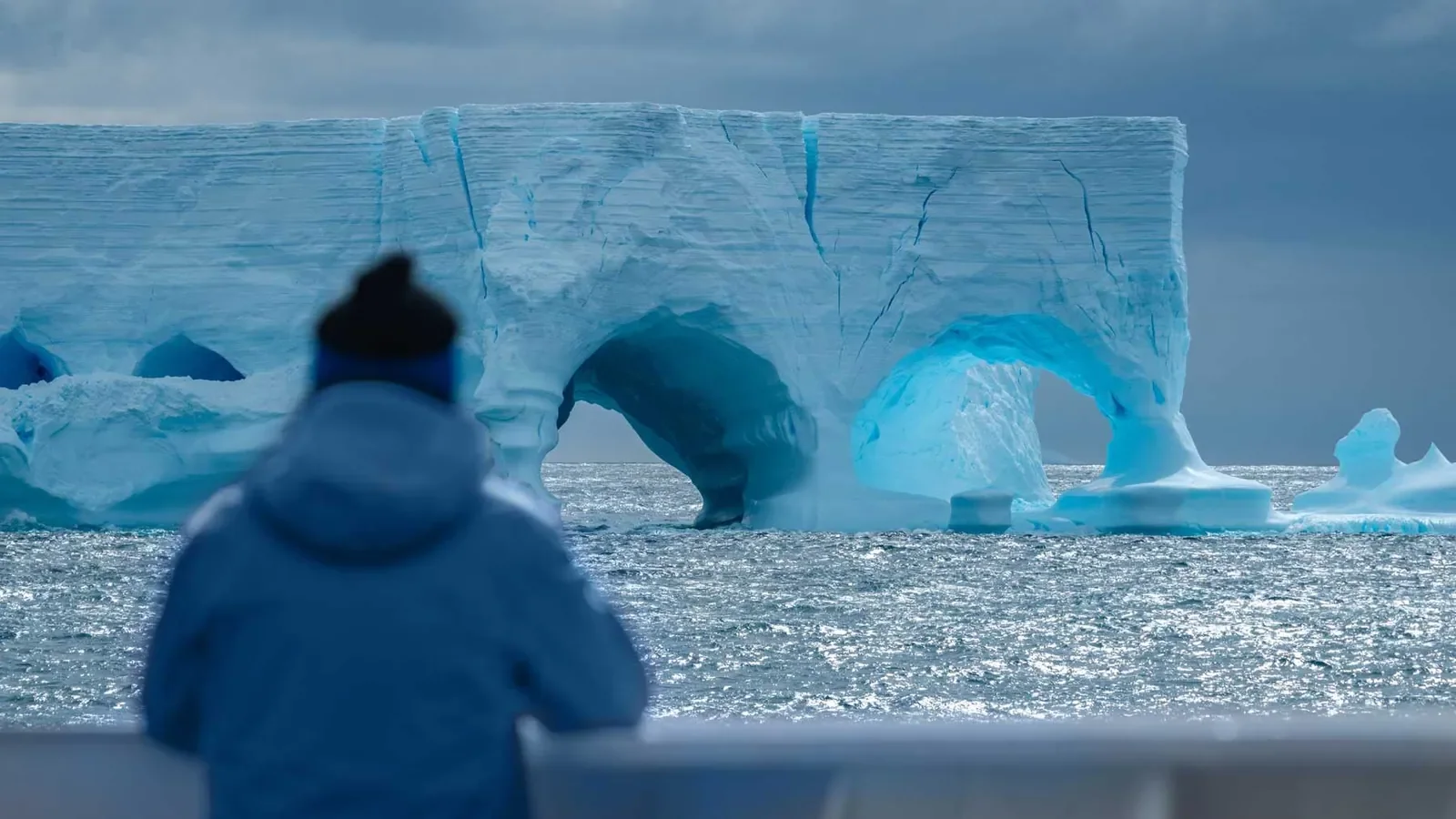
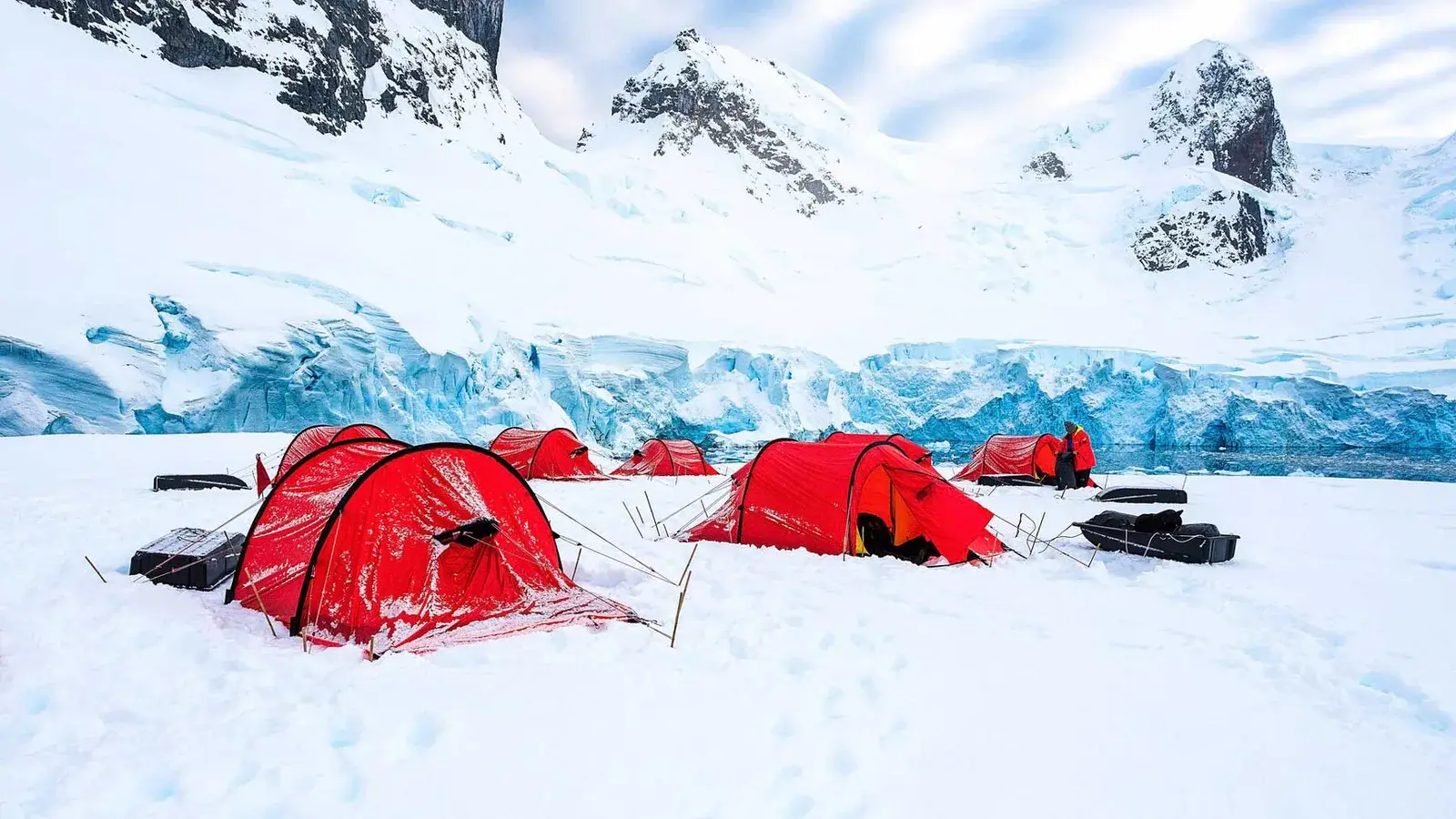
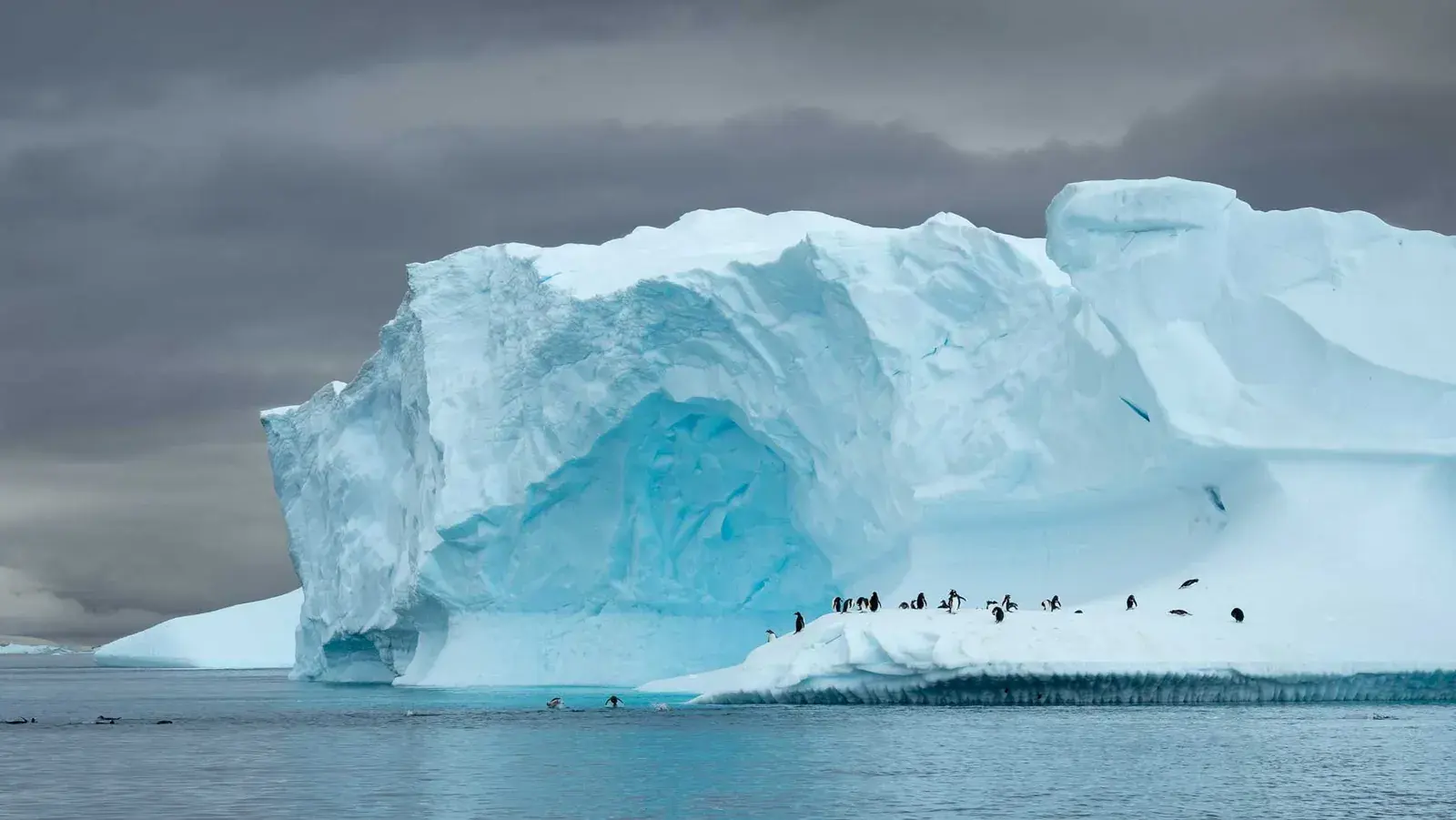
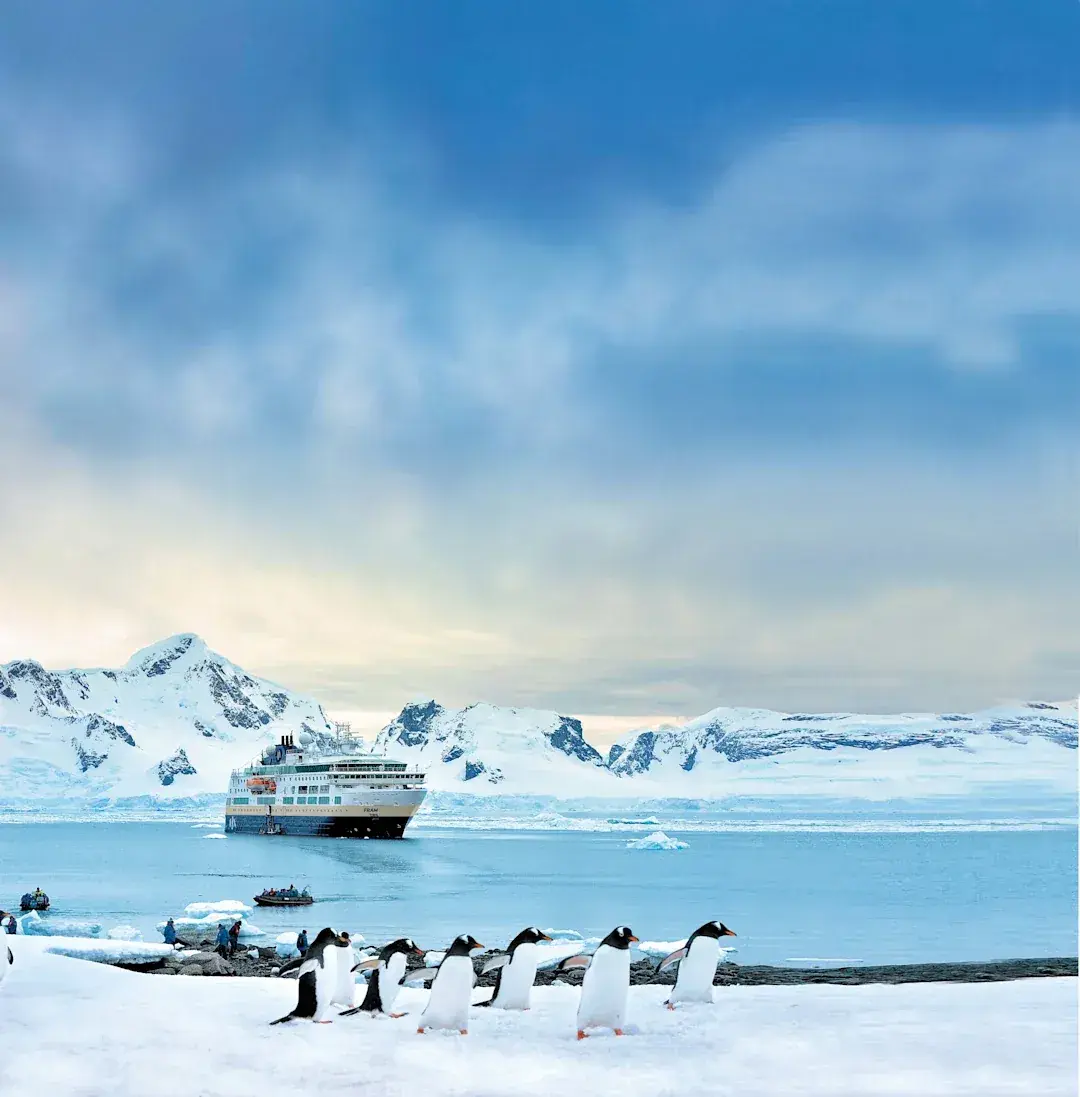
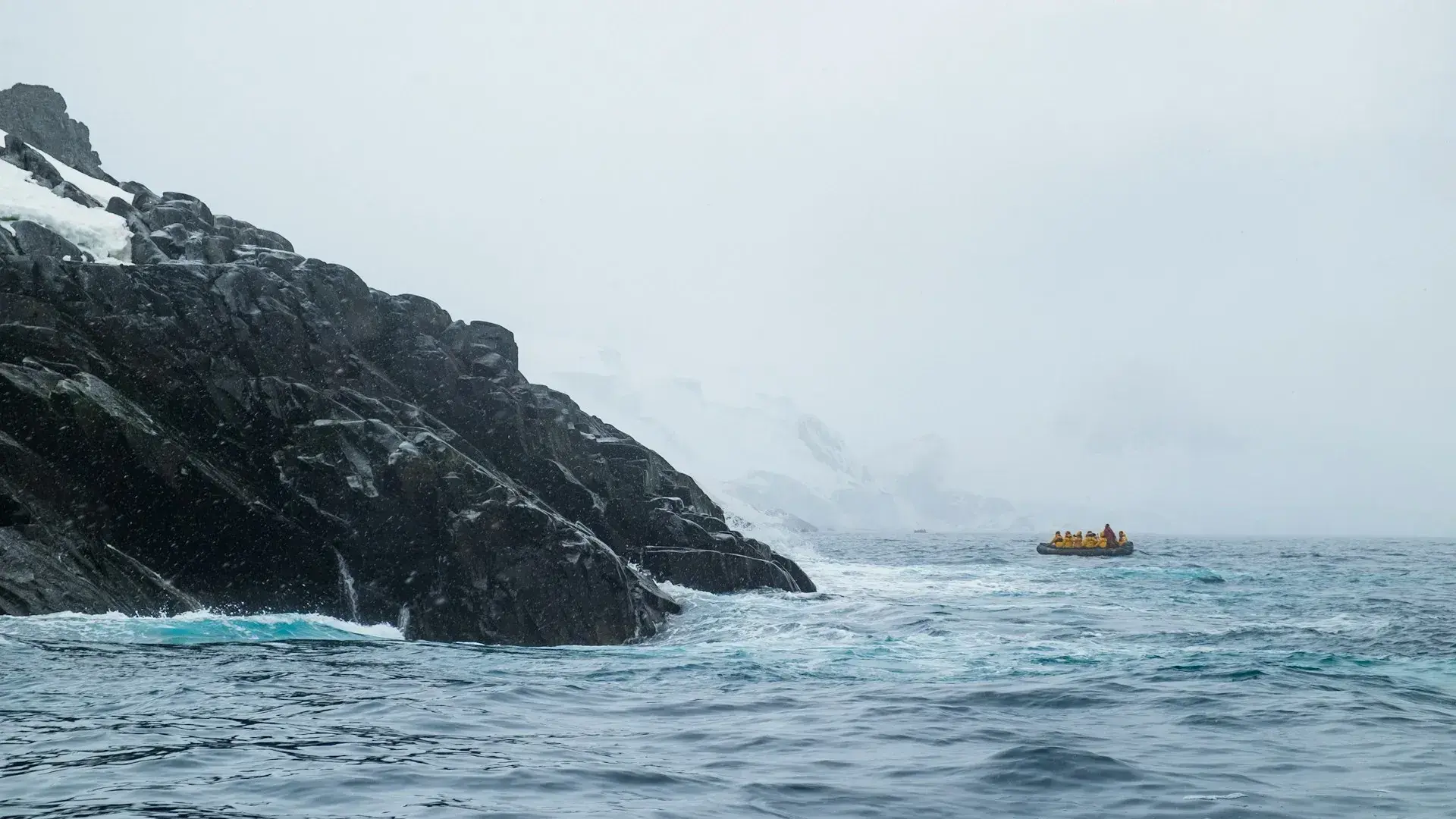
Then Antarctica. The continent proper — icebergs the size of city blocks, glacier-carved harbours where gentoo penguins nest indifferently at the edge of the ice, and a silence so complete it has physical weight. Four dedicated days in Antarctic waters, with landings shaped daily by conditions, wildlife protocols, and the professional judgment of an Expedition Team that has collectively spent decades here. Optional kayaking, camping, and snowshoeing for those who want more layers.
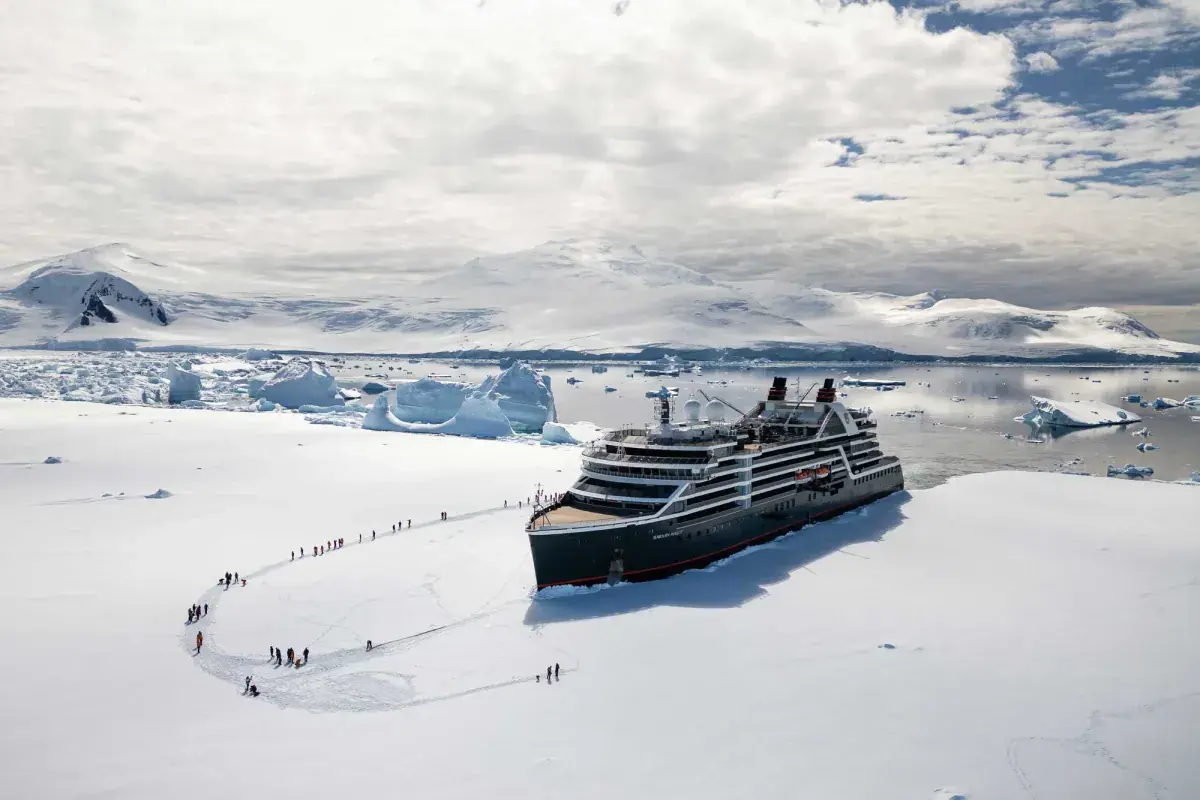
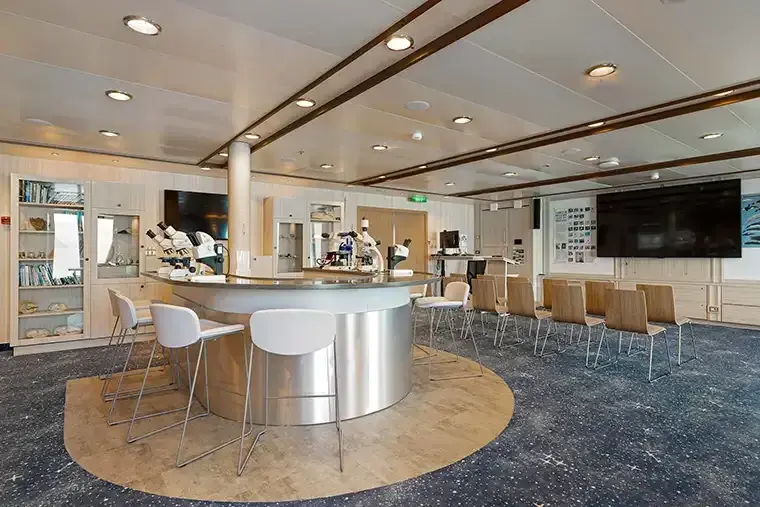
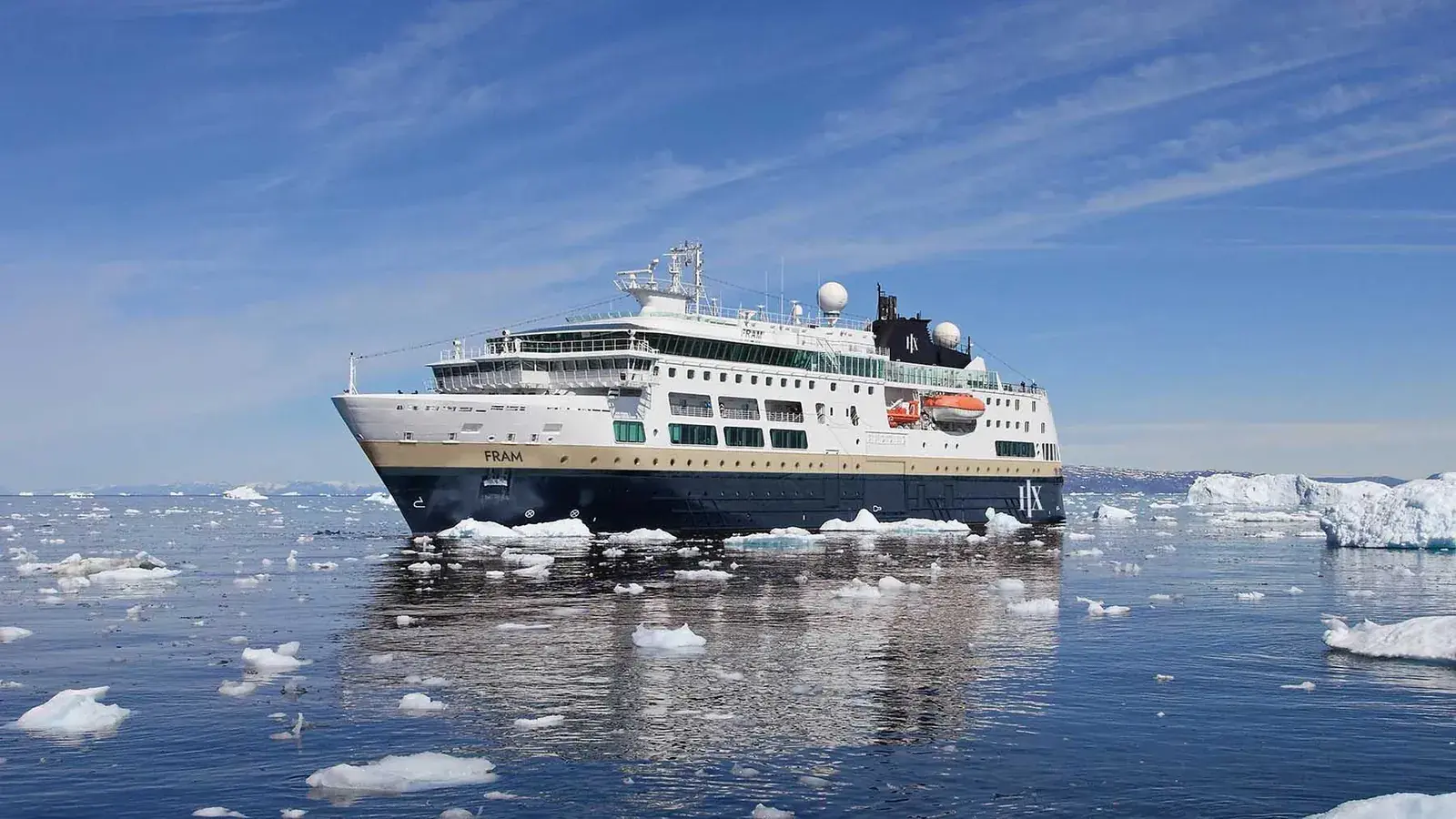
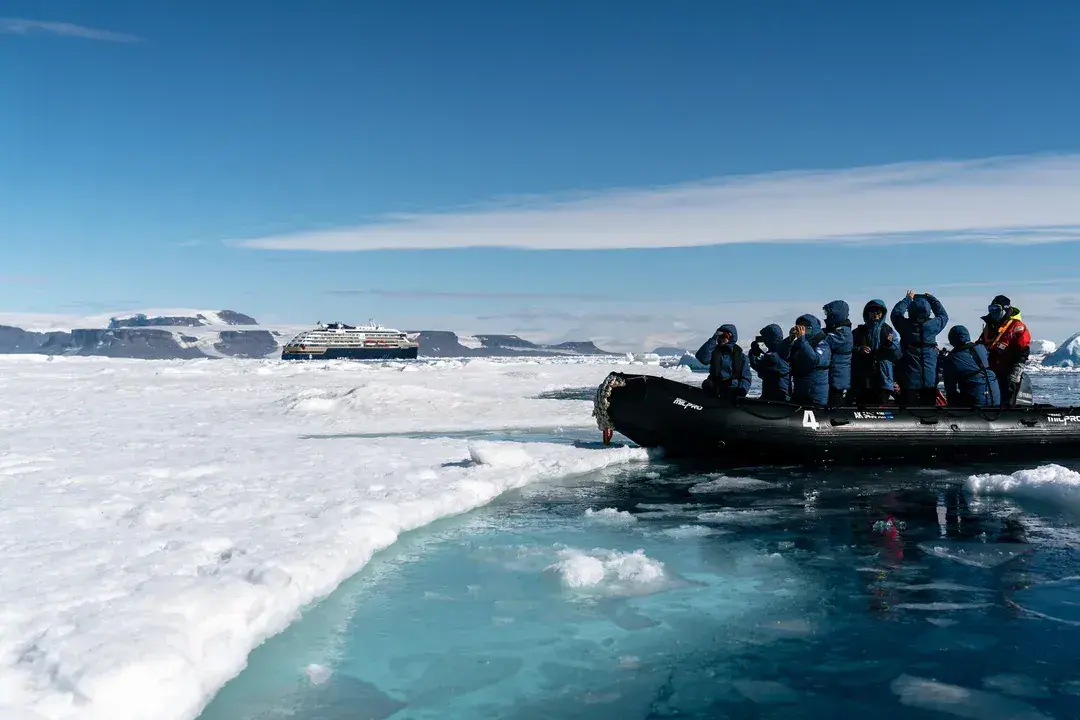
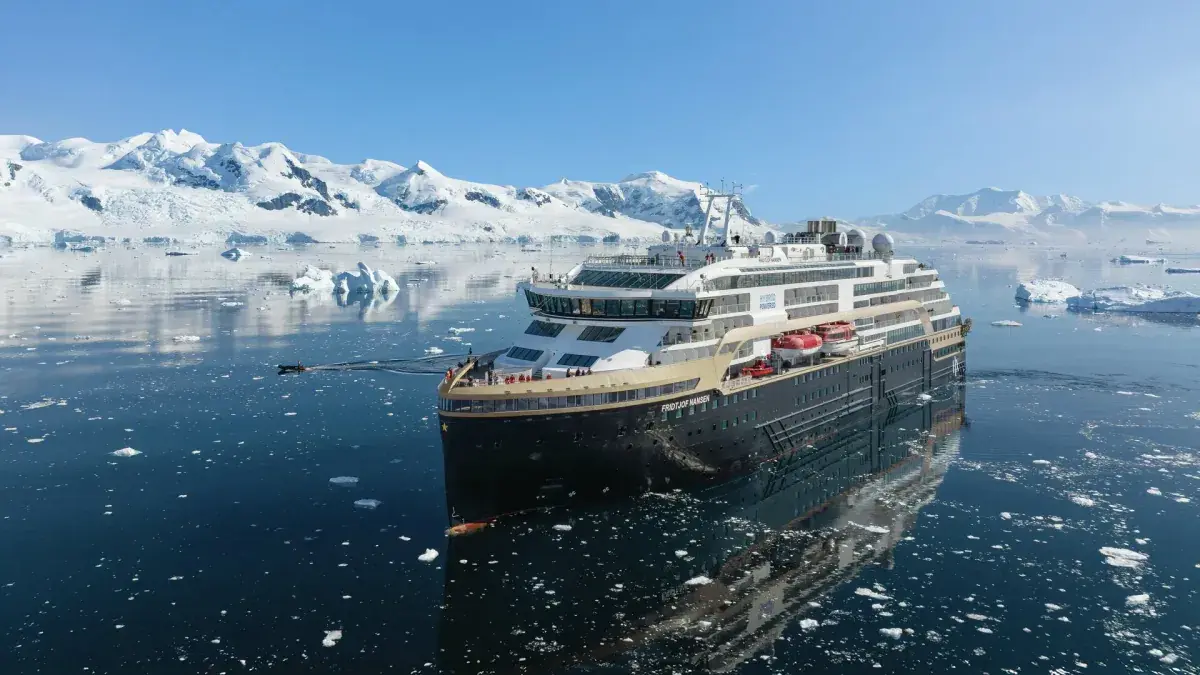
The MS Fram is an expedition ship in the truest sense: ice-rated, purpose-built, carrying around 200 guests with enough crew and Zodiac capacity to land them efficiently and safely. The onboard Science Center runs throughout the voyage with Citizen Science programs that contribute real data to global research projects. This is not a cruise that happens to visit Antarctica. It’s an expedition that takes the place seriously.
23 days is a commitment. It’s also, for a destination this significant, exactly the right amount of time.
Day by day
The itinerary.
Santiago hits different when you know what’s coming. You’ve got 22 more days ahead, and right now you’re standing in one of South America’s most vibrant capitals — colonial-era architecture, award-winning restaurants, and a food market that’ll make you momentarily forget you’re here for the ice. The Plaza de Armas, Mercado Central, and Sky Costanera observation deck (1,000 feet up, with panoramic Andean views) are all worth your time.
We strongly recommend arriving at least a couple of days early to acclimatize, recover from jet lag, and let Santiago do its thing. Pre-programs are available through HX for those who want a guided intro to the city. Tomorrow you fly south.

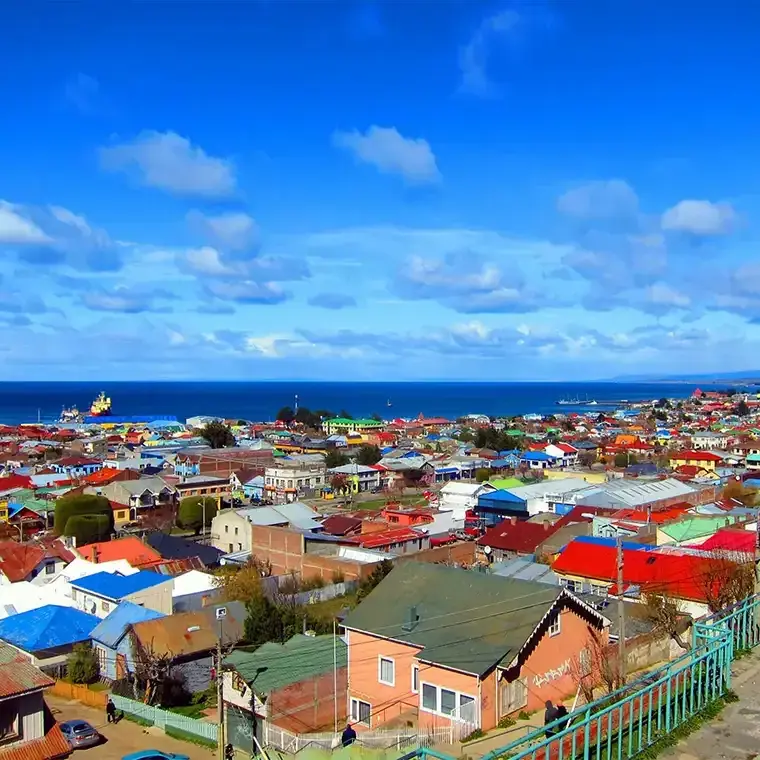
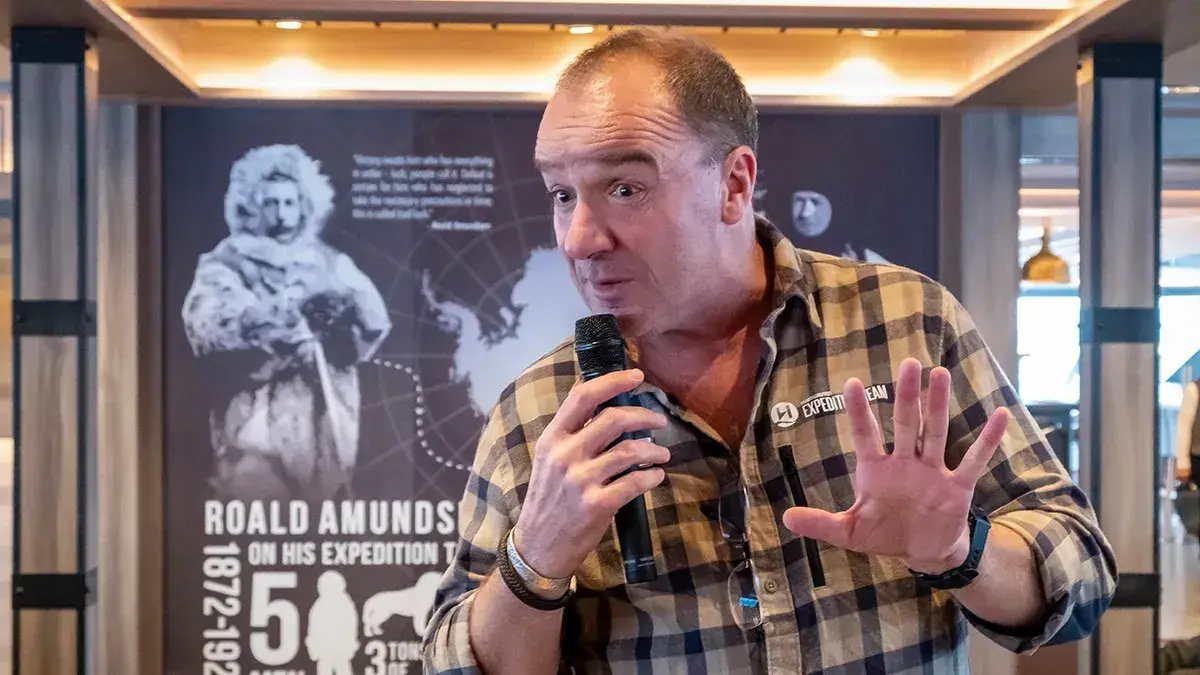
An early start: you’ll fly south from Santiago to Punta Arenas, Chile’s southernmost city, where the MS Fram is waiting at the dock. Embarkation is its own kind of thrill — settle into your cabin, explore the ship’s facilities, and meet the Expedition Team that’ll be your guides, lecturers, naturalists, and travel companions for the next three weeks.
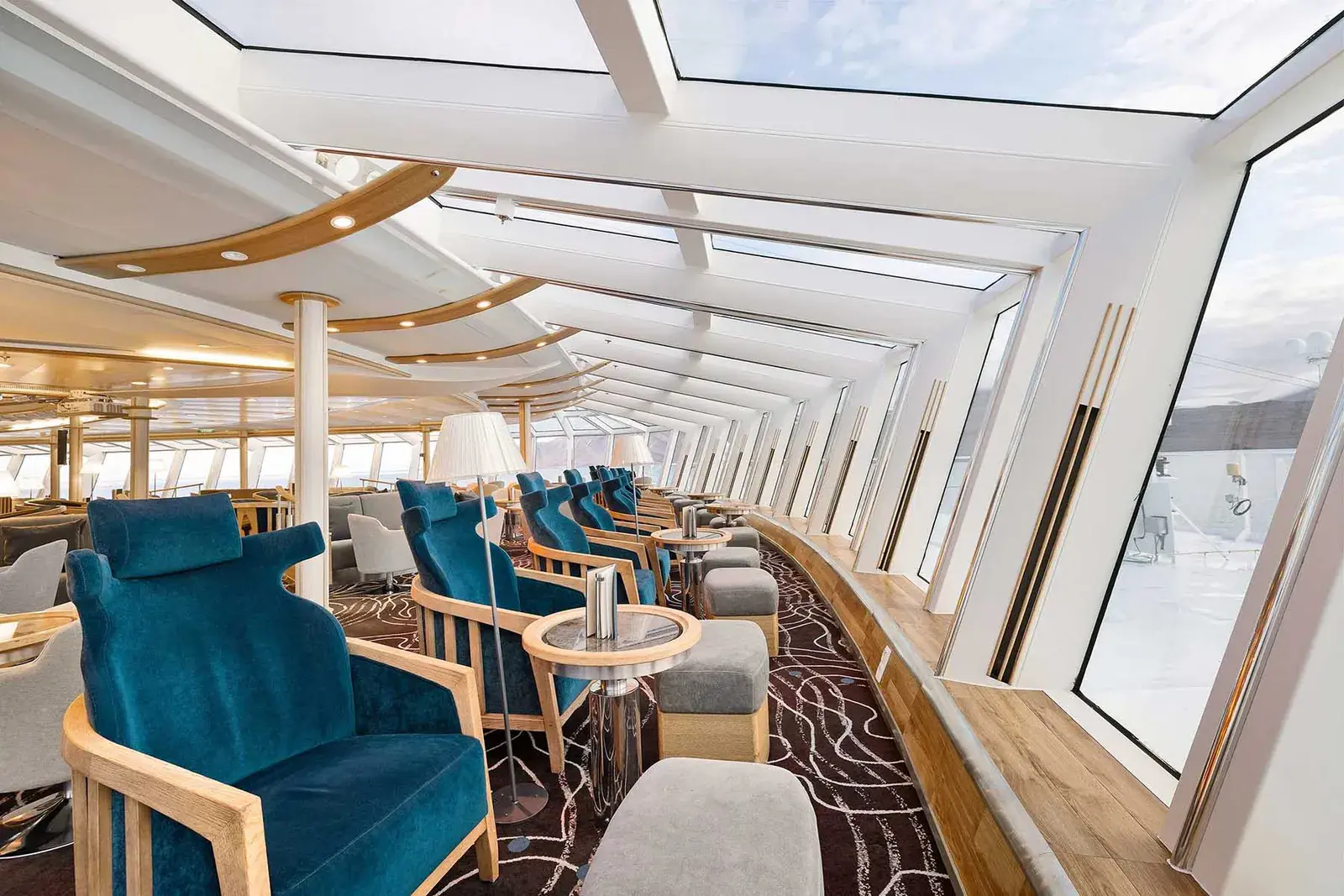
The welcome briefing in the Explorer Lounge & Bar sets the tone: this is a working expedition, and the team takes it seriously. Tonight you’ll have your first dinner aboard as the ship navigates out into the Strait of Magellan. The adventure is officially underway.
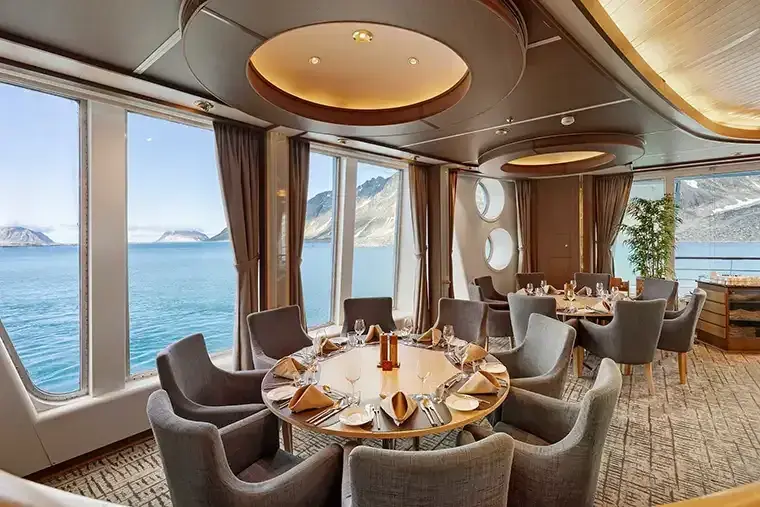
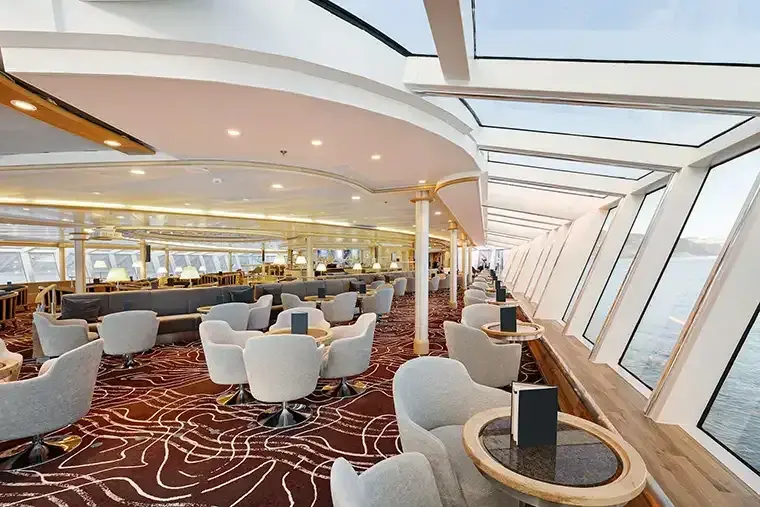
With course set for the Falkland Islands, your first full day at sea takes you through one of the great passages in the history of exploration — the Strait of Magellan. Watch the Patagonian coastline from the open deck, the outdoor hot tub, or the panoramic Explorer Lounge & Bar. The scenery is worth standing in the cold for.
Below decks, the Science Center is already running: the Expedition Team’s lecture program kicks off today with sessions on marine biology, oceanography, Antarctic survival, and the wildlife you’ll encounter over the coming weeks. By tomorrow, the green hills of the Falklands will be visible on the horizon.
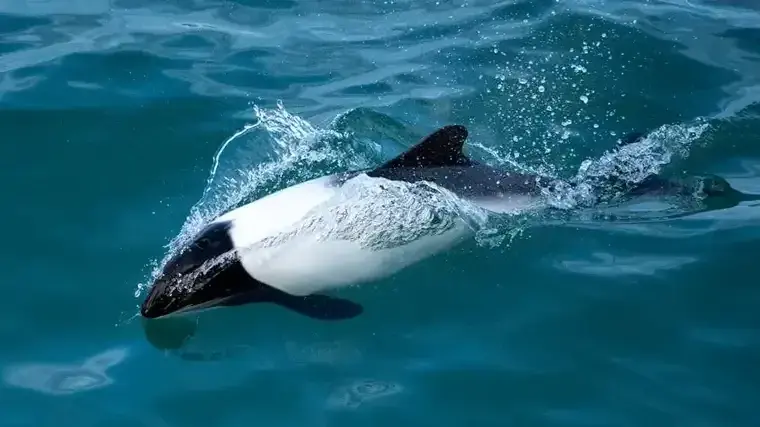
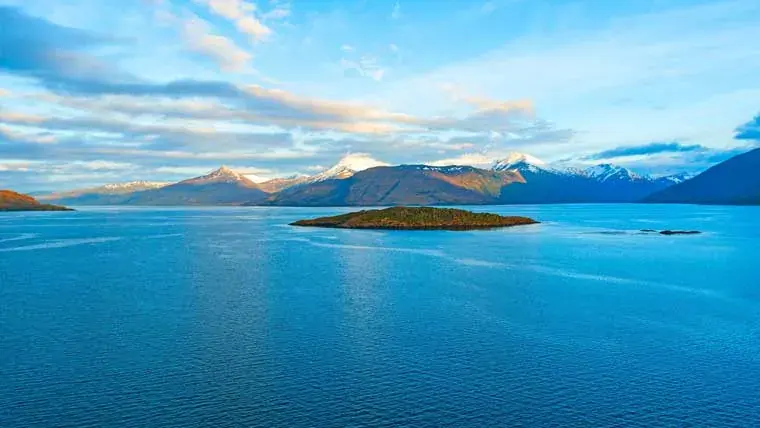
The Falkland archipelago is not what most people expect — and that’s exactly why it works. Windswept, surprisingly green, and beautiful in a way that has nothing to do with tropical warmth, the islands feel like a secret that never quite made the major guidebooks. Today you arrive in Stanley, the islands’ capital and, with roughly 3,000 residents, one of the most remote capital cities on earth.
A community walk takes in the Jubilee Villas gardens, Christ Church Cathedral (the southernmost Anglican cathedral in the world), and the Historic Dockyard Museum, whose collection covers the full span of Falklands maritime and military history. The scale of the place — no traffic lights, no chain restaurants — makes it feel genuinely exploratory. The wildlife is already close and largely unconcerned.
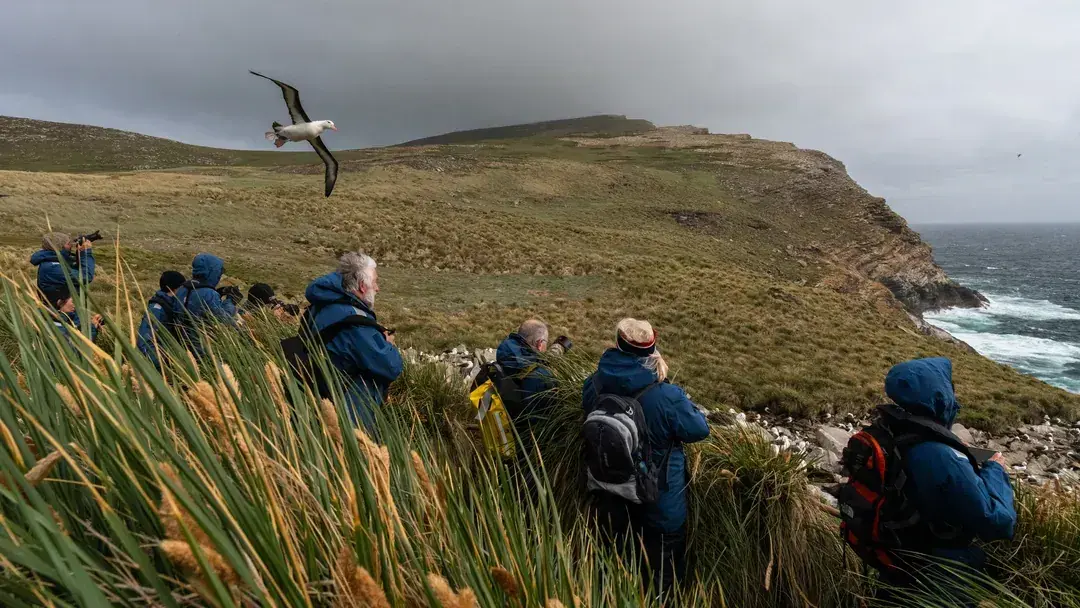
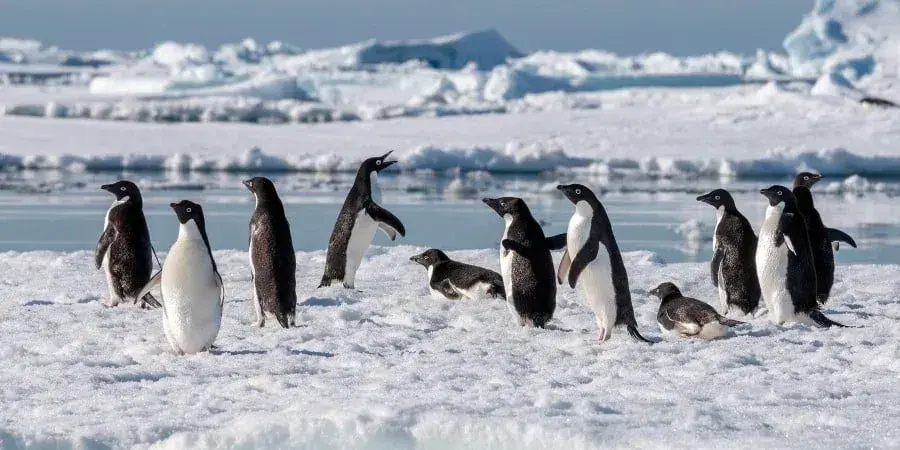
Today belongs to the colonies. The Falklands host staggering concentrations of breeding seabirds — albatrosses, rockhopper penguins, and Magellanic penguins often sharing the same hillside with elephant seals and fur seals, all completely unconcerned about the small group of humans watching from a respectful distance. The Expedition Team knows exactly where and when to go based on current conditions and wildlife sensitivity protocols.
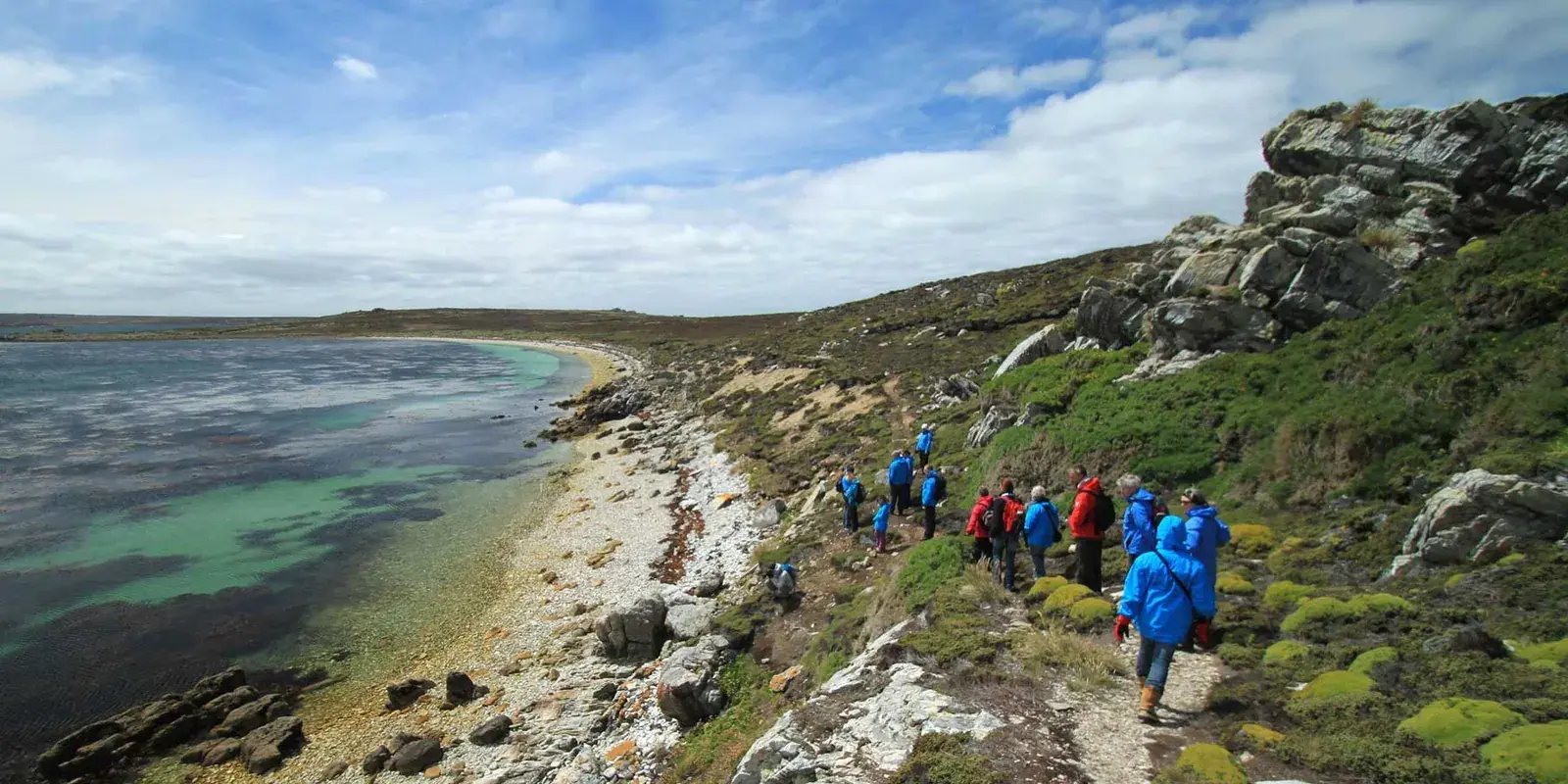
Gypsy Cove, just outside Stanley, is a reliable highlight — a crescent of white sand backed by tussock grass and occupied by Magellanic penguins who treat the beach as private property. The grassy hills and wildflower-dotted coast feel almost impossibly pastoral against the knowledge that Antarctica is only weeks away. Bring your patience and a long lens.
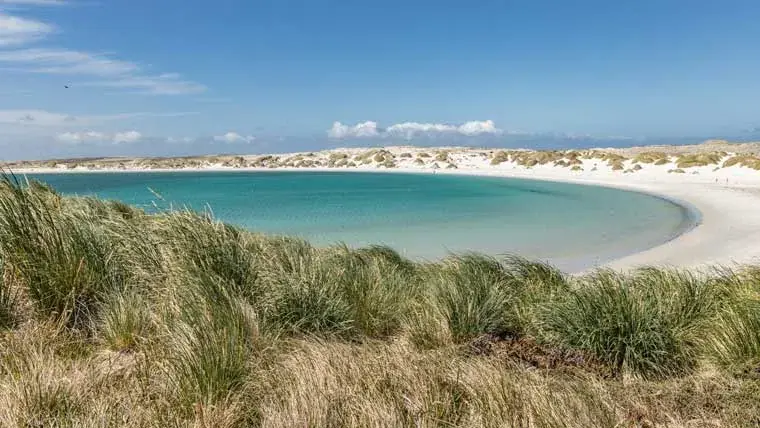
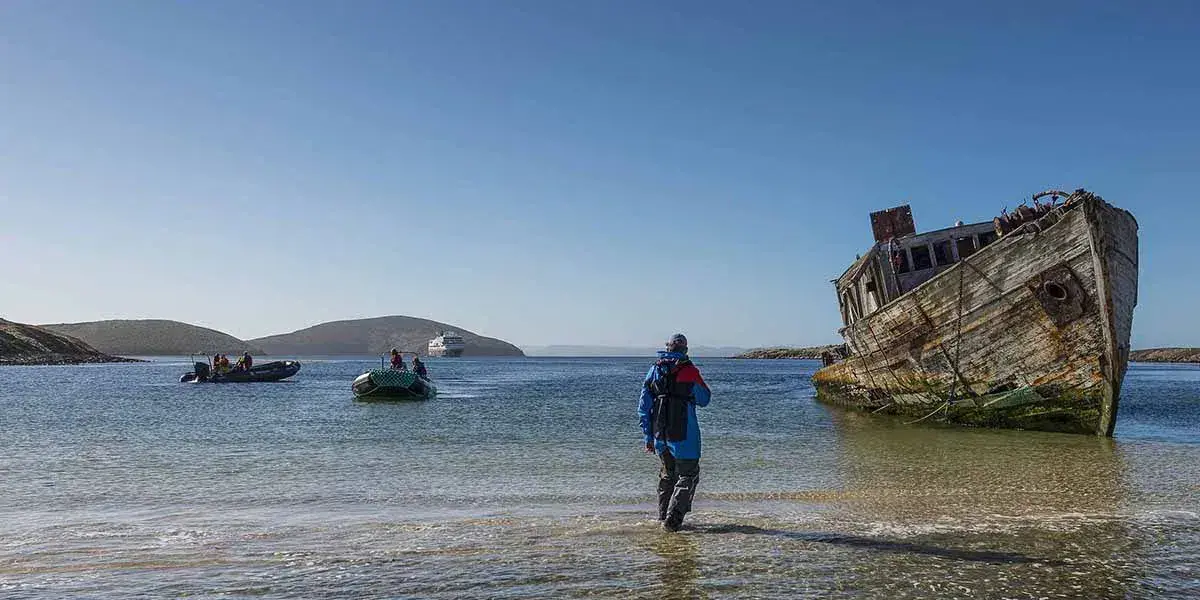
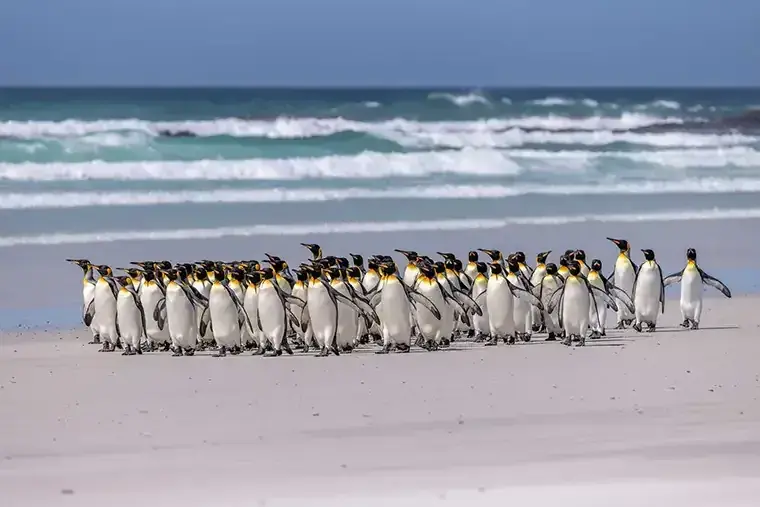
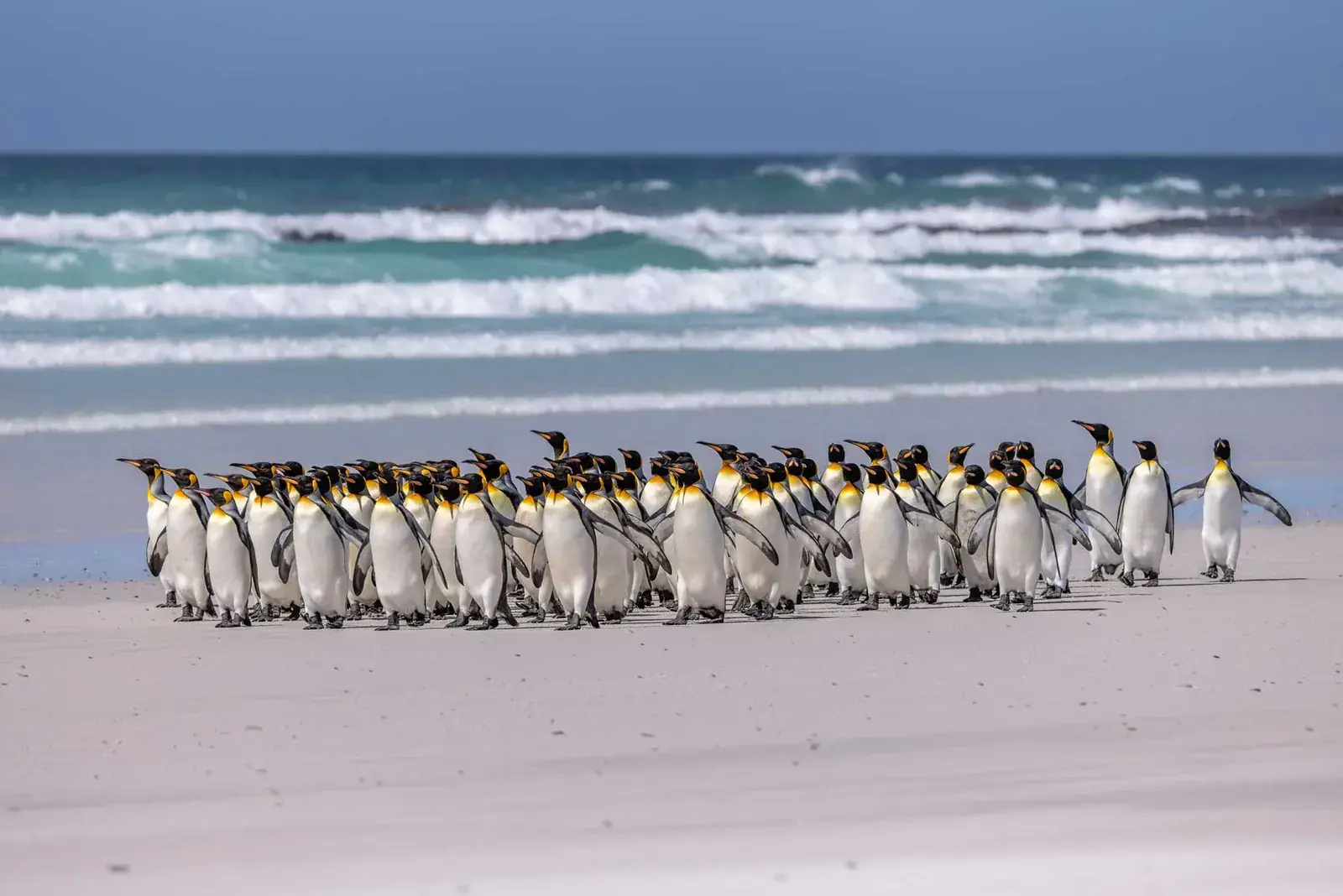
A final day in the archipelago, and the expedition is still responding to what nature offers. Conditions and breeding-season protocols guide exactly where the Expedition Team takes you — possibilities include Volunteer Point, home to one of the largest king penguin colonies outside South Georgia, or New Island with its black-browed albatross rookeries and rockhopper penguin colonies sharing the same clifftops.
The Falklands reward the traveler who stays flexible. The wildlife density here is genuinely exceptional — and unlike more famous destinations, you’re often the only group on a landing site. Stock up on memories here; the scenery is about to get significantly more dramatic. Tomorrow, we point toward South Georgia.
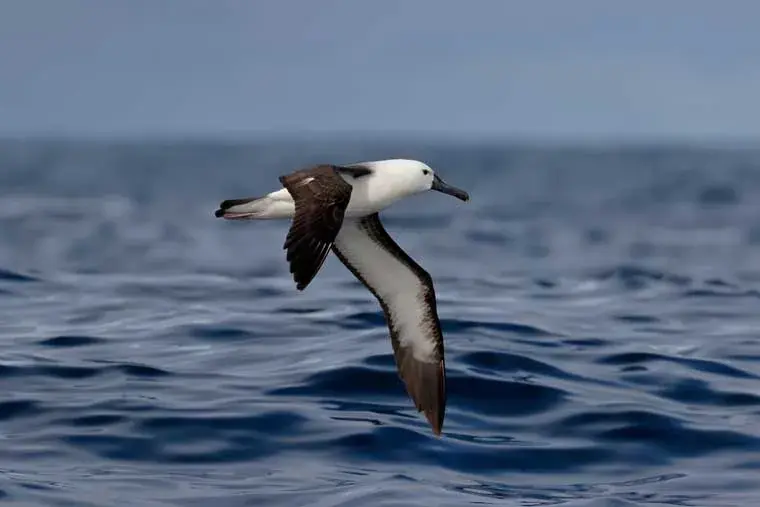
Two days of open ocean between the Falklands and South Georgia — which sounds like a lot until you’re on the bow watching a wandering albatross ride the swell for fifteen uninterrupted minutes without a single wingbeat. The South Atlantic is productive water, and the birdwatching from deck is some of the best of the voyage.
The Expedition Team is running South Georgia briefings: what the island looks like, what the wildlife protocols require, the wild history of the Norwegian whalers who worked these waters in the early 20th century, and the extraordinary story of Ernest Shackleton’s final journey here. Citizen Science programs are ongoing — ocean temperature readings, wildlife sightings logs, plankton sampling. By tomorrow, South Georgia will be close.
South Georgia is close now, and the anticipation is building. The Expedition Team completes your preparation for the island: wildlife protocols, landing logistics, the specific rules around visiting active breeding colonies, and the kind of ecological context that turns wildlife watching from passive observation into something genuinely meaningful.
On the science side, Citizen Science data collection continues. And if the ocean cooperates — which it often does on this crossing — there are cetaceans to watch from deck: humpback whales, minkes, and the occasional southern right whale have all been spotted on this route. By tomorrow, you’ll understand why the people who’ve been to South Georgia tend to put it at the very top of their expedition list. The island earns it.
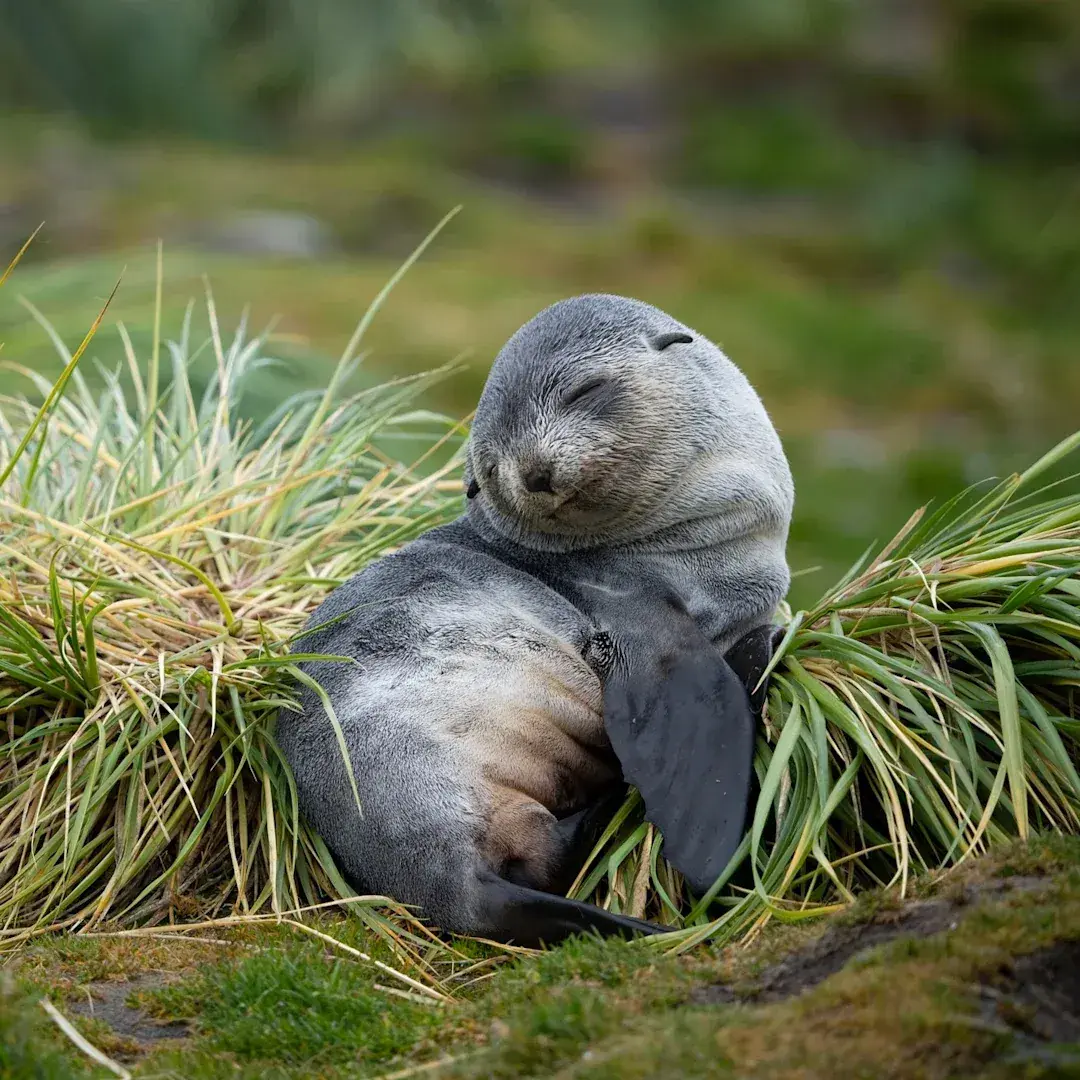
Nothing prepares you. South Georgia announces itself from the sea — dramatic alpine peaks dropping directly into the water, glaciers calving at the shoreline, and the dense biological roar of a wildlife population measured in millions rather than thousands. Bird Island, at the northwest tip, hosts one of the densest concentrations of seabirds on earth. Fur seals are everywhere — literally everywhere.
Your Expedition Team will get you ashore at the best available site based on conditions and breeding protocols. Wherever we land, the scale and intensity of the wildlife experience here is unlike anything in the Falklands or on a standard Antarctic Peninsula itinerary. Day one in the Serengeti of the Southern Ocean.
Grytviken is the kind of place that stays with you. The abandoned Norwegian whaling station is frozen mid-operation — rusting try pots, collapsed oil tanks, the skeletal hull of an old vessel beached in the cove, and the specific silence of a place that was once brutally industrious and is now completely still. The museum is small but excellent, and the surrounding king penguin colony treats the ruins as unremarkable backdrop.
In the small cemetery at the edge of town, a simple granite headstone marks the grave of Sir Ernest Shackleton, who died here in 1922 on the eve of his final expedition. Most visitors leave a dram of whisky on the stone — a tradition that, in this context, feels entirely appropriate. Few places in the world carry this combination of natural spectacle and human story.
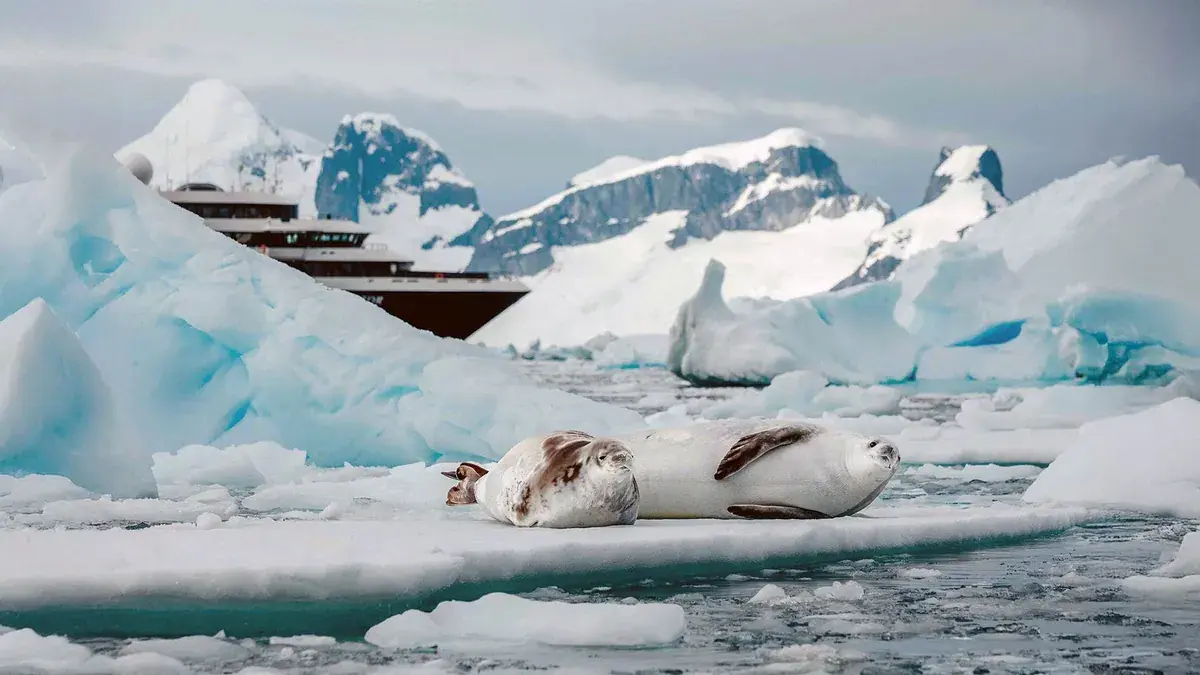
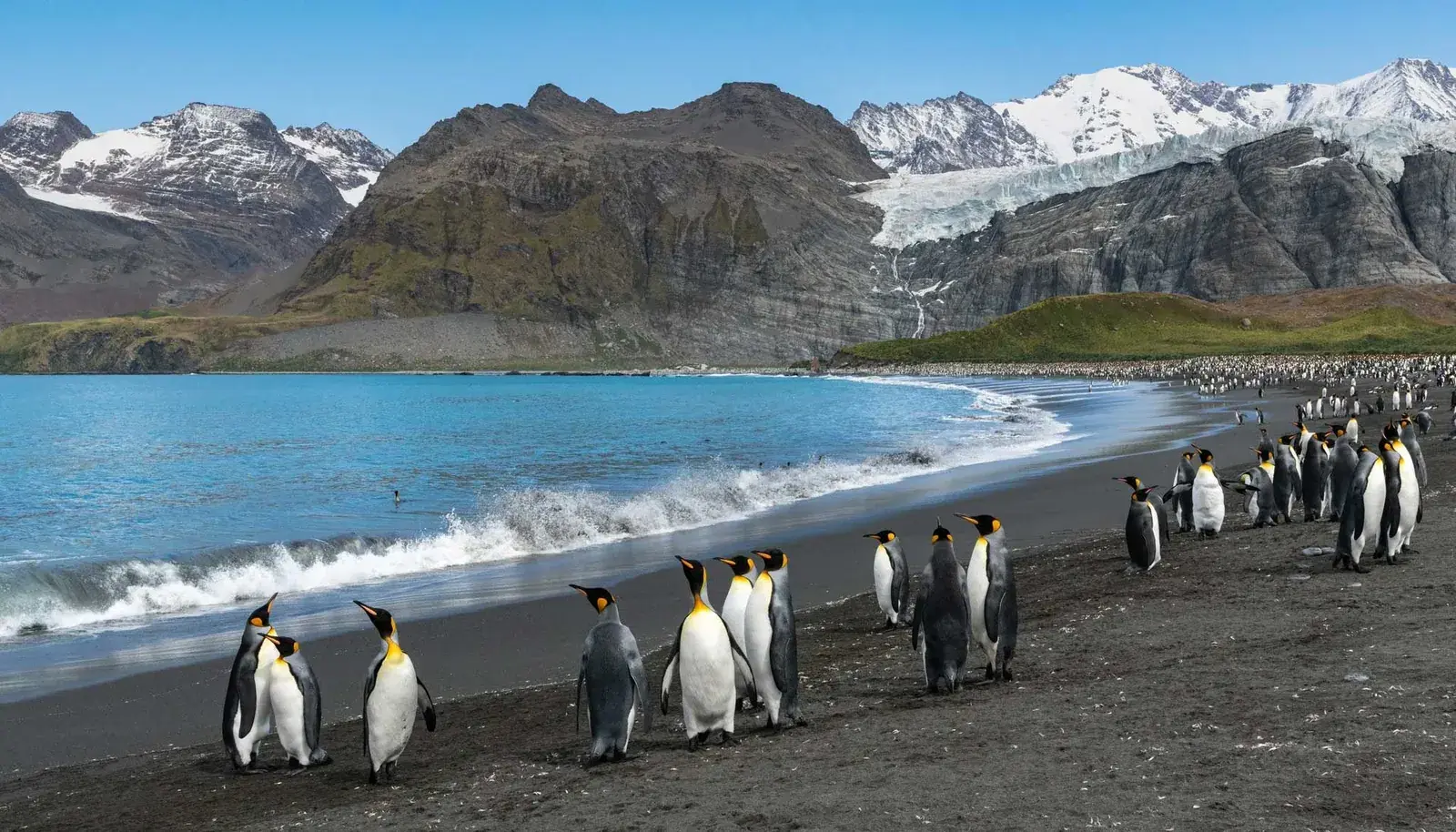
South Georgia’s king penguin colonies are among the most spectacular wildlife congregations on the planet. Gold Harbour alone hosts tens of thousands of breeding pairs, their orange-and-black livery visible from the Zodiacs before you’ve even reached the beach. Enormous southern elephant seals lie in heaps at the tide line, seemingly incapable of caring less about your presence. Antarctic fur seals, considerably more energetic, require respectful navigation.
The Expedition Team knows these sites intimately and will guide you through the protocols that make close-range observation possible without disrupting nesting behaviour. The light in South Georgia — when the clouds cooperate — is extraordinary. The mountains behind Gold Harbour drop straight to the sea with glaciers threading between them. Plan your camera batteries accordingly.
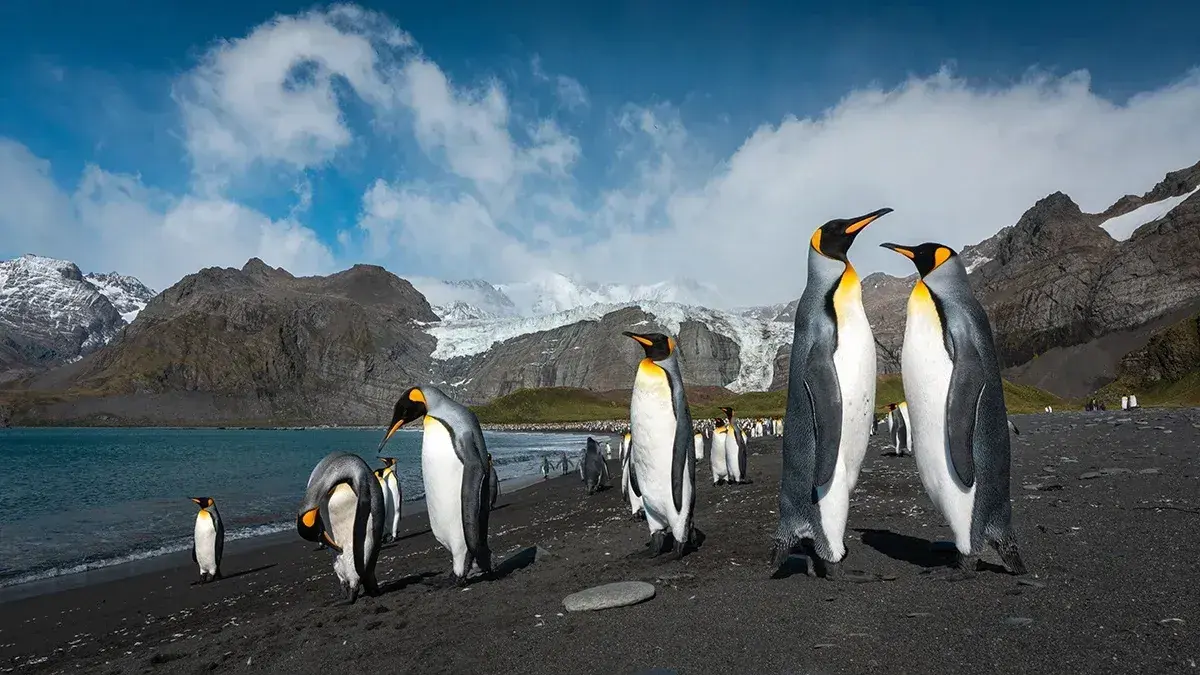
A final day working the best available sites on the island — Prion Island, Salisbury Plain, Fortuna Bay, or wherever conditions and wildlife sensitivity point the Expedition Team. Prion Island is particularly special during wandering albatross breeding season: the birds are simply enormous, tending to nests in the tussock grass with a domestic patience that’s somehow both surreal and completely moving.
South Georgia rewards the traveler who stays flexible, and four days here feels like both a lot and not quite enough. Whatever we do today, you’ll leave with the specific, quietly smug knowledge of someone who has been somewhere genuinely extraordinary. Tomorrow, we point south. Antarctica awaits.
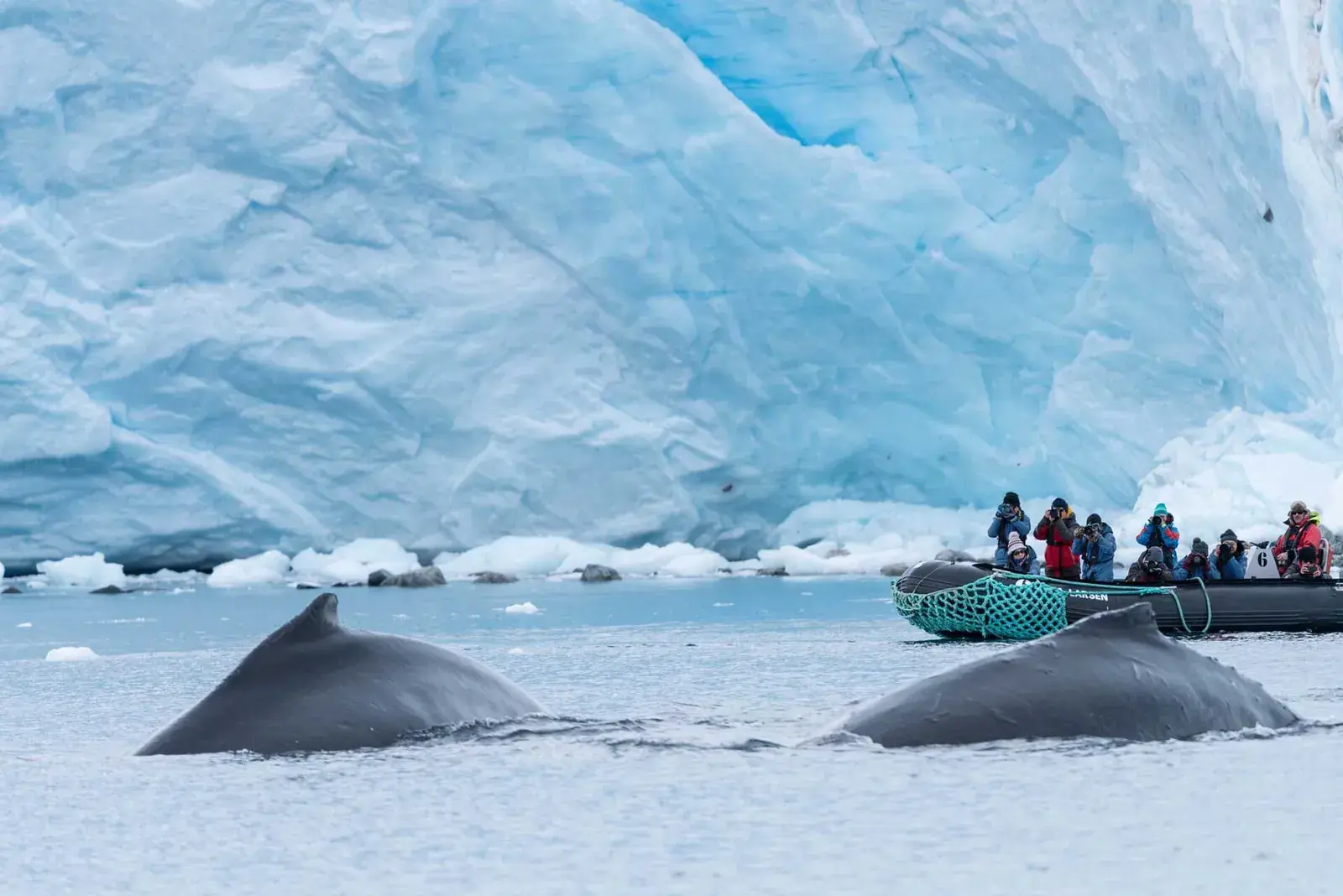
The ocean between South Georgia and the Antarctic Peninsula is some of the most productive water on earth — cetacean territory in the most expansive sense. Humpbacks, minkes, and the occasional southern right whale have all been spotted on this route, often feeding in dense krill concentrations that turn the sea an improbable rust-orange colour.
The Expedition Team is running Antarctica-specific briefings: the history and significance of the Antarctic Treaty, current climate science and what you’ll observe firsthand, and what to expect from your first iceberg, your first continental landing, your first penguin that doesn’t have South Georgia’s famous indifference to humans. Antarctica is a destination that rewards preparation, and the team is thorough.
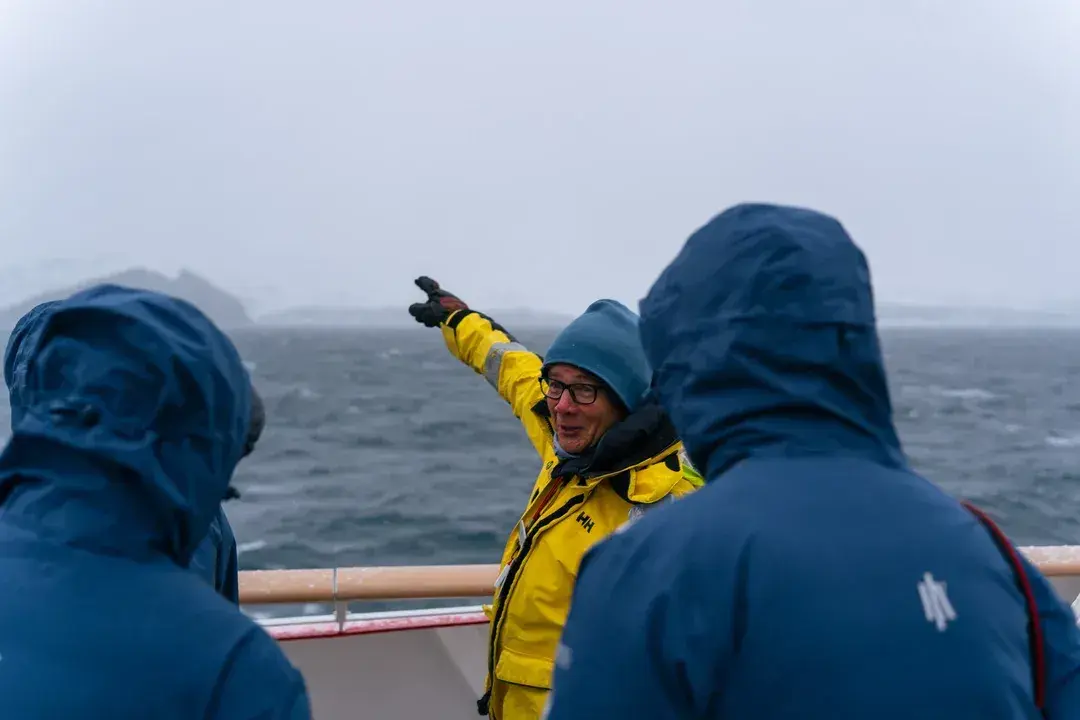
Two sea days before Antarctica, and the ship has a settled rhythm now — lectures in the morning, Citizen Science in the afternoon, wildlife watching from the deck whenever conditions allow. The Expedition Team is priming you for what lies ahead: the specific language of polar ice (grease ice, pancake ice, brash ice, bergy bits), how to read conditions from the bridge, what the different penguin species sound and behave like at a distance.
The Science Center is fully activated, with data collection projects running in parallel with the educational programming. Antarctica is a destination that rewards the informed traveler, and by tomorrow you’ll be as ready as a first-timer can reasonably be. The first tabular icebergs may be visible from deck by afternoon.
The first icebergs appear today — usually. Flat-topped tabular bergs from ice shelf calving events, enormous and improbably white against the grey-blue of the Southern Ocean. The air temperature has dropped noticeably and there’s a stillness on deck that’s partly weather and partly the specific weight of what’s coming.
The Antarctic Peninsula is one of the fastest-warming places on earth, and the Expedition Team will make sure you understand both the magnificence and the fragility of what you’re about to enter. The South Shetland Islands are close. Tomorrow, Antarctica begins in earnest.
Antarctica. There’s no good way to describe what it feels like the first time you see the continent up close — the scale is simply too large for normal reference points. The South Shetland Islands are often the entry point: Half Moon Island’s chinstrap penguin colony, Elephant Island with its stark reminder of Shackleton’s crew stranded there for months, the first Zodiac landing on ice that has never seen a footprint.
The Expedition Team lands you ashore with the practiced efficiency of people who have done this hundreds of times. Your job is simply to be present. Nothing prepares you, and you will not be disappointed.
Deception Island is one of the most extraordinary landing sites in Antarctic cruising — an active volcanic caldera that you literally sail into through a narrow break in the crater rim called Neptune’s Bellows. Inside, the geography is almost dreamlike: a ring of dark volcanic hills, steaming black sand beaches, and abandoned whaling infrastructure rusting dramatically into the landscape. Chinstrap penguins have colonised the ruins.
Hot springs bubble up at the shoreline in places, creating the surreal option of swimming in Antarctic waters at a temperature that’s technically above freezing. The geological backstory is genuinely wild, and the Expedition Team delivers it with the enthusiasm of people who never quite get tired of this place. One of the great landing sites anywhere on earth.
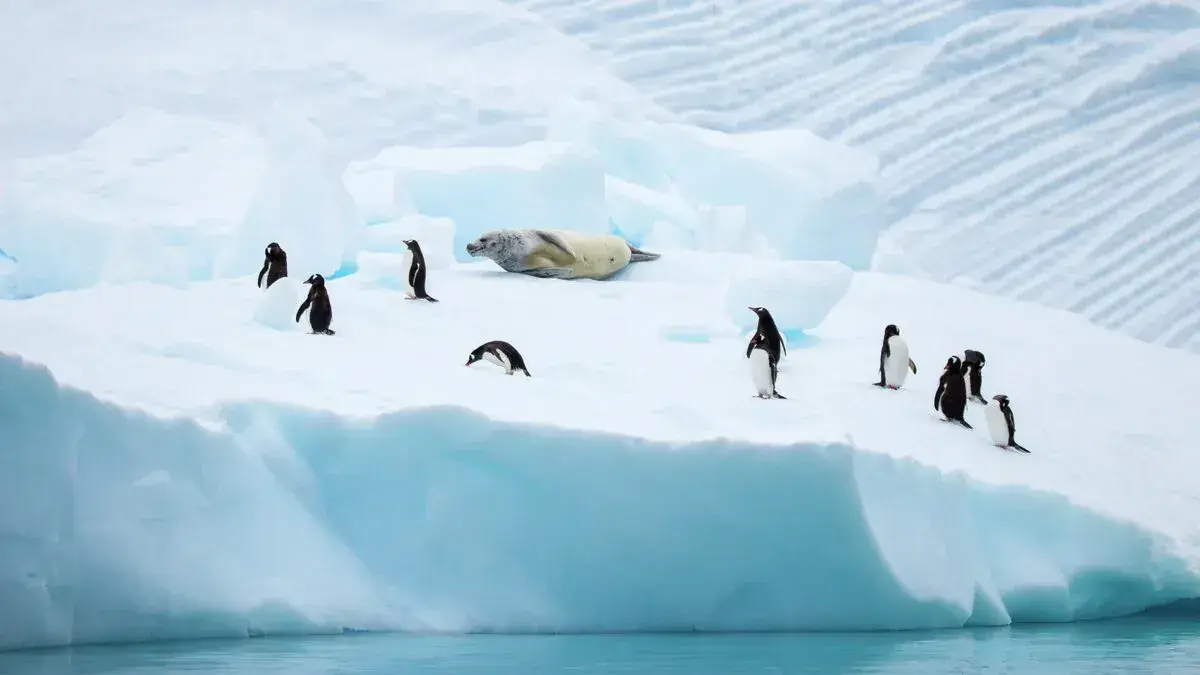
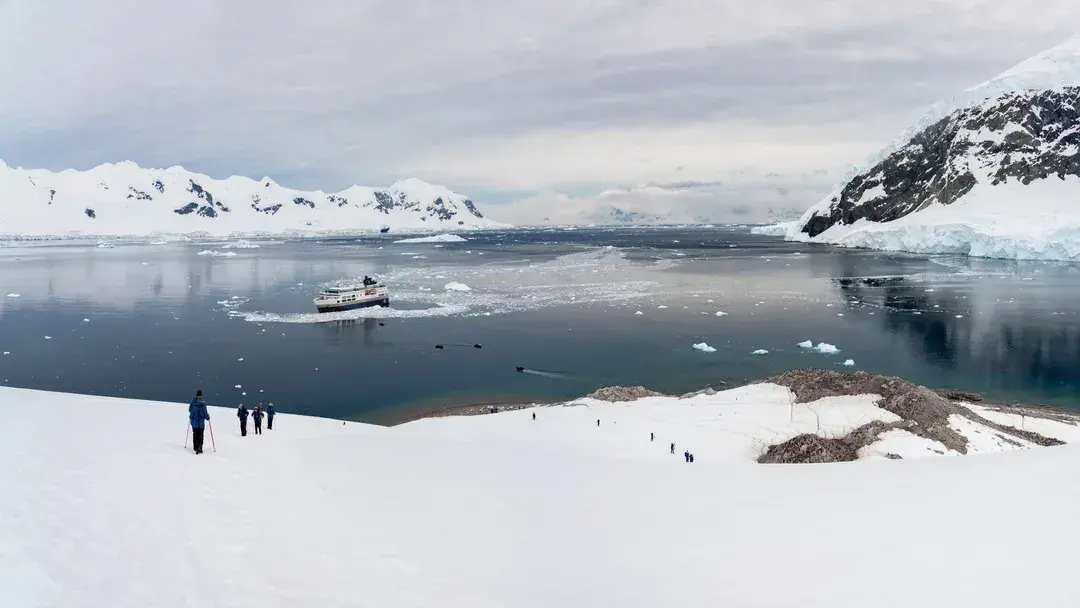
Neko Harbour: a continental landing. This matters, because most Antarctic sites are on islands — landing here means setting foot on actual Antarctica, the geological continent itself. The glacier at the back of the harbour calves actively and theatrically; chunks of ice the size of small buildings separate from the face and detonate into the water. Gentoo penguins nest at the edge of the ice, unimpressed by either the glacial theatre or the humans watching it.
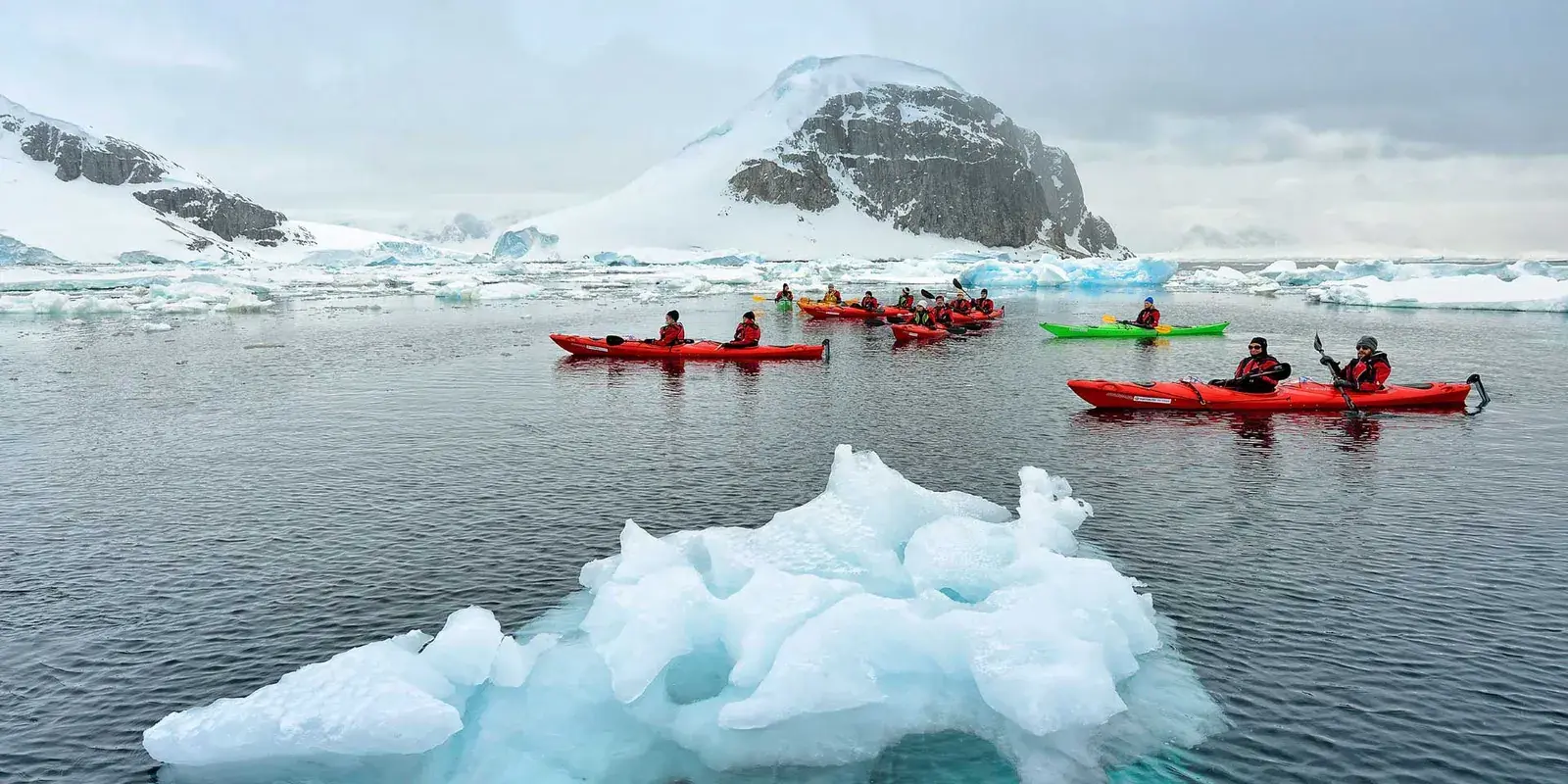
There’s often the option to hike up the snowfield above the bay for an elevated view that puts the scale of the Peninsula into proper perspective. For those who booked in advance, optional kayaking takes place among icebergs and seals at water level — a genuinely different register of the same extraordinary place.
Last day on the ice, and the Expedition Team will make it count. The Lemaire Channel if conditions allow — often called the Kodak Gap for the way its towering basalt walls compress the water into a passage that seems too narrow to believe and delivers a concentrated dose of Antarctic drama that’s difficult to overstate. Port Lockroy, the historic British research station turned museum and post office, offers a final community encounter before the northward turn.
Tonight, there’s a final dinner aboard the Fram with the full complement of guests and staff. Somewhere in the toasts and the recollections, it becomes clear that everyone on board has been changed by the same three weeks in the same irreversible way. That’s not nothing. Tomorrow, we begin the journey home.
The MS Fram turns north and the Drake Passage begins. Three days of open ocean between the tip of the continent and the tip of South America — the most infamous stretch of water in expedition cruising, and also one of the most remarkable for seabirds. Wandering albatrosses, giant petrels, and cape pigeons follow the ship north with the indifferent authority of birds that regard the Drake as a commute.
This is the time: organize your photos, write in the journal you meant to keep more consistently, compare notes with the people you’ve spent three weeks watching penguins with. The Expedition Team runs wrap-up sessions — what you’ve contributed to global Citizen Science research, how to think about climate change in the context of what you’ve seen, what comes next. The sauna and hot tubs are very much available and very much appropriate.

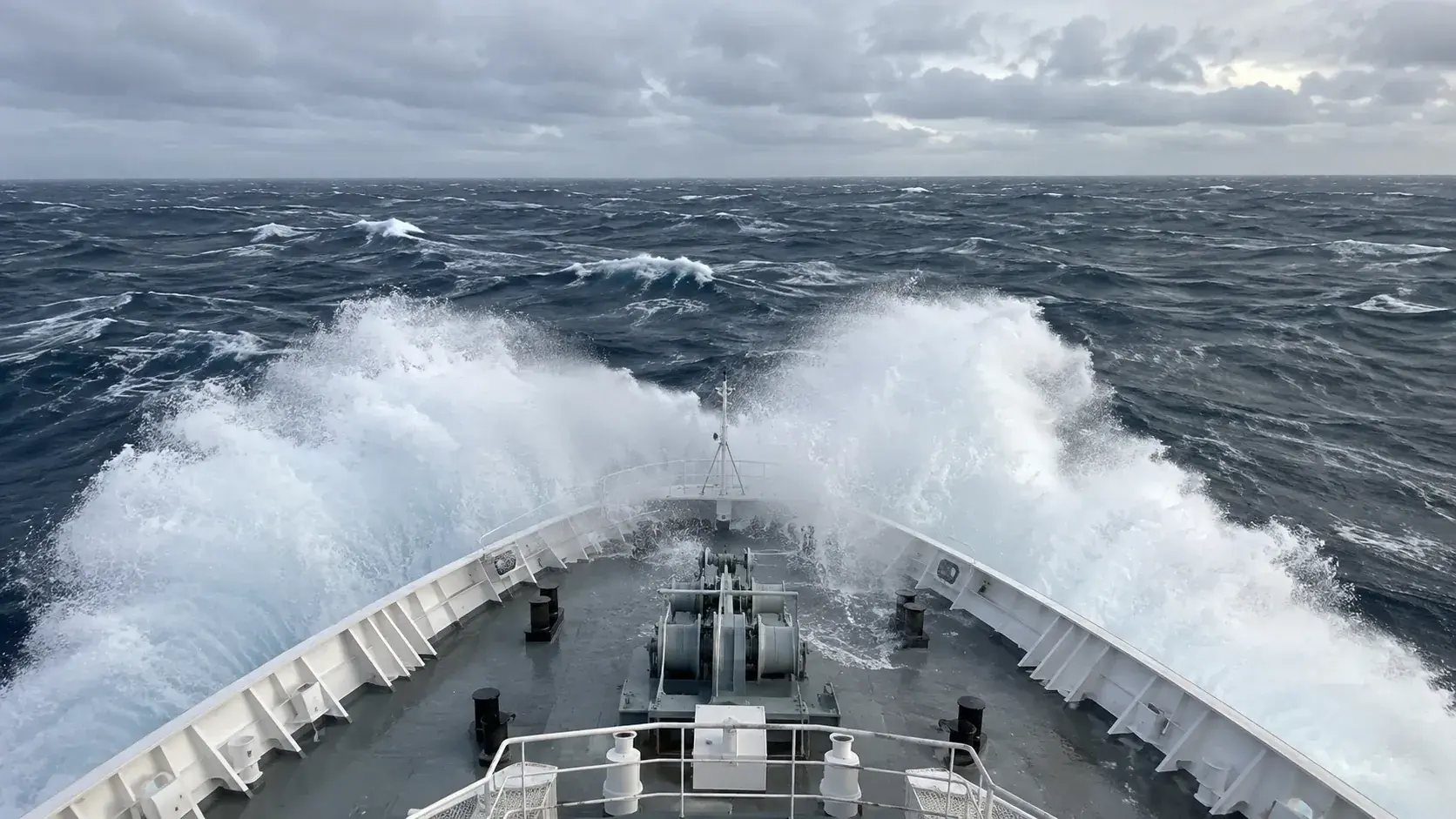
The Drake is a rite of passage that expedition sailors either embrace or endure — there is rarely a middle ground. The Southern Ocean in full expression is genuinely impressive: swells that make the horizon disappear and reappear in long, slow rhythms, and albatrosses threading the wave faces with a casual mastery that makes the whole performance feel personal. The panoramic Explorer Lounge & Bar is the best seat in the house in heavy weather.
The Drake Passage is 800 kilometres of open ocean between the Antarctic Peninsula and Cape Horn. We’re crossing it. This is what the explorers crossed in wooden ships, in both directions, many times, with no forecasting and no engine. Worth knowing. Worth appreciating from a warm room with a drink in hand.
The Drake is behind you, and the Beagle Channel feels like a different planet — mountains plunging straight into the water on both sides, Patagonian lenga beech forest clinging to the slopes, glaciers threading between peaks that Darwin himself sketched from the deck of the HMS Beagle in 1832. The channel is 240 kilometres of sheltered, spectacular sailing between the open ocean and Punta Arenas.
Watch the ridgelines for Andean condors. The Expedition Team runs a final farewell session in the Science Center, and the ship’s crew — who have been quietly excellent for three weeks — say their goodbyes. Tomorrow, Punta Arenas. Tonight, the Beagle Channel at dusk, which is its own kind of reward.
Your Antarctic expedition ends in Punta Arenas, where it began three weeks ago — though you are not the same traveler who boarded the Fram. From here, a flight back to Santiago and then your connections home, carrying what every Antarctic expedition traveler carries: the specific and permanent shift that happens when you’ve been that far south and seen what the planet looks like when humans haven’t gotten to it yet.
HX will coordinate your transfers and flight logistics. If you’re not ready to end the adventure, optional Post-Programs are available in Santiago including a morning wine tour through the Maipo Valley. Safe travels — and welcome to the very small group of people who have been to all three: Antarctica, South Georgia, and the Falklands.

Where you'll stay
Your home on this trip
 HX Expeditions
Ship
MS Fram
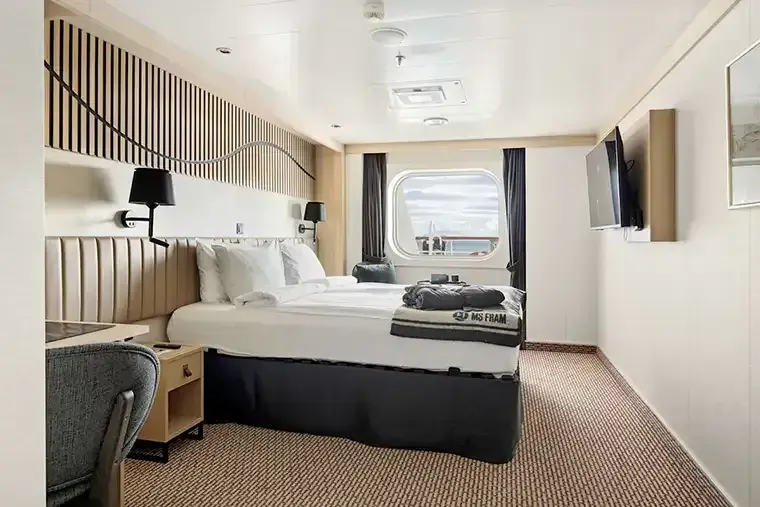
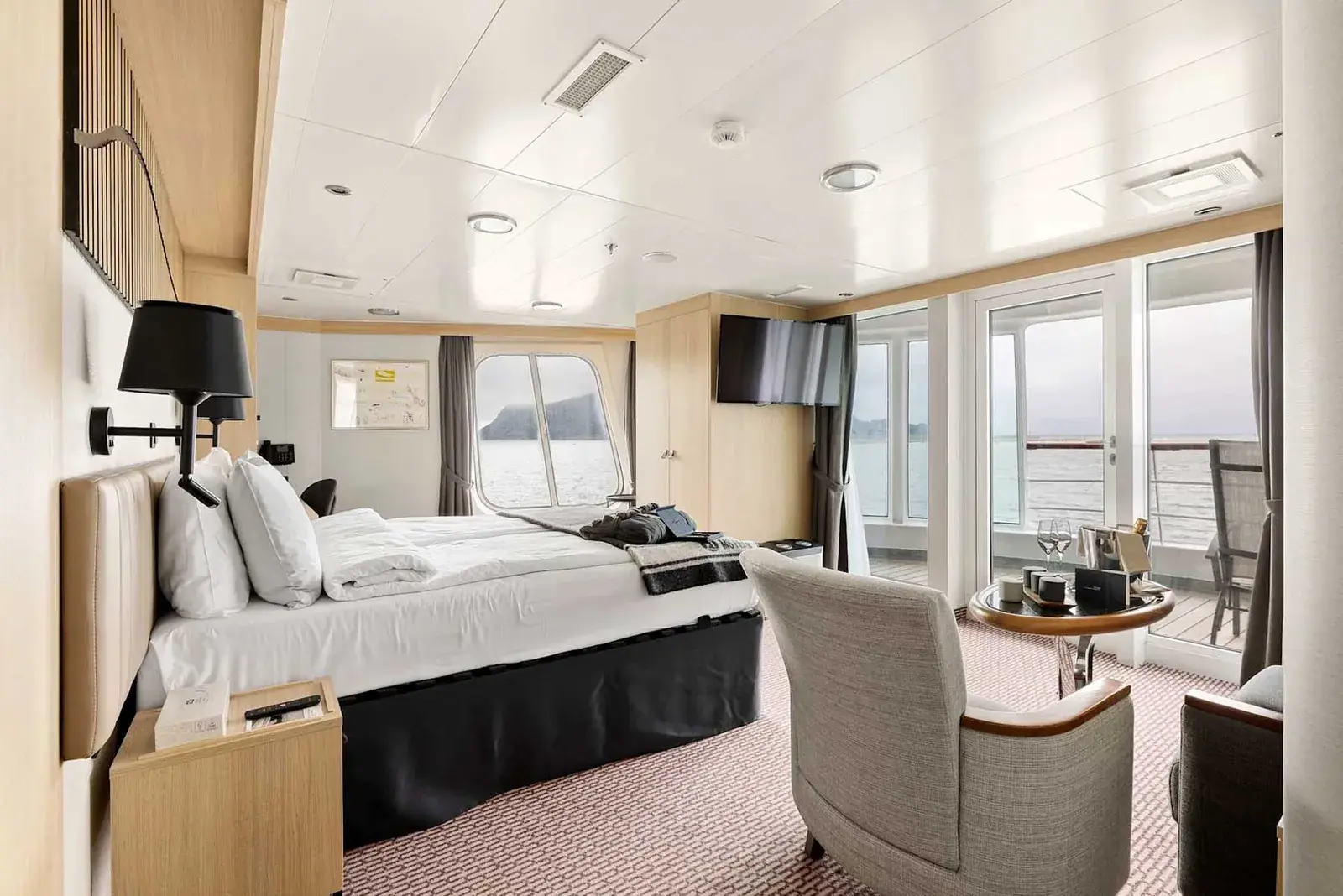
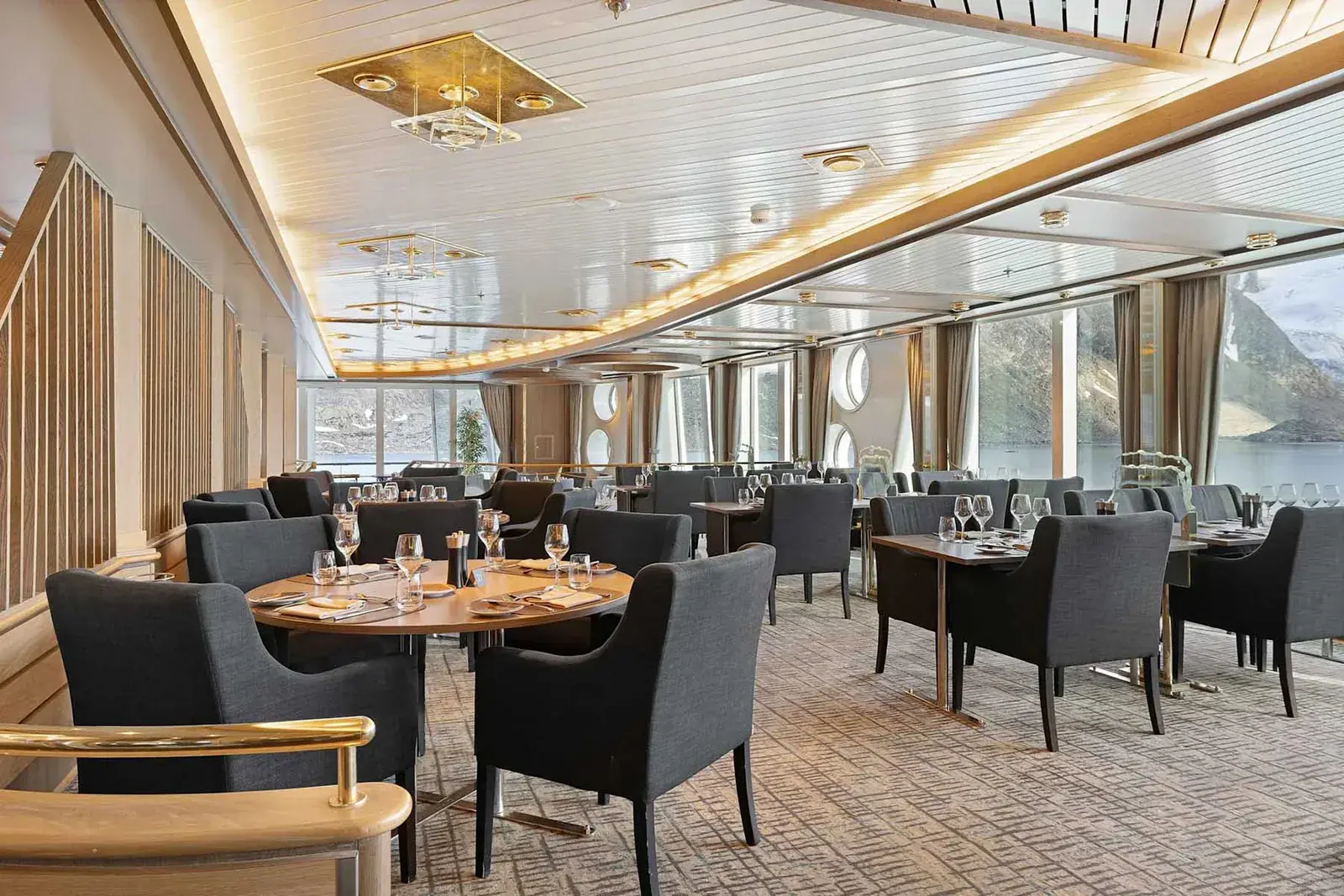
The MS Fram is where HX Expeditions' polar story actually begins—purpose-built in 2007 as the company's first dedicated expedition vessel, and named after the legendary wooden schooner that carried both Fridtjof Nansen and Roald Amundsen on their most famous polar journeys. After a major €7M refurbishment completed in spring 2025, she's running sharper and more comfortably than ever.
DetailsIncluded
- Charter flights (economy) between Santiago de Chile and Punta Arenas (round-trip)
- One hotel night in Santiago de Chile before the expedition, including breakfast
- Transfer from hotel to airport in Santiago on embarkation day
- All meals: daily breakfast, lunch, and dinner throughout the voyage
- All-day coffee, tea, and soft drinks
- House wine, beer, and still/sparkling water at lunch and dinner
- HX wind- and waterproof expedition jacket (yours to keep)
- Full use of ship facilities: sauna, hot tubs, fitness room, Explorer Lounge & Bar, and Science Center
- Complimentary Wi-Fi (note: streaming not supported)
- Professional expedition photos by the onboard photographer
- In-depth lectures and enrichment programming by the Expedition Team
- All Zodiac landings with Expedition Team escort
- Citizen Science program participation
- Port Stanley Gypsy Cove Discovery (included activity)
- South Georgia Passenger Entry Visa — for departures from October 2026 onwards, HX manages and covers the cost
Not included
- International flights to/from Santiago de Chile
- Travel insurance (required — medical screening form mandatory for all guests)
- Additional hotel nights required due to international flight timing
- Luggage handling
- Optional shore excursions with local partners (kayaking, camping, snowshoeing, wildlife safaris, etc.)
- Premium beverages and signature cocktails beyond standard inclusions (non-suite guests)
- South Georgia Passenger Entry Visa — for departures before April 1, 2026, guests must apply and pay independently
- Gratuities
Antarctica Cruise Drop · limited-time deals
One Antarctica sailing is discounted right now
A drop is a short-lived discount on one sailing, released first in our free Antarctica Cruise Drop app. Open one to see the price and request a hold. More about the app below.
Gallery
Ready when you are
Let's price 23-Day In-depth South Georgia, Antarctica & Falklands for you.
Keep reading
From the Savvy Traveler
More like this