


Savvy Traveler · April 2, 2026
Which Antarctica Cruise Brand Is Right for You? The No-Fluff Comparison Guide
Twelve brands. One continent. Zero wrong answers — as long as you pick the right one for you. Here's the most complete Antarctica cruise brand breakdown you'll find outside of an industry conference (and honestly, ours is more fun).
The Paradox of Picking an Antarctica Cruise
Here’s the thing about choosing an Antarctica cruise brand: the decision shouldn’t be complicated, but somehow it is. Every operator claims to be “expedition-focused,” “all-inclusive,” and “best for the serious traveler” — and none of them are lying, exactly. They’re just describing very different products with the same vocabulary. It’s the travel equivalent of every realtor calling their listing “charming” — technically defensible, practically useless when you’re trying to decide.
So let’s cut through the brochure-speak. The twelve brands we work with at ABC Trips cover every meaningful point on the Antarctica cruising spectrum — from no-frills adventure vessels built for maximum landings to full-on floating superyachts with submarines on deck. Each one has a genuine sweet spot, a real personality, and a specific type of traveler they’re quietly designed for. Your job is to figure out which one is you. Our job is to make that easier. As the proverb goes: the right tool makes light work of even the hardest job.
One thing to know upfront before you start comparing prices: IAATO — the International Association of Antarctica Tour Operators — caps shore landings at 100 guests per site at a time. This is a real operational constraint with real consequences. Ships carrying 300+ guests are rotating groups ashore in shifts, which means less spontaneous access, more waiting, and less time with the wildlife. Smaller ships with fewer than 200 guests in Antarctica simply have a structural advantage when it comes to the quality of the experience ashore. File that away before you get too attached to a sticker price.
The Comparison Table
Here’s how the twelve brands stack up on the metrics that actually matter for Antarctica. “From” prices are per person, double occupancy, for a standard Antarctica itinerary — not cherrypicked promotional rates. Use them directionally, not as gospel.
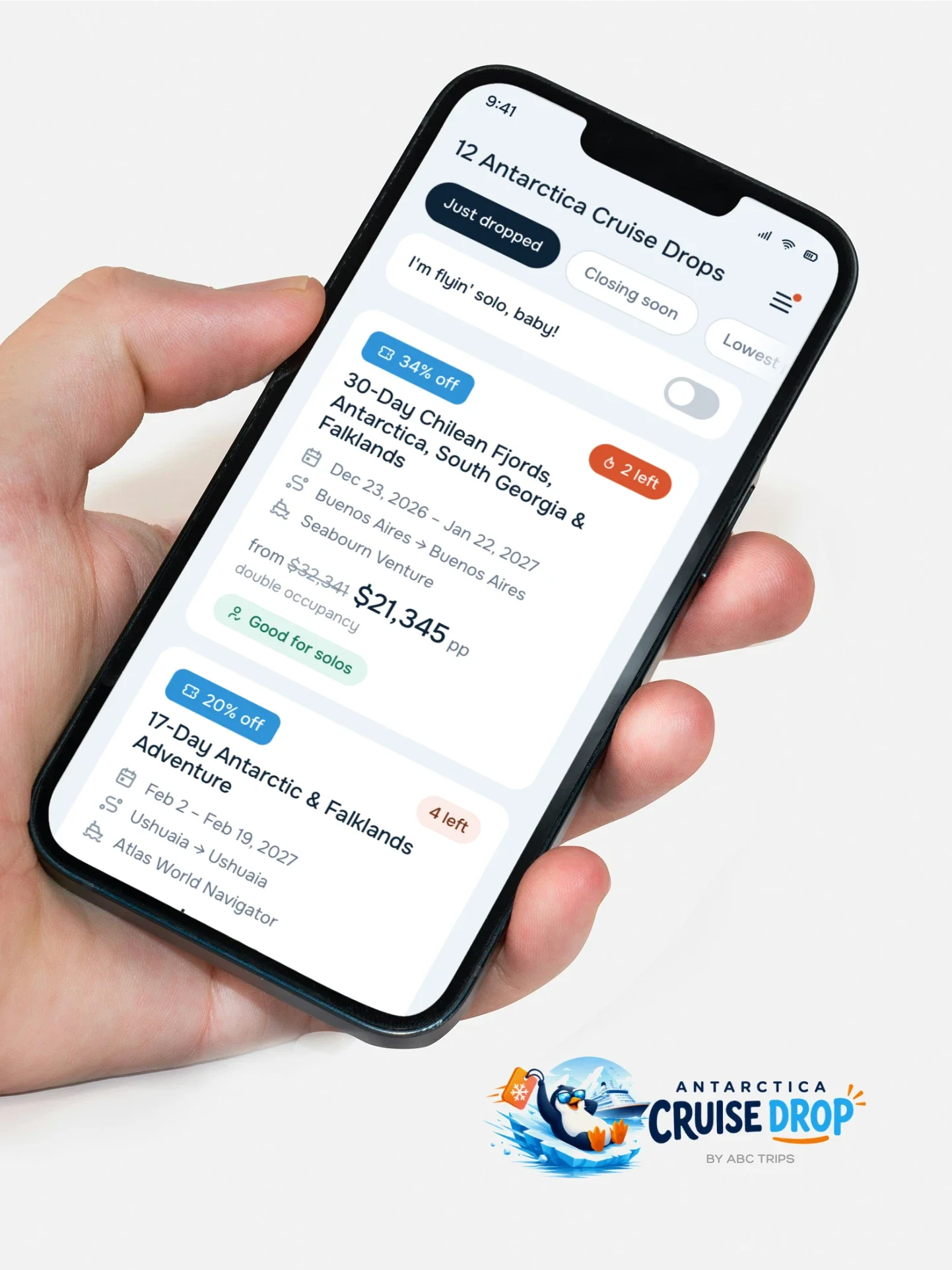
Even better! Try our new, interactive comparison tool to filter the top Antarctica ships across a dozen operators. Open the comparison tool →
| Brand | Key Ship(s) | Max Guests | Luxury Tier | All-Incl | From (pp) | Best For |
|---|---|---|---|---|---|---|
| Seabourn ⭐ | Venture / Pursuit | 264 | ★★★★★ | check_circle Fully | ~$9,000 | Our luxury pick |
| HX Expeditions ⭐ | Nansen / Amundsen / Fram | 530* | ★★★ | check_circle_unread Mostly | ~$7,000 | Our overall pick |
| Atlas | World Navigator / Traveller / Voyager | 198 | ★★★ | check_circle Fully | ~$8,000 | Expedition quality, great value |
| Scenic | Eclipse I / Eclipse II | 200 | ★★★★★ | check_circle Fully | ~$18,000 | The all-out splurge (helis + sub) |
| Swan Hellenic | SH Diana / SH Minerva / SH Vega | 192 | ★★★ | check_circle_unread Mostly | ~$10,000 | Culture-curious, boutique luxury |
| Silversea | Silver Endeavour | 200 | ★★★★★ | check_circle Fully | ~$15,000 | Pinnacle of expedition luxury |
| Aurora | Greg Mortimer / Sylvia Earle | 132 | ★★★ | check_circle_unread Mostly | ~$7,000 | Adventure-first, no-fluff explorers |
| Nat Geo Lindblad | Endurance / Resolution / Explorer | 148 | ★★★ | check_circle_unread Mostly | ~$8,000 | Education-obsessed + families |
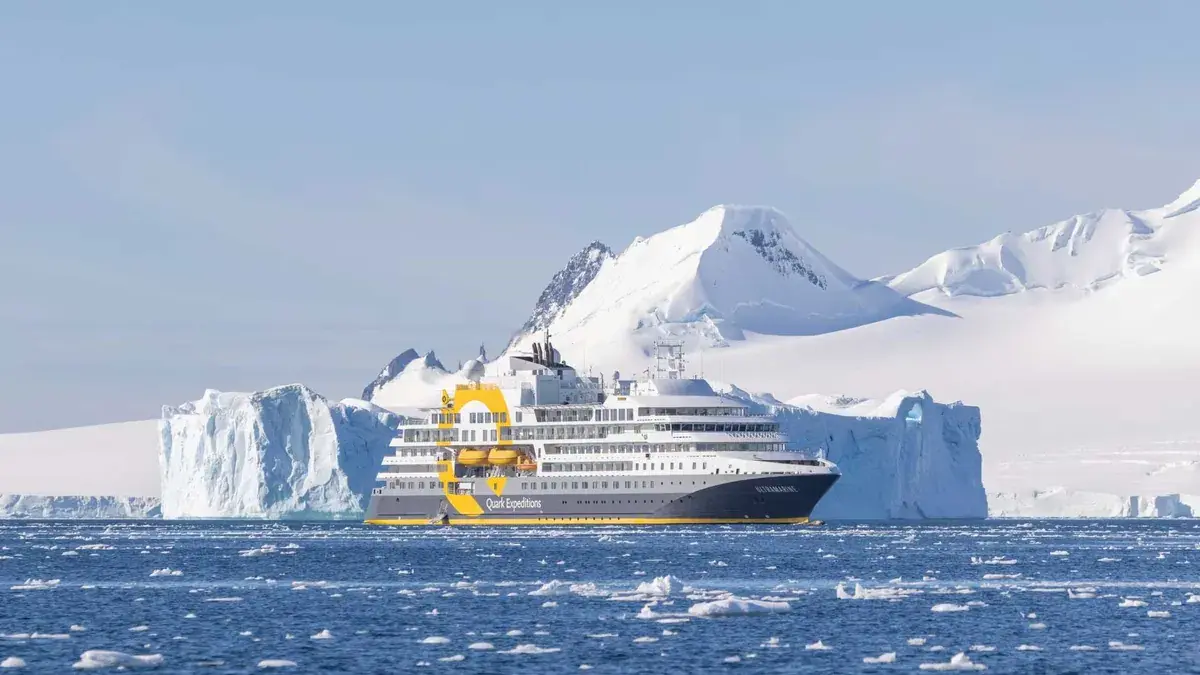
| Quark | Ultramarine | 199 | ★★★ | check_circle_unread Mostly | ~$8,500 | Adventure + helicopter access |
| Ponant | Charcot + Explorer Class† | 92–270 | ★★★★ | check_circle Fully | ~$10,000 | French flair + serious polar access |
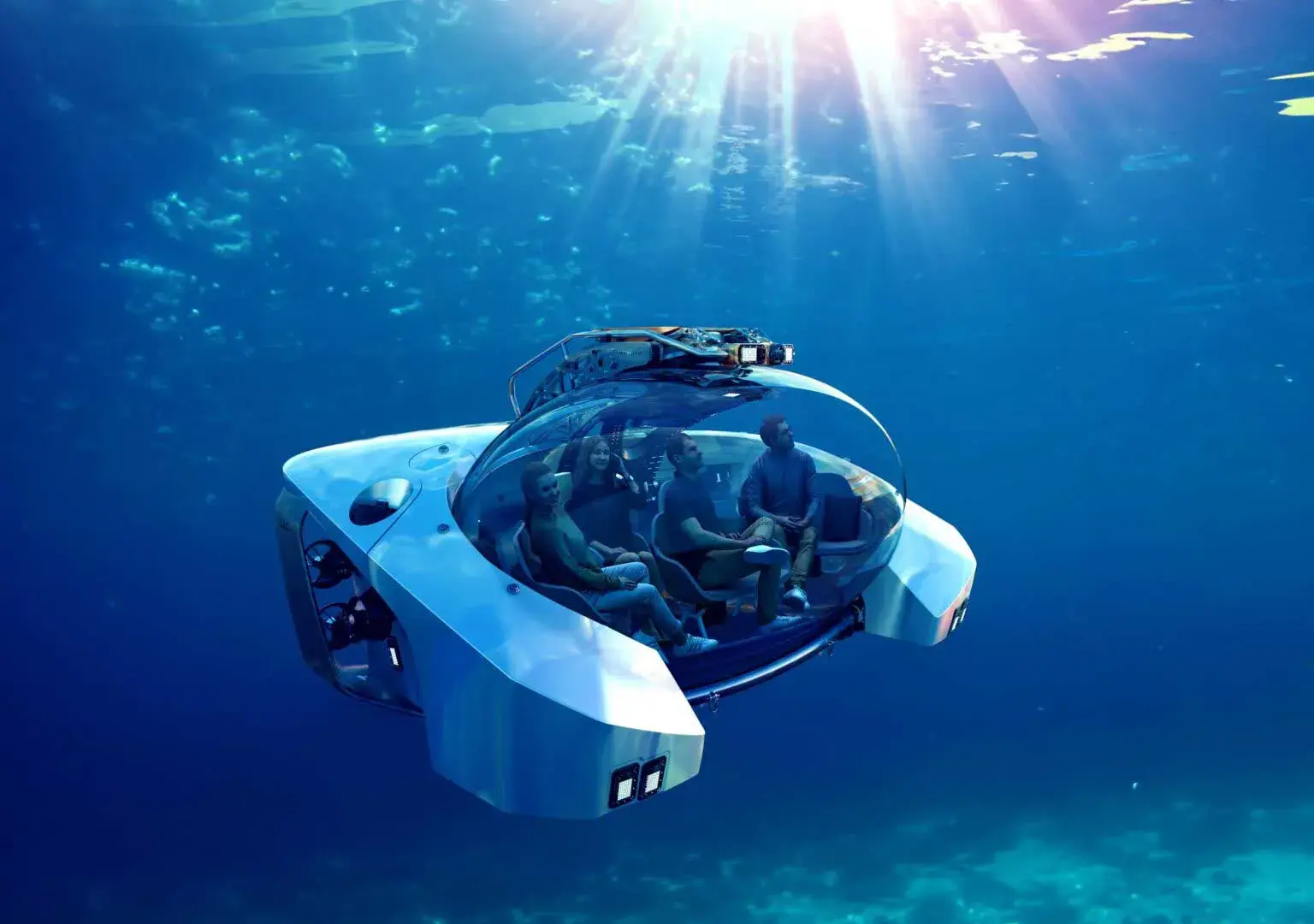
| Viking | Viking Octantis / Viking Polaris | 378 | ★★★★ | check_circle Fully | ~$10,000 | All-inclusive, 2 submarines, no formality |
| Oceania | Marina / Insignia | 670–1,250 | ★★★★ | check_circle_unread Mostly | ~$7,500 | Scenic cruising, Oceania loyalists |
⭐ ABC Trips Pick · * HX carries up to 530 guests onboard but IAATO landing restrictions apply regardless of ship capacity. † Ponant’s Explorer Class includes Le Laperouse, Le Champlain, Le Bougainville, Le Dumont-d’Urville, and Le Bellot (92 guests each); Le Commandant Charcot starts from ~$27,000. (★★★★★ Ultra-Luxury) · (★★★★ Premium-Luxury) · (★★★ Expedition-Premium). All-Inclusive: Fully = everything including excursions; Mostly = dining, drinks and gratuities included, excursions typically separate. Oceania = scenic Antarctic cruising only (no Zodiac landings).
The Brands, One by One
⭐ ABC Trips Luxury Pick
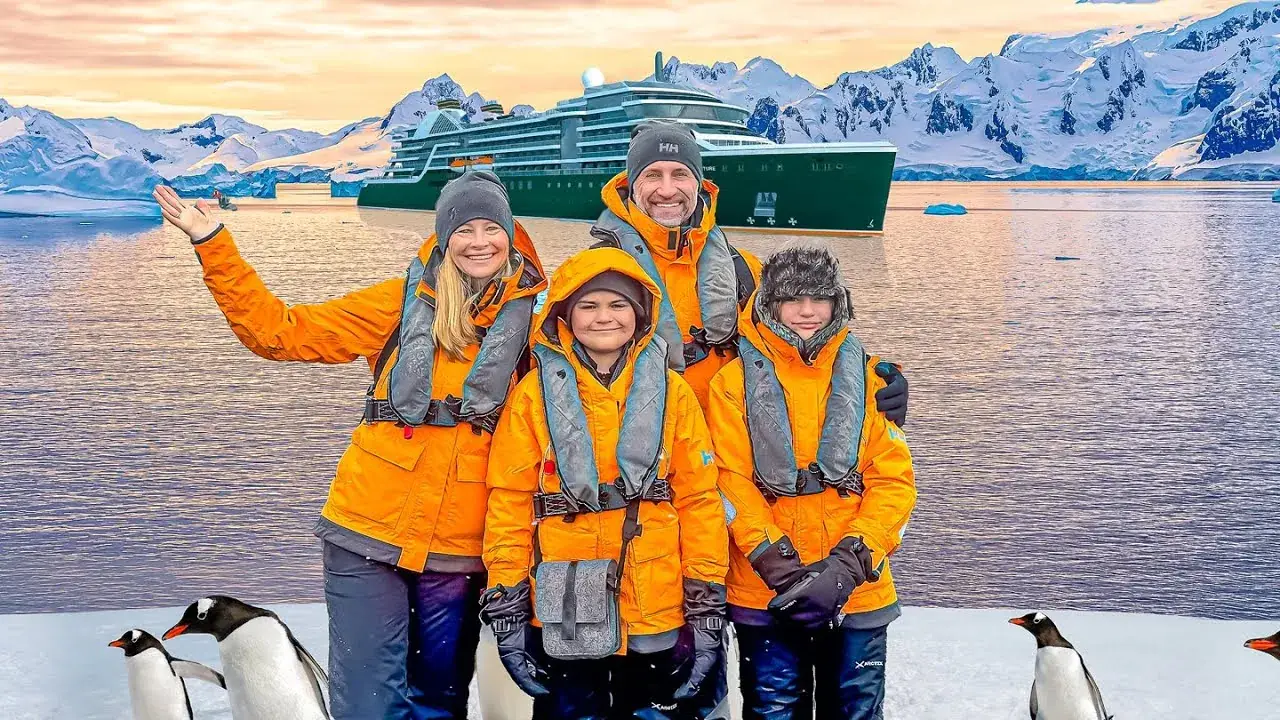
We sailed Seabourn as a family and it’s our first call when someone wants zero compromise. Here’s why.
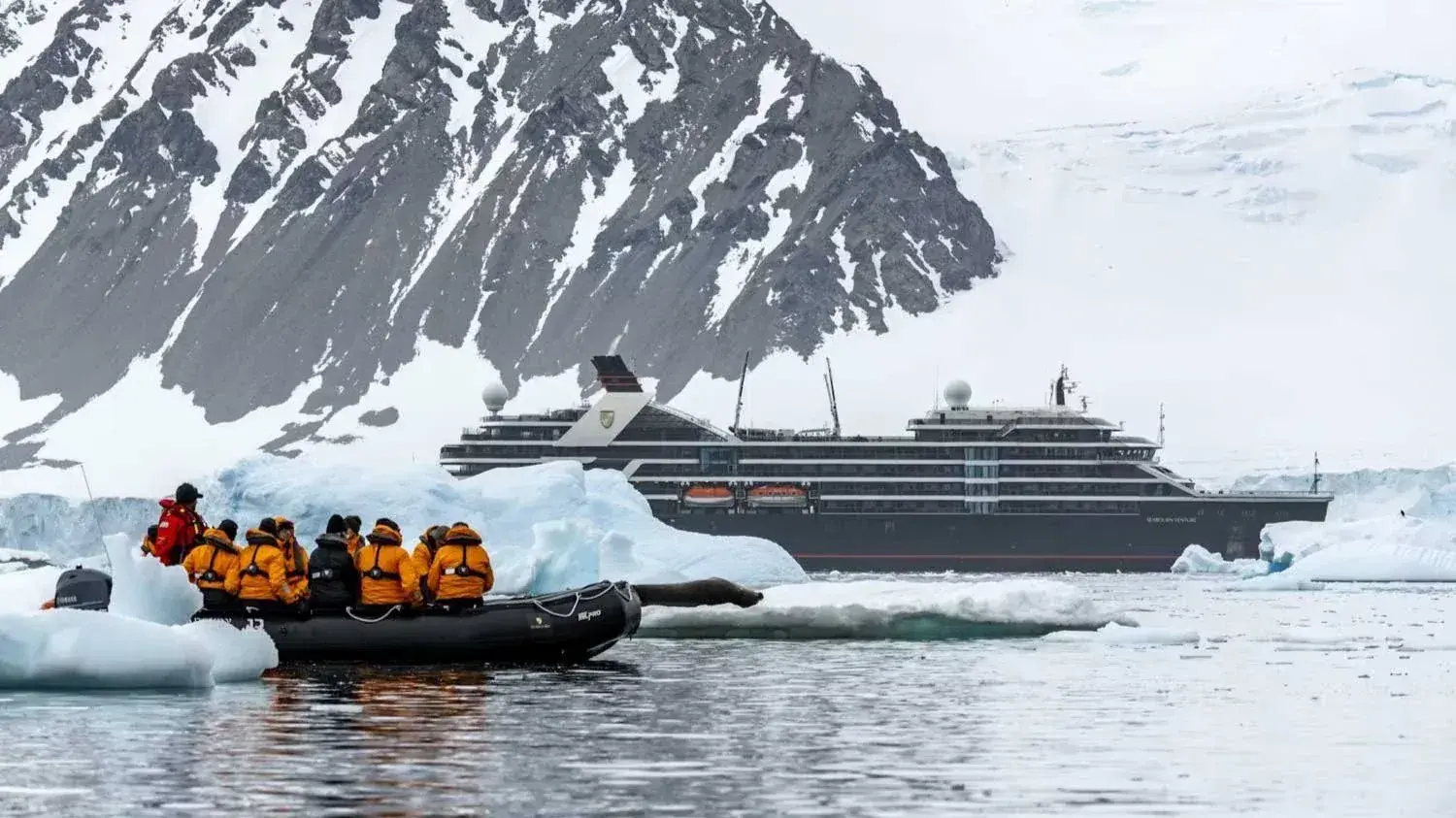
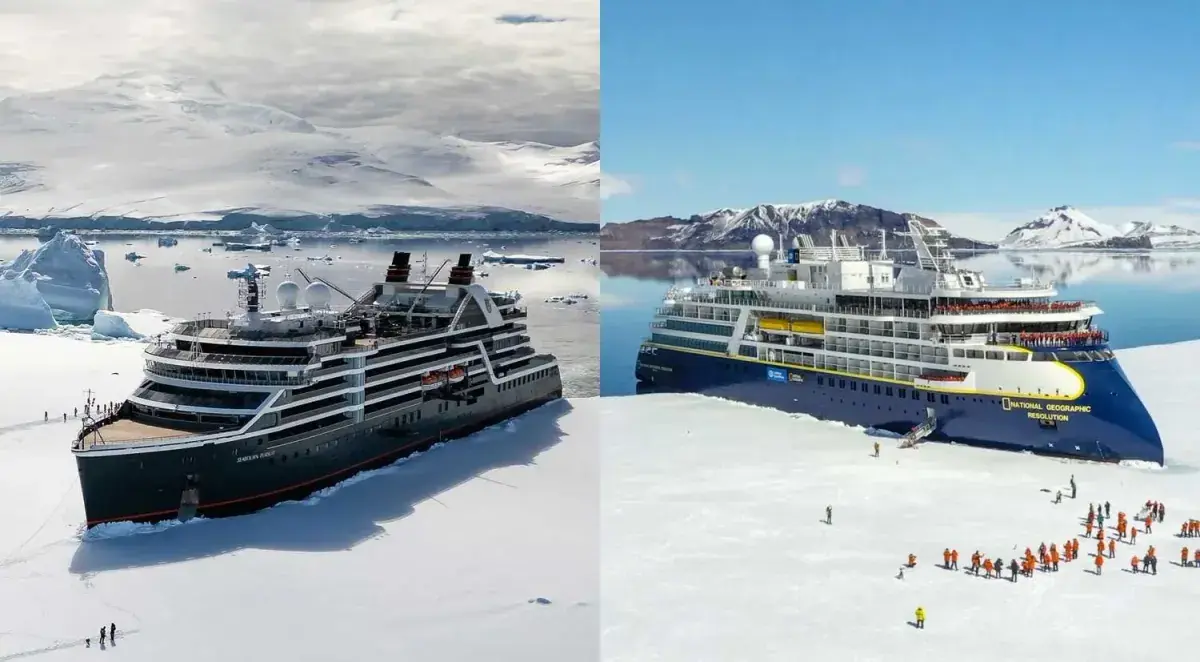
Seabourn is where most luxury travelers who’ve done their homework end up landing — and it’s where we landed too. The Venture and Pursuit were purpose-built for expedition: PC6 polar class (meaning certified for year-round operation in medium first-year ice — the gold standard for serious Antarctica work), dual submarines, 24 Zodiacs, and a 24-member expedition team, all wrapped in Seabourn’s signature all-suite, ultra-all-inclusive product. Caviar on demand after a Zodiac landing through brash ice is a legitimate Tuesday. There’s no choosing sides between luxury and expedition here — Seabourn figured out how to do both without apologizing for either.
⭐ ABC Trips Overall Pick
Our favorite Antarctica brand across the board — and our top call for solo travelers specifically.
HX Expeditions is our overall pick for Antarctica, and it comes down to culture as much as hardware. Where a lot of expedition brands have quietly adopted a “no by default” posture — rigid policies, inflexible rooming, extra charges that appear out of nowhere — HX operates with a “yes by default” philosophy that you feel from the first inquiry. They go out of their way to anticipate passenger needs rather than manage them. Solo travelers in particular: HX is one of the very few brands that treats you like a full guest rather than a single supplement problem. Their hybrid-electric flagships — the MS Fridtjof Nansen and MS Roald Amundsen — have onboard Science Centers and Citizen Science programs, with expedition teams that include legitimate researchers actively collecting data. The MS Fram rounds out the fleet as a smaller, purpose-built polar specialist with deeper ice access and a more intimate atmosphere. Guests aren’t just observing Antarctica — they’re part of the work. We also use HX for some of our favorite Greenland expeditions, which tells you something about the brand’s operational range. Starting prices are among the most competitive on this list.
Atlas Ocean Voyages has figured out something the rest of the industry quietly envies: how to deliver a fully all-inclusive expedition experience — including excursions — at a price point that doesn’t require an asterisk. All three ships — the World Navigator, World Traveller, and World Voyager — are purpose-built sister vessels, each carrying under 200 guests, with the same expedition-quality hardware and unfussy contemporary atmosphere across the fleet. For travelers who want genuine expedition quality without ultra-luxury prices, Atlas is often the surprise favorite in this conversation. As the saying goes: you don’t have to spend the most to get the most.
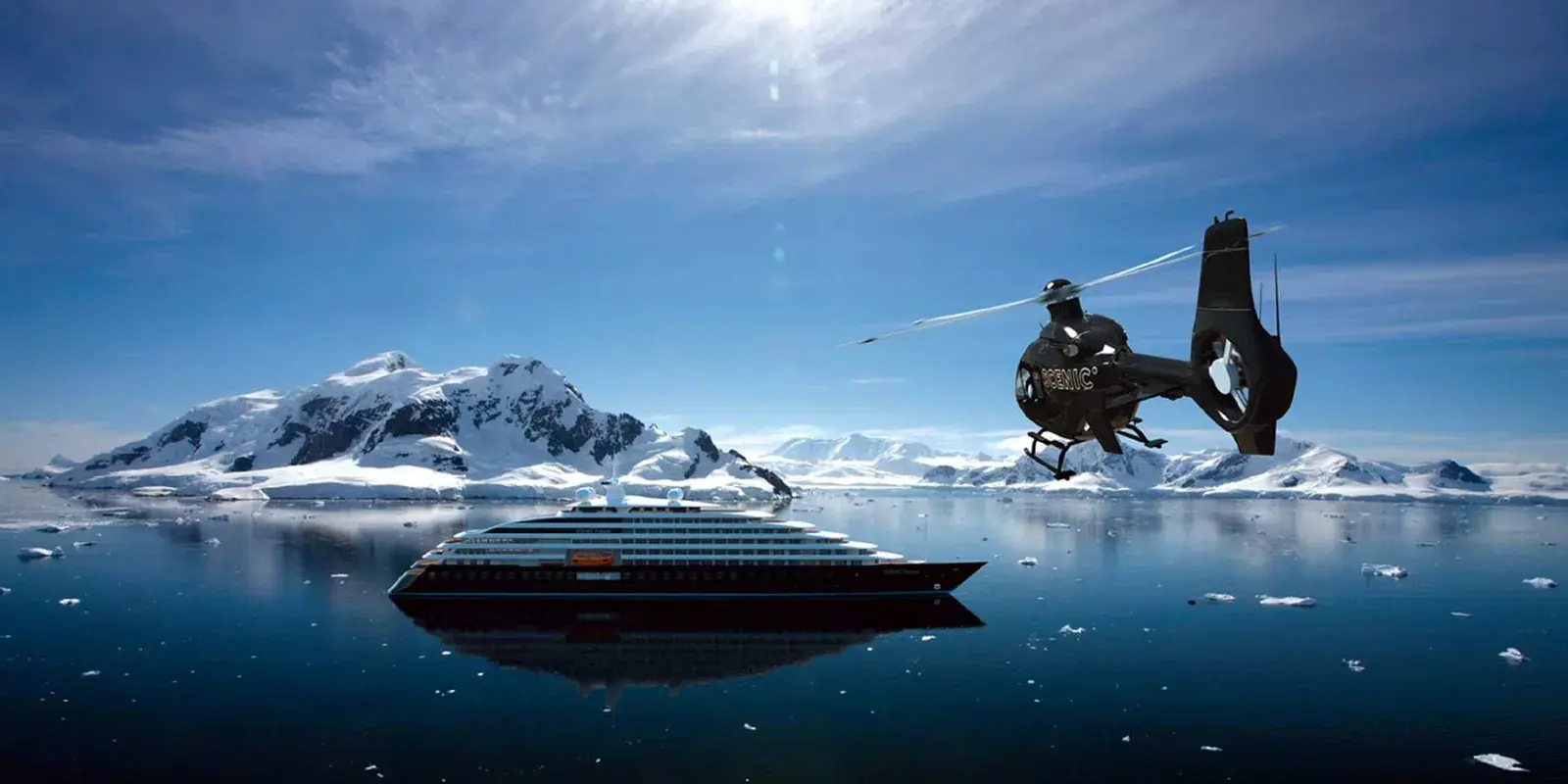
Scenic is in its own category and comfortable there. The Eclipse I and Eclipse II carry just 200 guests, offer a near 1:1 staff-to-guest ratio, and come equipped with two onboard helicopters and a personal submarine. Nine dining venues. Butler service in every suite. If your response to “helicopter flightseeing over Antarctica” is involuntary excitement — not considered interest, actual involuntary excitement — Scenic is your brand. Read our full Scenic Eclipse Antarctica review for the unfiltered take.
Swan Hellenic leads with culture and human narrative in a way that no other brand on this list really tries to match. Every voyage is built around scholars, historians, and cultural specialists who give context to the places visited — in Antarctica, that means the Heroic Age of exploration, the legacy of Shackleton and Amundsen, and the current science at active research stations. It’s less “point the camera at the penguins” and more “understand why you’re standing where you’re standing.” The fleet runs three ships: the SH Diana (192 guests, PC6), the SH Minerva (152 guests, PC5), and the SH Vega (152 guests, PC6). Pricing is competitive, and for travelers who find the cultural layer as compelling as the wildlife layer, Swan Hellenic is genuinely underrated — the quiet overachiever on this list.
Silversea brings the definitive statement in expedition luxury aboard the Silver Endeavour — 100 all-butler suites, a near 1:1 crew-to-guest ratio, and a product most industry insiders consider the outright ceiling of what the expedition segment currently offers. Silversea’s S.A.L.T. culinary program (Sea and Land Taste) adapts menus to the destination in ways that, in our view, nothing else at sea comes close to matching — and the expedition programming is serious: PC6 polar class, a genuine science team, and an onboard atmosphere that manages to be both rarefied and purposeful. If you love dressing for dinner and want to do it in Antarctica, this is your ship.
Aurora Expeditions was founded by Greg Mortimer, a mountaineer among the first to summit Everest via the Northeast Ridge without supplemental oxygen. That origin story tells you everything: Aurora was built by people who wanted to go further, land more, and put you in the environment rather than adjacent to it. Both the Greg Mortimer and Sylvia Earle feature the Ulstein X-BOW® hull design — an inverted bow that cuts through swells rather than slamming into them, which matters considerably on Drake Passage days. Each carries 132 guests and both prioritize landing access above everything else. Adventure-first, comfort-included, no pretense.
National Geographic-Lindblad Expeditions occupies a lane no other brand can quite replicate. The NatGeo partnership brings photographers, scientists, and storytellers who turn every voyage into something closer to an immersive documentary than a cruise — think field journals and underwater ROV deployments, not cocktail hours. Three ships — National Geographic Endurance, National Geographic Resolution, and National Geographic Explorer — give the fleet real flexibility across itinerary types, from the Peninsula to South Georgia. At 126–148 guests, they’re squarely inside IAATO’s sweet spot for landing flexibility. Genuinely multigenerational — for travelers bringing older kids or teens who learn better through experience than a classroom, Nat Geo Lindblad is one of the most powerful options on this list.
Quark Expeditions was doing polar travel before most brands on this list existed — founded in 1991, originally chartering Soviet nuclear icebreakers when Antarctic expedition tourism was still a niche curiosity. Their current flagship, the Ultramarine, is purpose-built with twin helicopters and a serious Zodiac fleet. For travelers who want helicopter access as a centrepiece rather than a pricey add-on, Ultramarine is one of very few ships that delivers it properly — built into the itinerary, not bolted on. Expedition-focused rather than luxury-forward, and entirely unashamed of it.
Ponant brings a distinctly French sensibility to Antarctic exploration — precise service, serious gastronomy, and a design sensibility that makes most expedition ships look like they dressed in the dark. The Explorer-class vessels — Le Laperouse, Le Champlain, Le Bougainville, Le Dumont-d’Urville, and Le Bellot — each carry just 92 guests in all-suite comfort, with a culinary program rooted in French gastronomy. Then there’s Le Commandant Charcot — the world’s only luxury nuclear-assisted icebreaker, capable of reaching the geographic North Pole and polar regions no other luxury vessel can touch. A brand with serious range on both ends of the spectrum.
Viking Expeditions has made a strong case for itself quickly. The Viking Octantis and Viking Polaris carry 378 guests — large by expedition standards, but still within IAATO operational parameters — and each ship comes equipped with two custom-built submarines. The all-inclusive model is genuinely comprehensive: shore excursions, beverages, gratuities, all folded in. Viking’s vibe is deliberately unfussy — no formal nights, no dress code, no casino. That resonates strongly with North American travelers who want the full polar experience without the ceremony. The onboard science lab and university partnerships add real depth to the expedition programming.
Oceania Cruises is a different kind of Antarctica entirely — and that distinction matters. Neither the Marina (1,250 guests) nor the Insignia (670 guests) is an expedition ship. There are no Zodiac landings, no mudroom, no expedition team. What Oceania offers instead is scenic cruising through Antarctic waters as part of extended South American grand voyages — the Peninsula as a dramatic chapter in a longer story that also includes the Chilean Fjords, Ushuaia, the Falkland Islands, and Patagonia. The tradeoff is entirely in Oceania’s favor on the ship side: exceptional dining across multiple open-seating restaurants all included in the fare, a refined onboard atmosphere, and a level of culinary polish that no dedicated expedition brand has matched. If you’re an Oceania loyalist and Antarctica is on your bucket list, this is your honest path to it. If Zodiac landings and wildlife encounters on the ice are your primary goal, one of the purpose-built expedition brands above is the right call.
The Quick-Pick Decision Framework
Your priority is high-end luxury, full stop: You’ve earned this. You’re not doing spreadsheets, you’re not comparison-shopping, and “butler service between Zodiac landings” sounds less like a perk and more like a baseline expectation. That’s Seabourn Venture or Pursuit. It’s the brand we sailed as a family and the one we recommend first when someone wants zero compromise. Caviar on demand after a landing through brash ice is, as we like to say, a legitimate Tuesday.
You want the best overall Antarctica experience: HX Expeditions. Three ships, hybrid-electric engines, citizen science programs, and an onboard culture that genuinely seems to enjoy saying yes. When other brands say no — on rooming, on solo supplements, on passenger requests that fall outside the standard playbook — HX finds a way. Our overall pick, and our top call specifically for solo travelers who are tired of being treated like an afterthought.
All-inclusive expedition without the ultra-luxury price tag: Atlas Ocean Voyages. Three near-identical purpose-built sister ships, all fully inclusive down to the excursions. The best-kept open secret in this conversation — travelers who book Atlas once tend to tell their friends immediately.
Budget is secondary, experience is everything: Scenic Eclipse. You’ve made your money, you’re not comparison-shopping, and the phrase “helicopter flightseeing over Antarctica” just produced an involuntary reaction you’d describe as excitement rather than concern. That’s Scenic. Full stop.
Culture, history, the human story of exploration — that’s your whole thing: Swan Hellenic. Historians, scholars, the legacy of Shackleton. Three boutique ships, all PC5 or PC6, all genuinely exceptional. The quiet overachiever on this list — and one of the most underrated in the whole expedition segment.
The absolute ceiling of expedition luxury: Silversea Silver Endeavour. 100 butler suites, near 1:1 crew ratio, the S.A.L.T. culinary program, and an onboard atmosphere that somehow feels both rarefied and purposeful. If you want to dress for dinner and do it in Antarctica, this is your ship.
Maximum adventure, minimum compromise on comfort: Aurora Expeditions. Built by a mountaineer who summited Everest. The DNA shows — these ships land more, go further, and put you in the environment rather than near it. The X-BOW hull helps with the Drake too, which your stomach will appreciate.
Bringing kids or teens, and education is literally the point: National Geographic-Lindblad Expeditions. NatGeo photographers, field scientists, certified educators on every sailing. This is what they were built for, and it shows in every detail. The kids who do this trip don’t forget it.
Helicopter access is non-negotiable: Quark Ultramarine. Twin helicopters built into the itinerary, not bolted on as an add-on. For travelers who want aerial access to the ice as a core part of the experience, not a line item on a shore excursion menu.
French design, European elegance, and you want to go somewhere no other luxury ship can reach: Ponant Explorer class. Ninety-two guests per ship, all-suite, PC6 polar class, and a culinary program rooted in French gastronomy. And if you want the geographic North Pole or Antarctica’s remote Ross Sea? That’s Le Commandant Charcot — the only luxury nuclear icebreaker on earth.
All-inclusive, submarines, zero formality: Viking Expeditions. Two custom subs per ship, everything folded in, no dress code, no casino. Bigger ships (378 guests) but fully inclusive and genuinely expedition-credible for travelers who’d rather skip the ceremony entirely.
You’re an Oceania loyalist and Antarctica is on your bucket list: Oceania Cruises. Exceptional dining, polished service, and the seventh continent as a scenic centerpiece. No Zodiac landings — this is scenic cruising, not expedition. But if the Oceania product is what you love, this is your honest path to Antarctica.
One More Thing Before You Start Comparing Prices
Here’s a mistake we see constantly: travelers start comparison-shopping Antarctica cruises by sticker price, then discover that one brand charges separately for excursions ($300–600 per landing in some cases), another doesn’t include beverages, and a third adds a fuel surcharge that doesn’t appear until checkout. The “cheaper” brand can end up costing more once you’ve ticked all the boxes. As the old proverb goes: the devil is in the details — and in Antarctica, so is the best wildlife.
Before you commit to anything, our Antarctica destination page covers every operator we work with, current availability, and itinerary options across the Peninsula, South Georgia, and the Falklands. And if you’d rather talk it through with someone who’s actually been there — the penguins, the Drake, the whole sitch — that’s exactly what we’re here for. There’s no pressure, no upsell, and genuinely no bad choice once you’ve matched the right brand to the right traveler.
Explore Antarctica cruise options →
Get a personalized Antarctica cruise recommendation →
Want to run all twelve brands side by side with every ship we book? Our interactive Antarctica ship comparison tool covers all 28+ ships across 12 operators — filter by budget, ship size, and expedition style in one place.
Watch
Episodes on this


Keep reading