
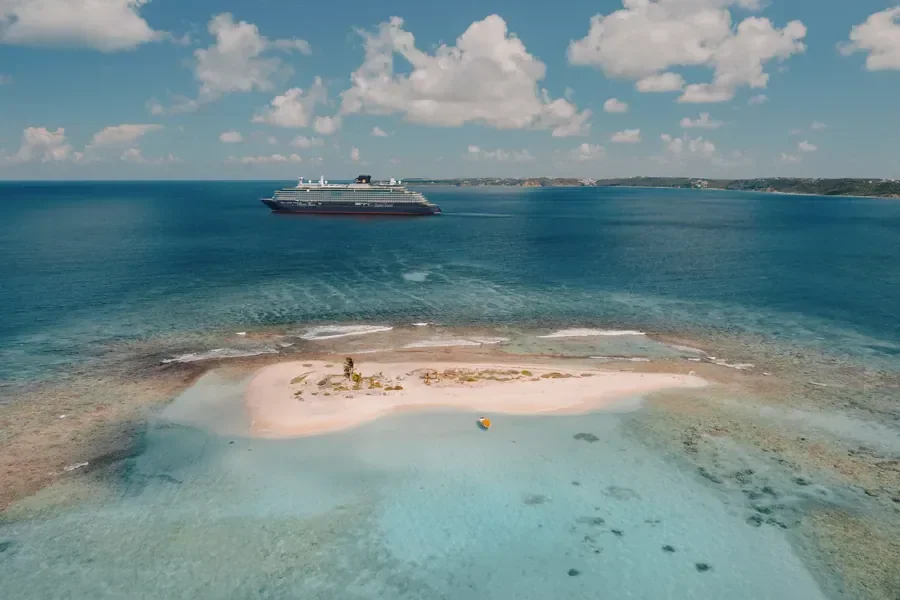

Lindblad’s classic expedition ship — 148 guests, ice-strengthened hull, and the full National Geographic naturalist program. The most character-driven and accessible ship in the Lindblad fleet.
- Guests
- 148
- Max capacity
- Cabins
- 81
- Multiple categories
- Built
- 1982
- Continuously refurbished
- Hull
- Ice-strengthened
- Ice-strengthened
- Ice class
- 1A
- Starting price
- $10,000
- per person
Style Pure expedition · Modern boutique
- Wildlife Encounters
- Experiential Learning Adventure
- Family-Friendly
National Geographic Explorer has the longest history of any ship in the Lindblad fleet, originally launched in 1982 and continuously refurbished to maintain operational currency. She carries 148 guests in 81 cabins across multiple categories and delivers the full Lindblad expedition program — the same team of naturalists, marine biologists, and National Geographic specialists found on the brand’s newer flagships, with a style that leans older and more character-driven than the purpose-built modern vessels.
Explorer’s ice-strengthened hull makes her suitable for Antarctic Peninsula itineraries and Arctic routing, though she does not carry helicopters and operates with a somewhat more conventional Zodiac-based expedition model compared to Endurance and Resolution. What she offers that the newer ships can’t quite replicate is a sense of expedition tradition — a ship that has genuinely been to these places for decades and carries that history in her DNA.
For travelers who find the newer ships feel too new or who want the most accessible price point in the Lindblad fleet without giving up the naturalist program and NatGeo partnership, Explorer delivers the core of the experience. She also sails a broader geographic portfolio than the polar flagships, including Alaska, Costa Rica, Baja, and other non-polar routes, making her the workhorse of the Lindblad fleet.
On board + on site
What makes National Geographic Explorer the ship
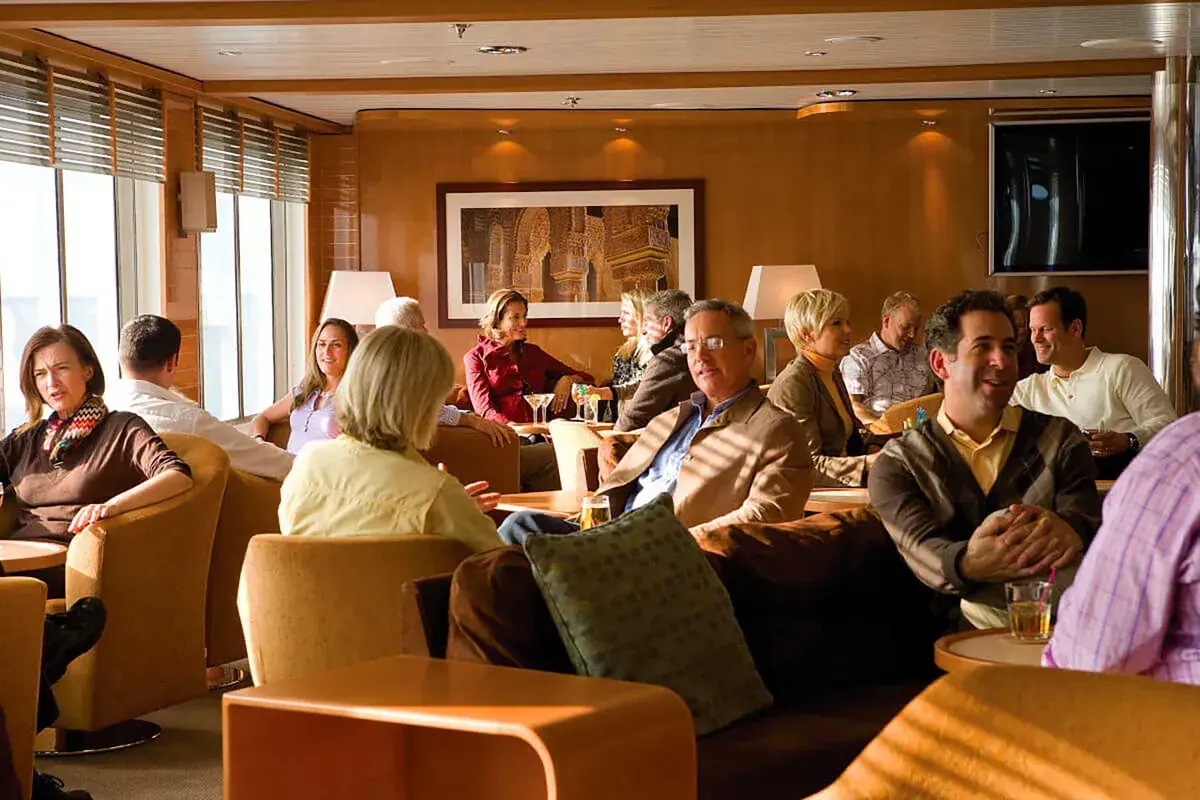
Main Lounge
Expedition briefings, naturalist lectures, and social space
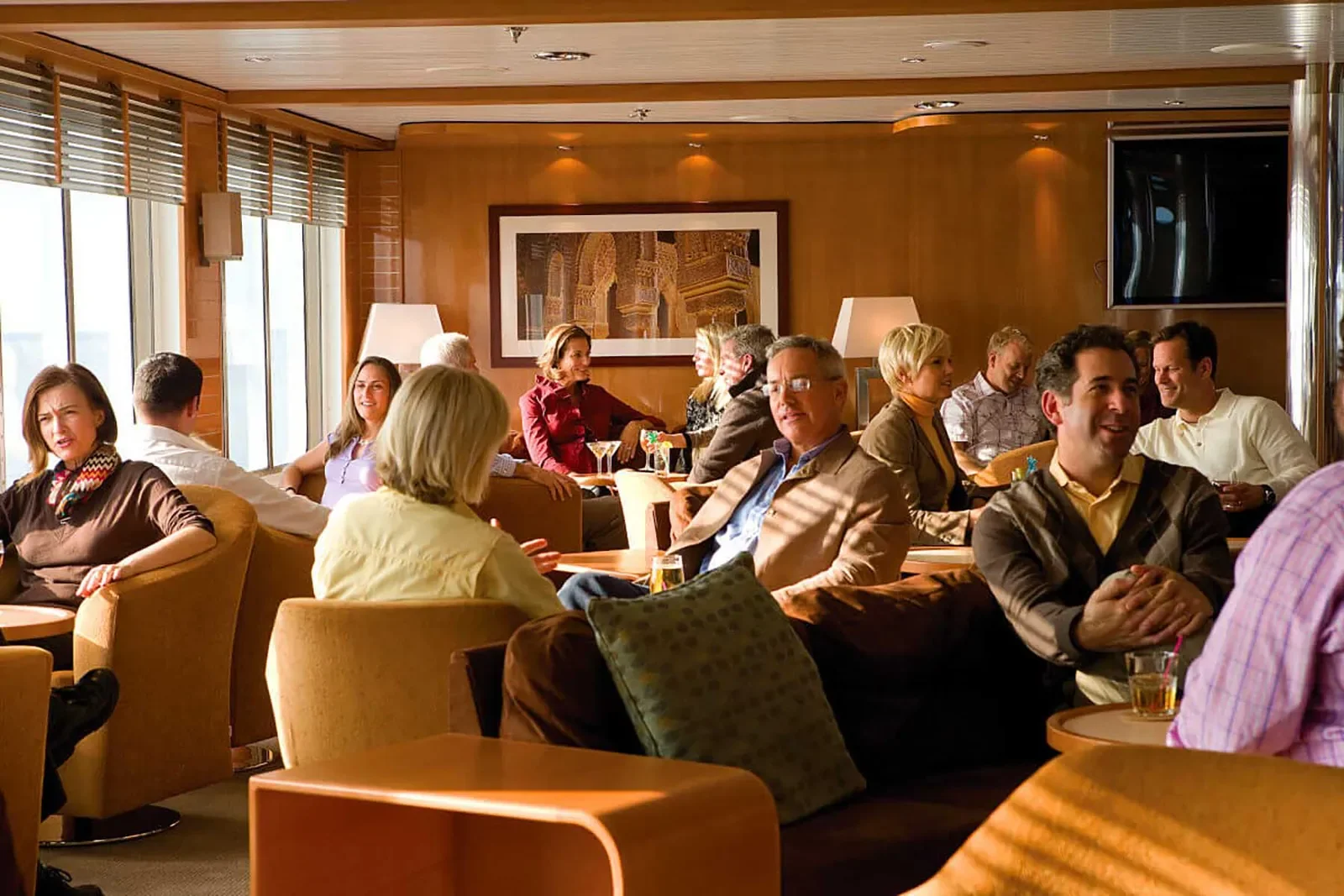
Explorer’s main lounge is the daily gathering point for expedition briefings, naturalist lectures, and the informal conversations between landings that are half the point of a Lindblad voyage. The kind of room where genuinely credentialed experts share what they know — and guests leave knowing considerably more than they expected to.
NatGeo Photography Program
On-board National Geographic photography instruction
Every Lindblad-NatGeo voyage includes a certified photo instructor and access to National Geographic’s photography resources. From basic composition to polar wildlife technique, the program gives guests practical tools to document their Antarctic experience the way NatGeo would — a meaningful upgrade over an untrained eye and a phone camera pointed at a penguin.
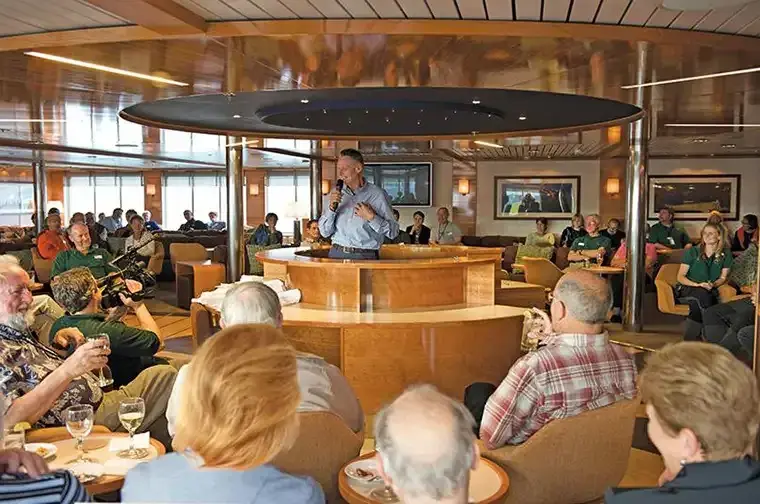
Naturalist & NatGeo Photo Program
Daily expert lectures, NatGeo photographer program
National Geographic Explorer’s naturalist and enrichment program is the foundation of the Lindblad expedition experience — a team of naturalists, ornithologists, marine biologists, historians, and National Geographic photographers who lead every shore excursion, deliver nightly recap and briefing sessions, and engage guests individually throughout the voyage. Evening presentations are a daily fixture: an hour or more of expert-led content on the day’s wildlife, geology, history, or conservation context that consistently rates among the top experiences of a Lindblad voyage. The NatGeo photographers specifically offer one-on-one portfolio review and photography guidance for guests who want it.
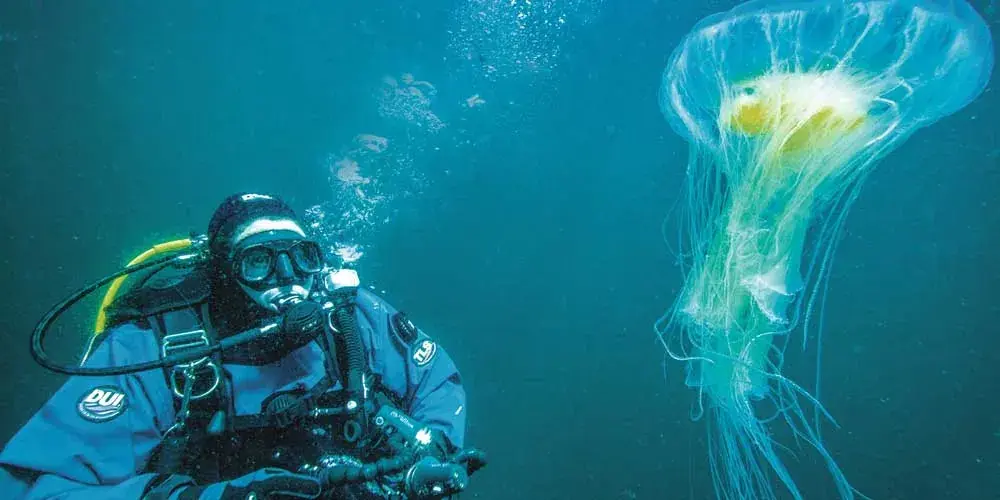
Undersea Specialist Program
Live undersea video, specialist team
Lindblad’s undersea specialist program deploys video cameras, remotely operated equipment, and specialist divers (on qualifying voyages) to document the marine world beneath the expedition route. Live footage is broadcast to screens throughout the ship in real time, allowing every guest to observe what the undersea team is encountering below the Zodiac landing sites. The program reflects Lindblad’s National Geographic partnership — a commitment to scientific documentation as an inherent part of the expedition experience rather than an optional add-on.
Zodiac & Sea Kayaking
Zodiacs included, kayaking optional add-on
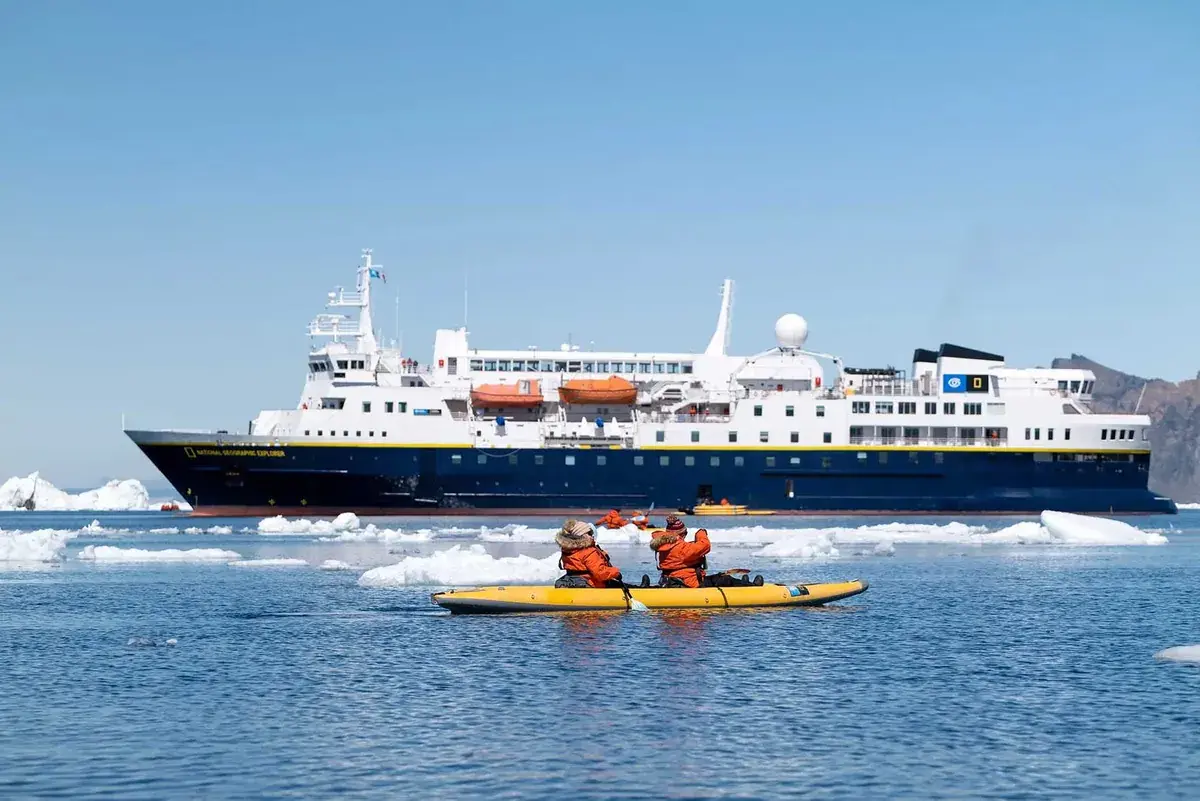
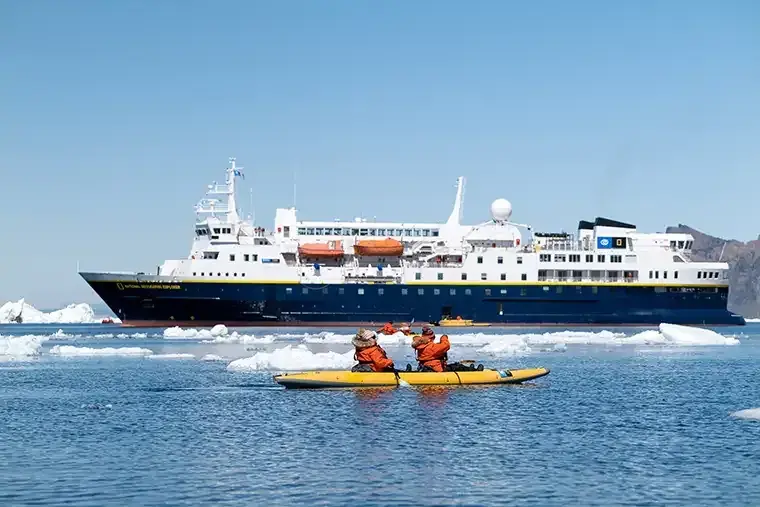
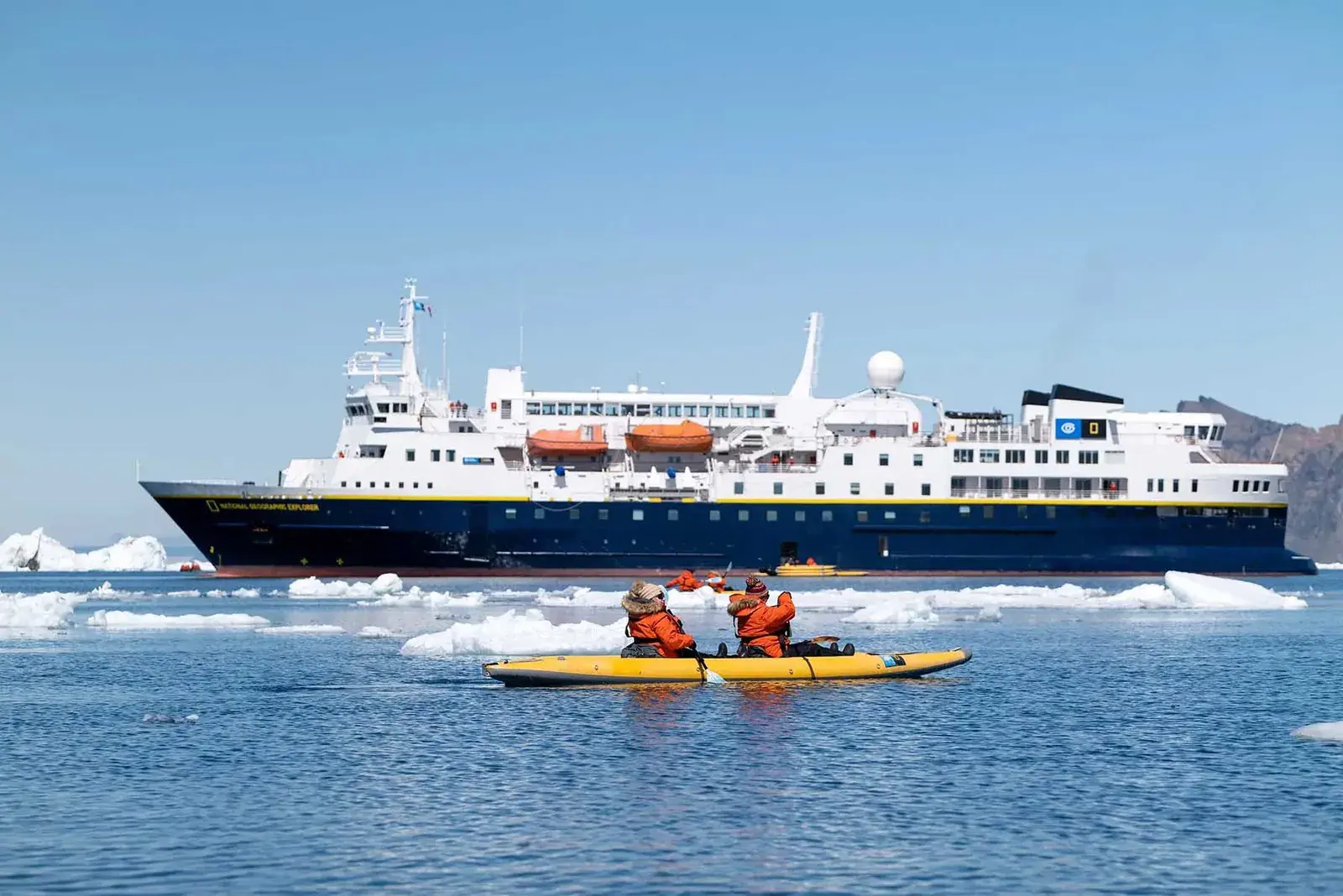
National Geographic Explorer operates a comprehensive Zodiac and sea kayaking expedition program led by the ship’s naturalist team. All shore landings and wildlife Zodiac cruises are included in the base fare and represent the primary mode of access to every destination on the itinerary. Sea kayaking is available as an optional activity on most itineraries, allowing guests to experience the polar environment at water level — among icebergs, alongside wildlife, and in the silence that no motorized Zodiac can replicate. Kayaking on Explorer is consistently cited by returning guests as the single best decision they made when booking add-on activities.
Open Bridge Policy
Open to guests at virtually all times
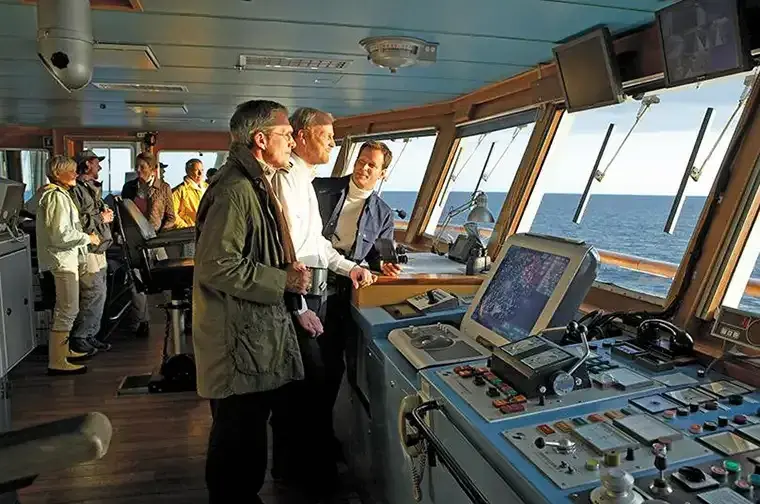
One of National Geographic Explorer’s most distinctive traditions is the open bridge policy — the navigation bridge is open to guests at virtually all times, allowing anyone to step in, meet the captain and navigation team, monitor the ship’s progress through polar channels, and be among the first to spot wildlife from the bridge’s elevated vantage point. On a ship whose history spans decades of genuine polar navigation, the bridge feels like a working archive of expedition expertise. It’s also frequently where the first whale sighting or unexpected wildlife encounter gets called out over the ship’s PA.
Cabins + suites
Where you'll sleep.
Category 3
Approx 19 m² (200 sq ft) / Large windows / Sleeps 2
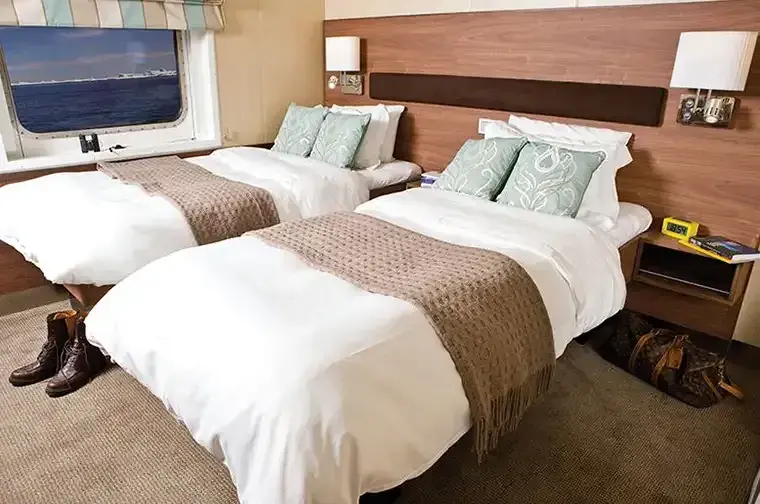
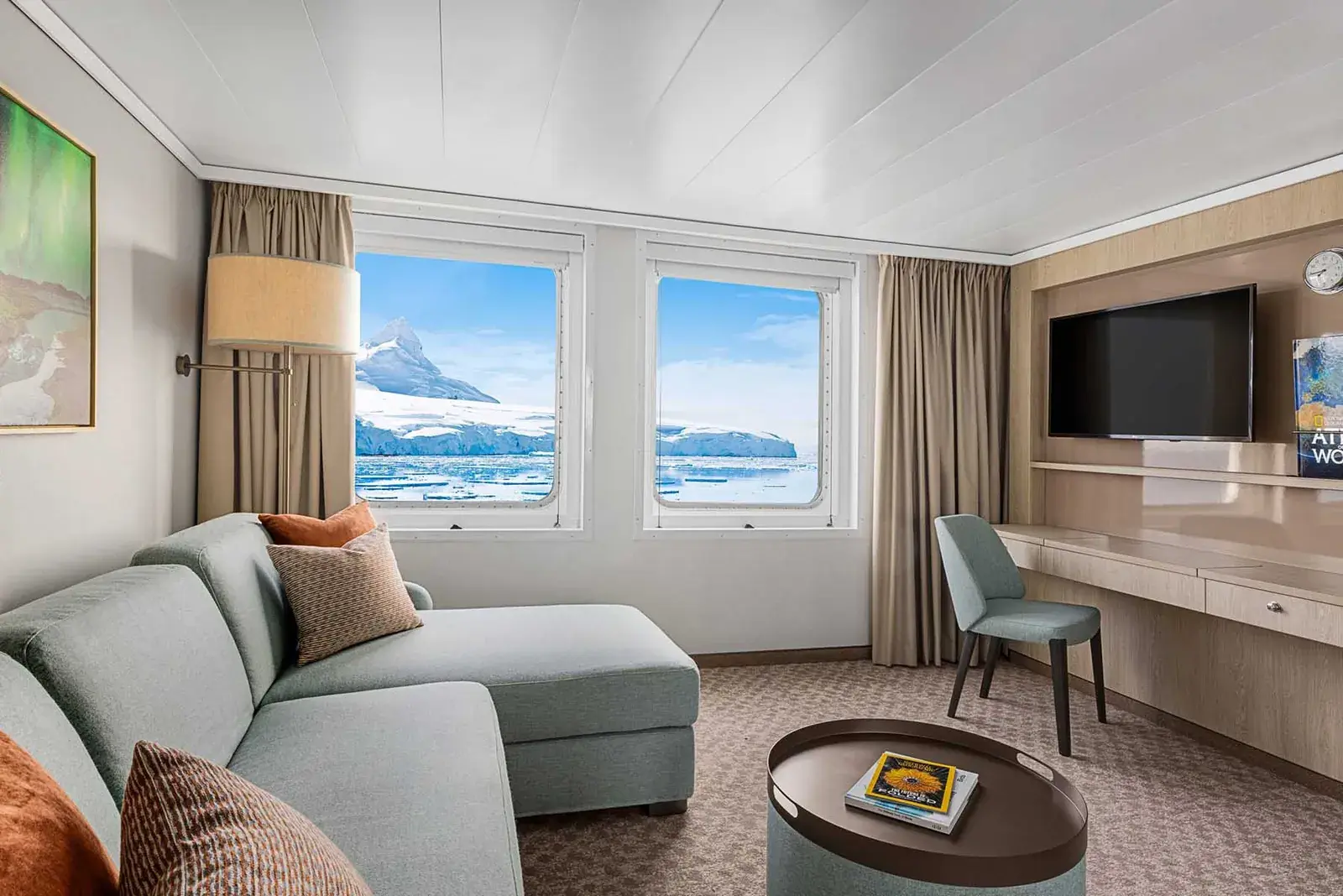
Category 3 cabins provide a step up in both window size and interior space, offering more natural light and a slightly more generous footprint than the entry categories. Located on upper decks, these cabins have a better relationship with the environment outside and a slightly more refined feel than the Main Deck options below. For guests who want a noticeably better onboard environment without stepping up to the balcony categories, Category 3 is the natural midpoint.
Category 1
17.5 m² (188 sq ft) / Porthole windows / Sleeps 2
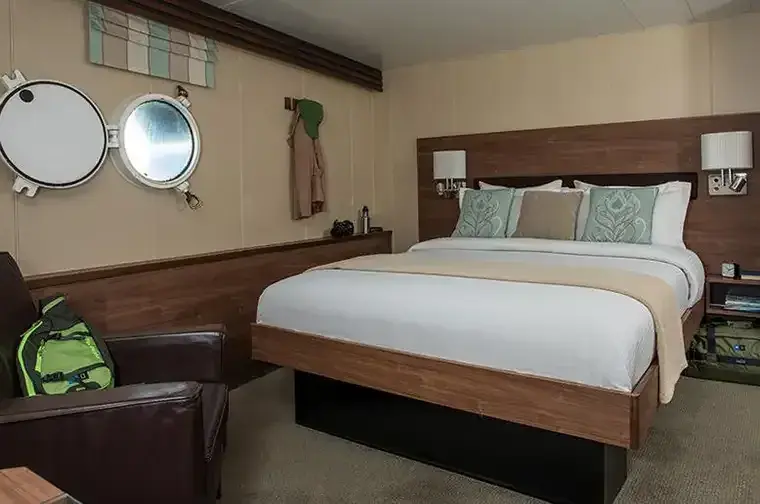
Category 1 cabins sit on the Main Deck and are the entry accommodation on National Geographic Explorer, featuring porthole windows that are a deliberate nod to the ship’s expedition heritage. At 188 sq ft with a queen or twin configuration, writing desk, reading lamps, and a private bathroom, the Category 1 cabin is designed for travelers whose time will be spent on deck, on shore, or in the ship’s lecture lounge rather than in the room. The full Lindblad naturalist team, National Geographic photography program, and undersea specialist access apply equally at every cabin category.
Category 2
Approx 17 m² (183 sq ft) / Ocean-view windows / Sleeps 2
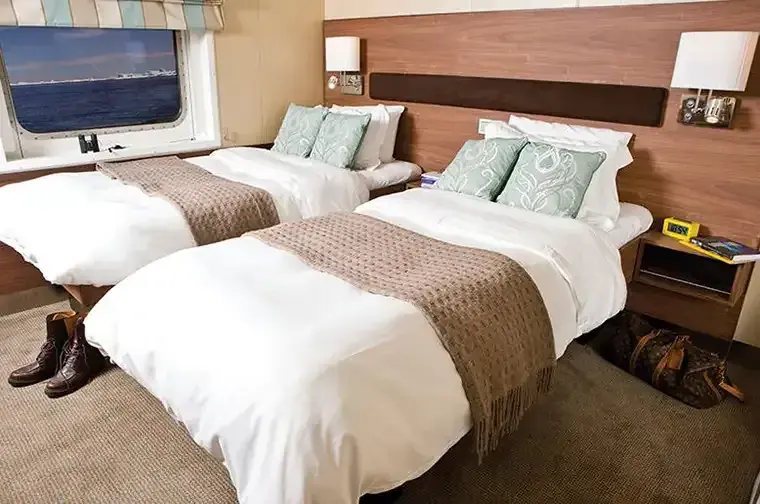
Category 2 cabins are located on the Main Deck and upgrade the porthole to a larger ocean-view window — a meaningful improvement in natural light and sense of connection to the environment outside. The cabin footprint and layout are comparable to Category 1, with the same queen or twin configuration, writing desk, reading lamps, and private bathroom. For travelers choosing between Category 1 and 2, the window is the difference worth paying for.
Solo Cabin
11.7 m² (126 sq ft) / Large window / Sleeps 1
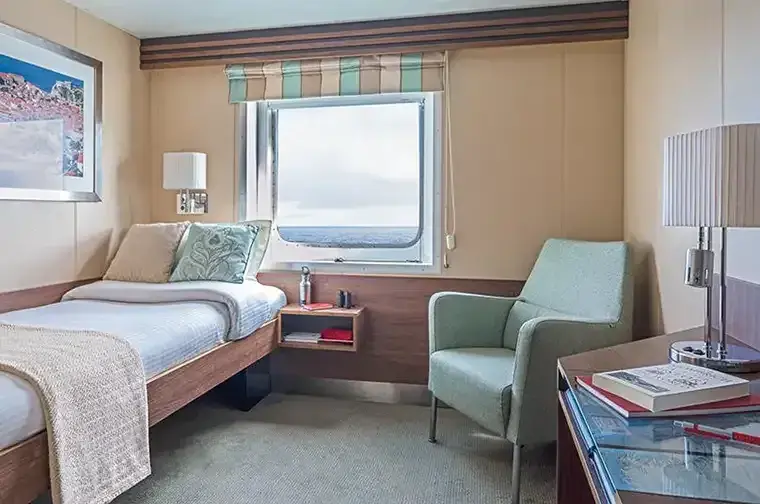
The Solo Cabin on National Geographic Explorer is designed specifically for single travelers — a single bed, large window, desk, reading lamp, and private bathroom in a compact but purposeful layout. It provides one of the cleanest ways to book a Lindblad expedition solo: a dedicated single room with no supplement, full access to the National Geographic naturalist and photography team, and the ship’s complete expedition program. For travelers who travel alone by choice and want to maximize their expedition budget rather than pay a single supplement for a room twice as large as they need, the Solo Cabin is the answer.
Gallery
Keep reading
From the Savvy Traveler
September 23, 2026
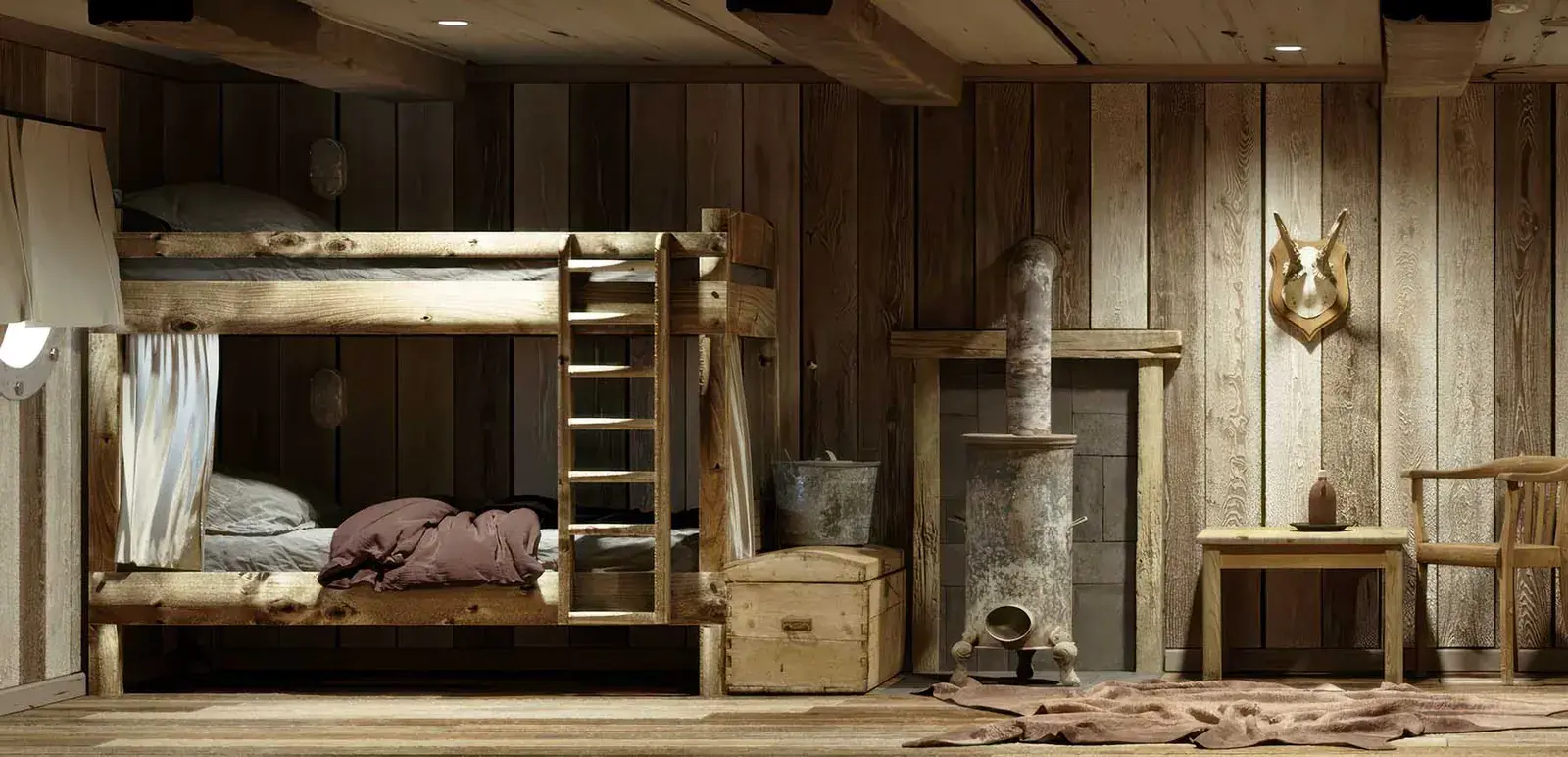
HX's 1896 Cabin Just Won Expedition Initiative of the Year. You Can Sleep in It for a Night.
September 22, 2026
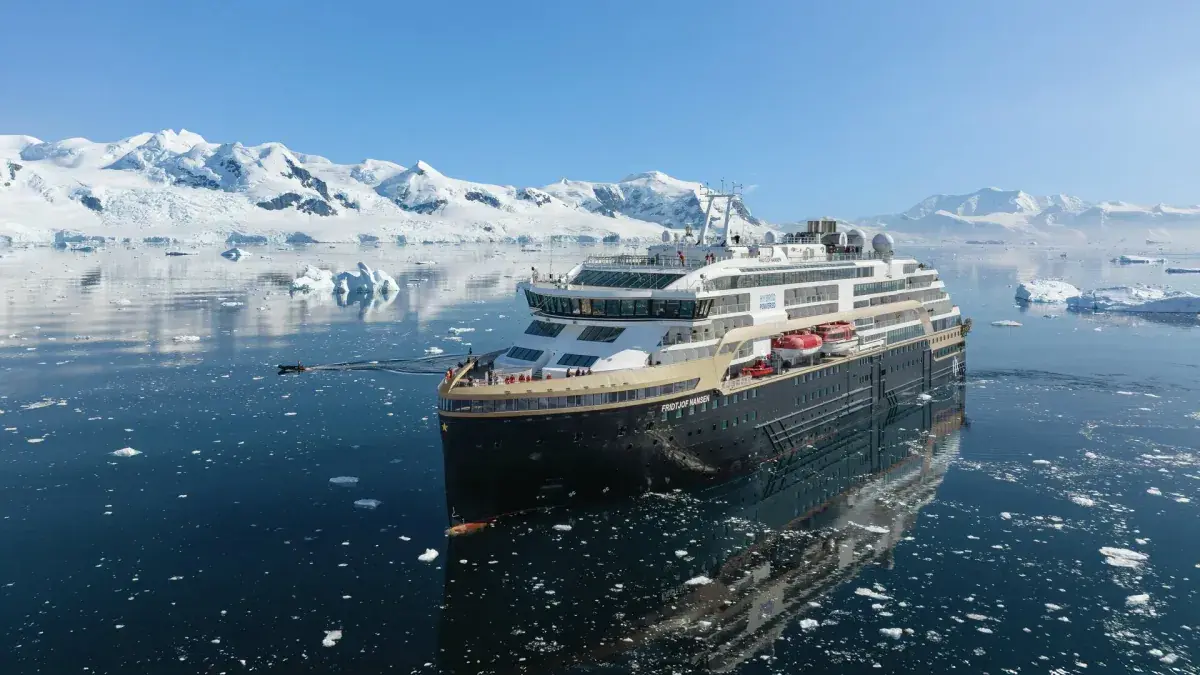
The Ultimate Guide to HX (Hurtigruten Expeditions): Basecamp Ships, Real Science, and the Poles
September 18, 2026