



Savvy Traveler · September 18, 2026
How Rough Is the Drake Passage, Really?
Two days of open ocean stand between Ushuaia and the penguins. Here's what our crossing aboard Seabourn Venture was actually like, what decides whether the Drake shakes or sleeps, and how to stack the odds in your favor.
Our crossing, honestly
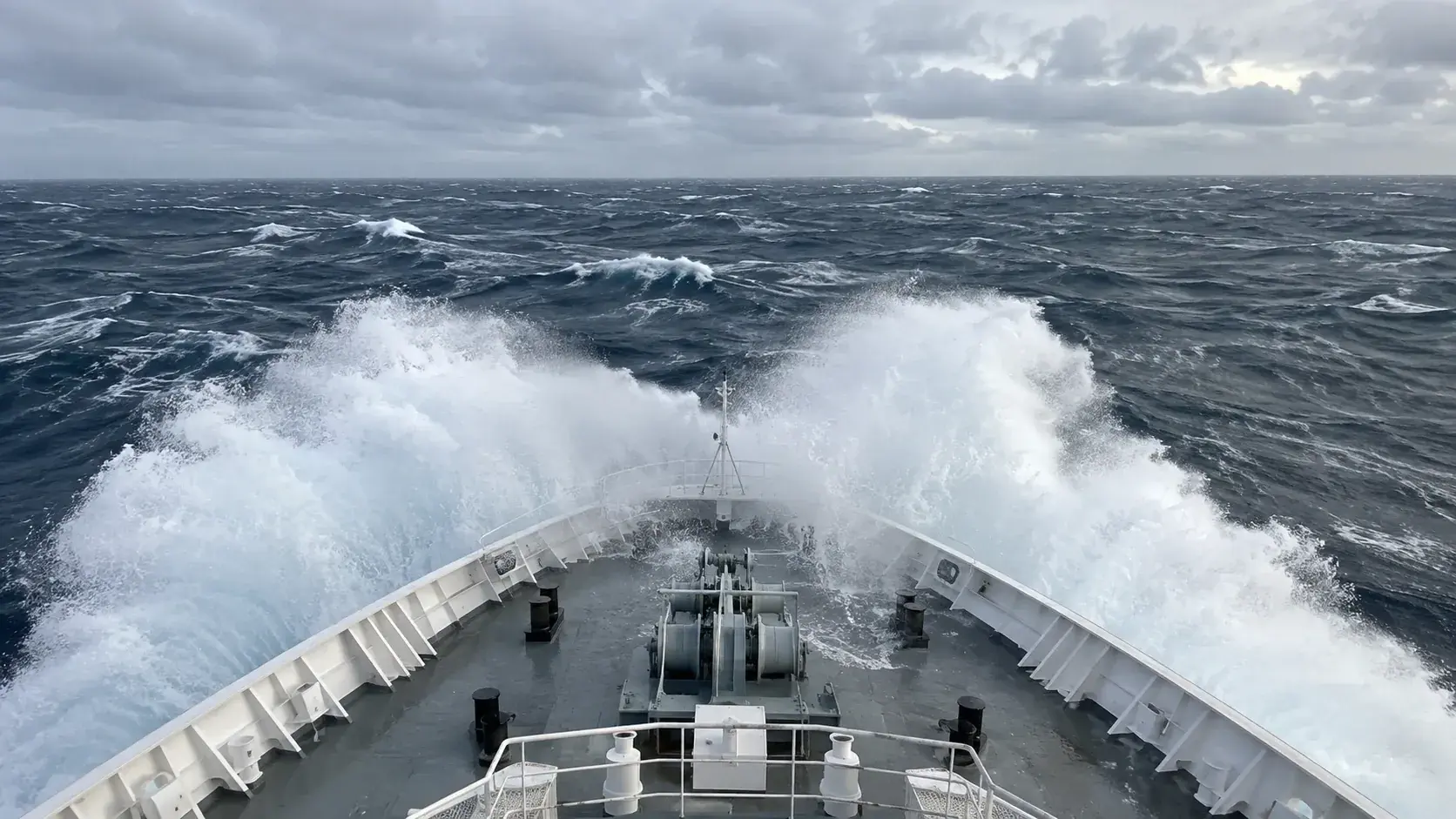
Every single person who has ever mentioned Antarctica to us has asked the same question within about eleven seconds, and it is never about penguins. It’s “how bad was the Drake?” So here’s our answer, with the caveat that the ocean does not take requests.
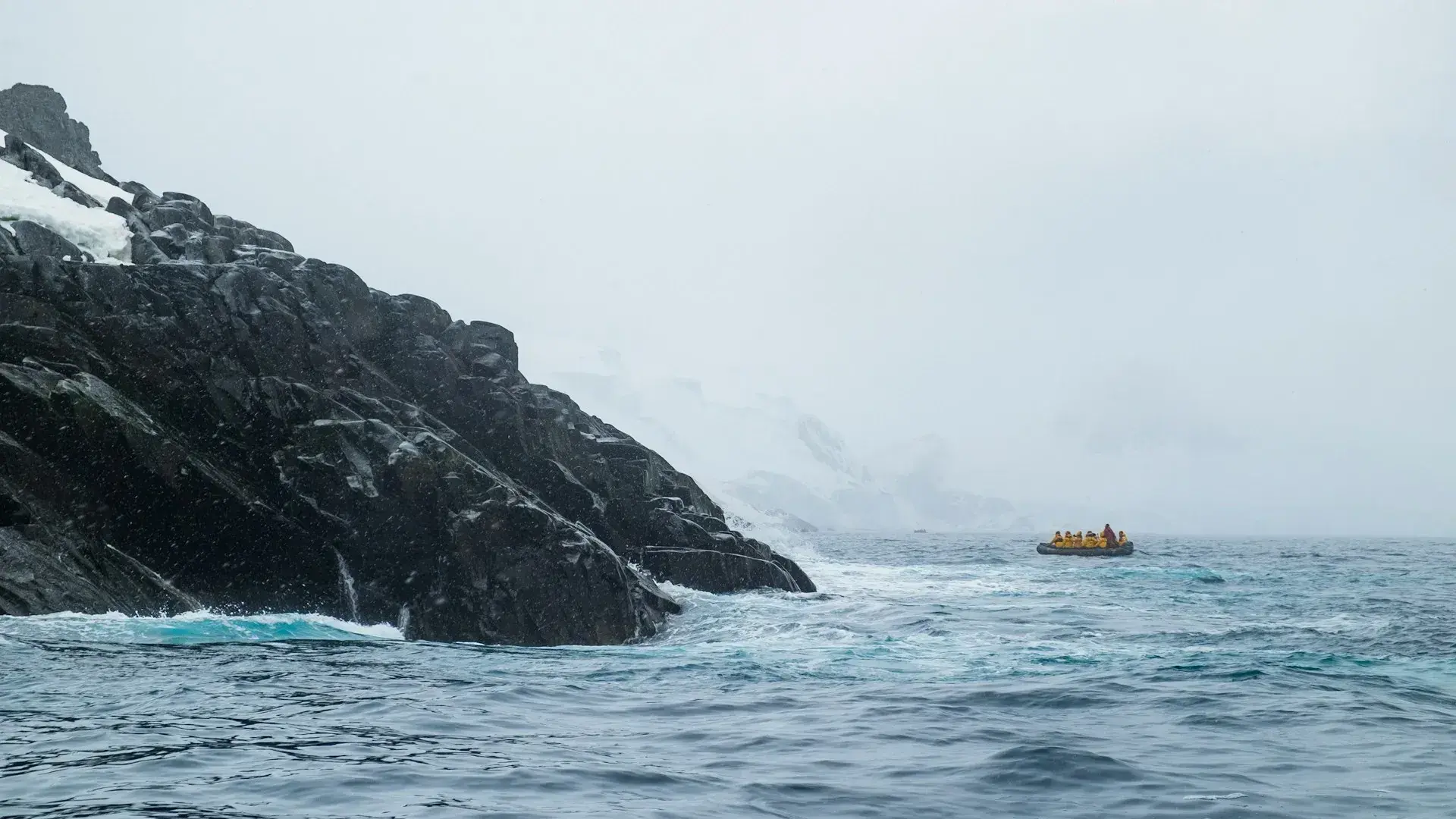
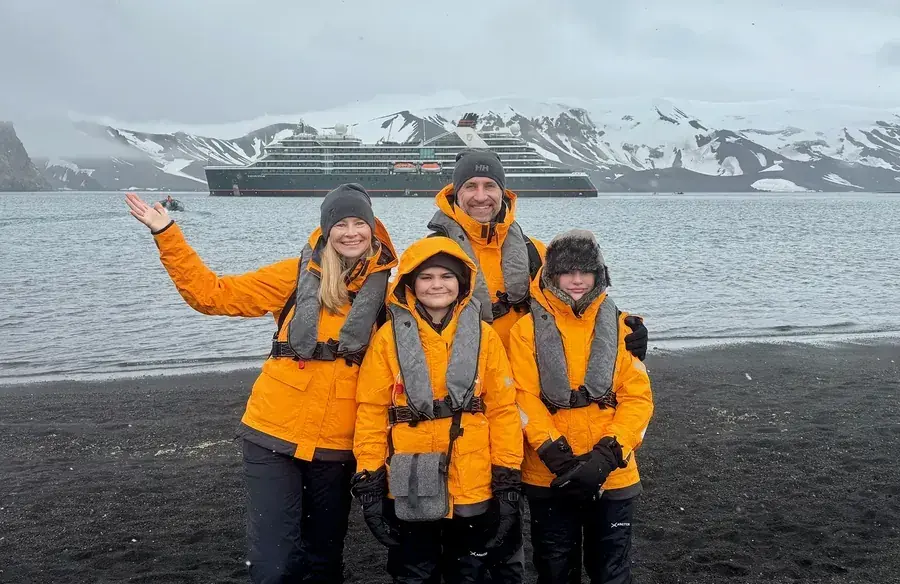
We crossed it at the end of 2024 aboard Seabourn’s Venture with a group of twenty travelers who had signed up to join our family on our first expedition to the seventh continent. We flew from Buenos Aires down to Ushuaia, boarded in the afternoon, and were pointed at the open ocean within hours. The crew calls the crossing a rite of passage. Everyone else calls it the Drake Shake or the Drake Lake, depending on the ocean’s mood that day.
We got the lake. There was some genuine wave action the first night, enough that the ship’s stabilizers were earning their keep, but nobody was crawling down a corridor. There were a few ghost faces at breakfast, and one member of our group declared Dramamine a scam invented by Poseidon. He came around by lunch.
In our own family the order of operations is well established: even on flat water, Colt goes green first. The Drake did not break the pattern. One tiny pill was all it took, though, and from there the rest of the sailing was a piece of cake for him. I’d started out with the patch behind the ear, which promptly fell off, so I swallowed a pill too and joined him. Erin and Brooklyn never had a moment. Most of us spent the two days doing the thing the Drake is secretly good for: slowing down. Reading, journaling, the wildlife briefings, and a lot of staring at a horizon that hadn’t changed in six hours.
Here’s the episode, cued up to the crossing, if you’d rather see the ship and the water for yourself.

What the Drake actually is
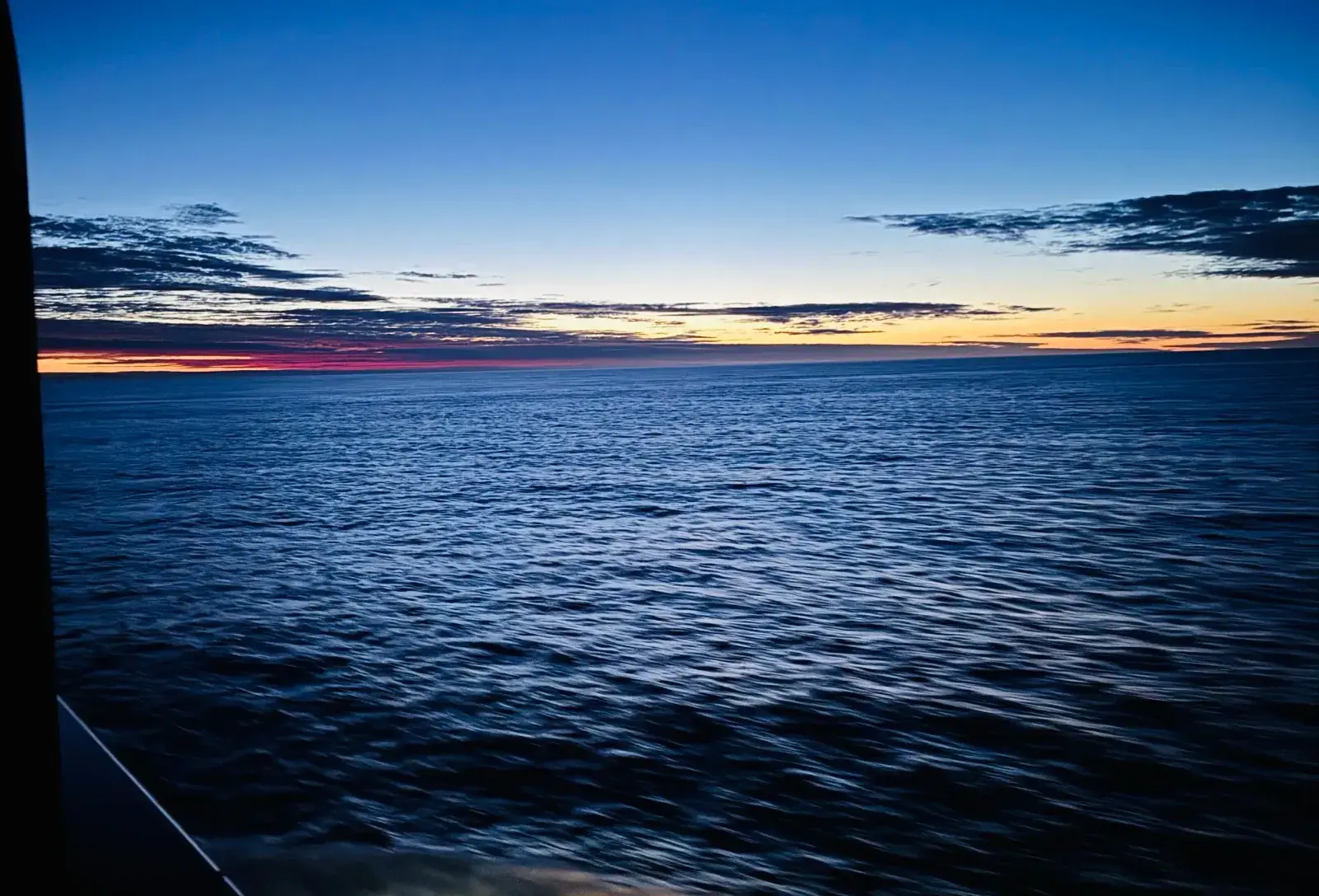
The Drake Passage is the stretch of ocean between the tip of South America and the Antarctic Peninsula, about 600 miles across. A ship out of Ushuaia takes roughly two days to cross it, then two more to come back, so on a classic ten to twelve day itinerary you should expect to spend four days at sea on either end of the good part.
Why it gets its reputation: it’s the one place on the planet where the ocean circles the globe with nothing in the way. No continent, no shelf, no island chain to break the swell. The wind and the current that run around Antarctica all funnel through a gap that’s narrow by their standards, and when a low-pressure system rolls through at the same time, the seas can build to the kind of heights that make the news. Somewhere in the middle you cross the Antarctic Convergence, where the water temperature drops a few degrees in an afternoon and the birdlife changes almost on cue. That’s the real border of Antarctica, not any line on a map.
Shake or Lake: what actually decides it
Luck, mostly. That’s the honest answer and the one nobody likes.
The sea state on a given crossing is set by whatever weather system happens to be passing through in that 48 hour window, and no operator can promise you a flat one. What they can do is time the departure. Expedition captains watch the forecast obsessively and will leave Ushuaia a few hours early or late, or hug the Beagle Channel a little longer, to slip between systems. Some will also run the crossing faster or slower to arrive in the Peninsula before the next front does. It isn’t foolproof, but it is why a lot of crossings that look scary on the forecast turn out fine on the ship.
For what it’s worth, the folklore that the Drake is always a washing machine is out of date. Plenty of crossings are dull. A fair number are lumpy for half a day. A minority are genuinely rough, and those are the stories that get retold at dinner parties for a decade, which is why everyone’s heard one.
The ship matters more than the pills
If you want to influence the outcome rather than pray about it, this is the part to pay attention to.
Modern purpose-built expedition ships are a different animal from the converted research vessels people crossed on twenty years ago. Venture, National Geographic-Lindblad’s Endurance and Resolution, and most of the ships launched since 2019 carry active stabilizers, and a few have hull shapes designed specifically for polar swell. The difference is real: a stabilized ship leans into a wave and gets quietly pulled back, rather than rolling all the way through it. Older or smaller ships without stabilizers roll more, full stop.
Size helps too, up to a point. A ship carrying 150 to 250 guests rides a big swell better than a 100-guest vessel, though it loses a little on landing flexibility once you’re in the ice. If you’re weighing hulls, our Antarctica ship comparison lines them up side by side, and the Antarctica page covers the operators we work with, including Atlas Ocean Voyages and Quark Expeditions.
The cabin is the other lever. Midship and on a lower deck is the calmest place on any ship, and it’s the one upgrade that’s genuinely about motion rather than square footage. If you get seasick on a ferry, tell us that when you ask for a quote and we’ll pick the cabin with that in mind rather than the one with the prettiest photo.
If you’d rather not: flying the Drake
You can skip the crossing altogether. Fly-cruise itineraries run a charter flight from Punta Arenas in Chile to King George Island in the South Shetlands, where the ship is waiting. Two hours in the air instead of two days at sea, and you’re stepping onto a zodiac the same afternoon. Lindblad runs this on Explorer and Orion, and several other lines offer it, usually on shorter six to nine night trips.
The trade-offs are real. Fly-cruise departures cost more per night, the flights are weather-dependent in both directions (a fogged-in King George Island can add a day at either end), and you skip the slow build of anticipation that a sea crossing gives you, which sounds precious until you’ve done it. It also skips the albatrosses. But if the two days of open water are the reason you haven’t booked, this is the answer, and it’s a good one.
There’s a hybrid too: sail down, fly back, or the reverse. It’s a nice compromise for people who want one crossing for the story and none for the return.
The seasickness kit that actually helps
Sort this out at home, because the ship’s shop will be out of the good stuff by the second morning.
- The patch. A scopolamine patch behind the ear, put on the evening before you sail, is what most repeat expedition travelers use. Prescription only in the US, so it’s a conversation with your doctor before you leave. Press it down properly; mine fell off.
- Meclizine or similar. Bonine, Dramamine Less Drowsy, whatever your pharmacy carries. Take the first one before you feel anything; they don’t work in reverse. One tiny pill was the whole fix for Colt, and for me after the patch quit.
- Ginger. Chews, tea, the candied stuff. Mild, but it does something and it doesn’t make you sleepy.
- The horizon. Get on deck, or at least to a window, and look at the far edge of the world. Reading in a windowless bar on deck three is how the ghost faces happen.
- Eat. Plain, regular, small. An empty stomach is worse than a full one, which nobody believes until they test it.
- The ship’s doctor. Every expedition ship has one, and a shot for the truly miserable. It’s not a failure to ask.
One more thing that isn’t a pill: travel insurance that covers polar expeditions, arranged early. The Drake doesn’t care about your non-refundable deposit, and the medical evacuation coverage the ships require is a separate line item from the trip cancellation part. We wrote up the Antarctica insurance requirements separately because it’s confusing on purpose.
Where this leaves you
The Drake is two days each way of water that might be flat, might be lumpy, and occasionally is memorable. The ship you pick and the cabin you’re in shape that experience more than anything you can buy at a pharmacy, and if you’d rather skip it, you can. What you shouldn’t do is let it be the thing that stops you, because the part after the Drake is the part people spend the rest of their lives talking about.
Tell us who’s going, when you’re thinking, and how you handle a rough ferry, and we’ll come back with the ship, the cabin, and the crossing we’d choose for you. Request a quote, or if you’d rather ask the Drake question out loud first, start here.
Watch
Episodes on this



Keep reading
September 18, 2026
Atlas Ocean Voyages Is Running a Travelzoo Sale. We'll Match It, and Make the Phone Call.
September 16, 2026
Antarctica Travel Insurance: What's Actually Required + How to Save Without Skimping
December 7, 2024