


Savvy Traveler · May 8, 2026
MV Hondius Hantavirus: What the Headlines Got Wrong About Oceanwide + Expedition Cruising
Three passengers died, the media panicked, and the internet decided it was the ship's fault. Here's what the science actually says — and why Oceanwide Expeditions isn't the villain of this story.
By now, you’ve probably seen the headlines: “Hantavirus Outbreak on Luxury Cruise Ship.” Maybe you pictured a rat-infested vessel lurching through the South Atlantic, passengers stumbling over each other in the hallways. That’s the movie version. The real version is a lot more complicated — and a lot more fair to one of our favorite expedition brands.
Let’s talk about what actually happened on the MV Hondius, why Oceanwide Expeditions is taking heat they largely don’t deserve, and what this whole sitch means for expedition cruising at large.
First, a Moment
Before we get into the science and the media narratives, it’s worth saying plainly: three people have died. A Dutch couple, and a German woman. That’s real, and that’s devastating. We’re not here to minimize any of that.
We’re here because bad information spreads faster than any virus, and the travel community deserves an accurate read.
Who Is Oceanwide, Anyway?
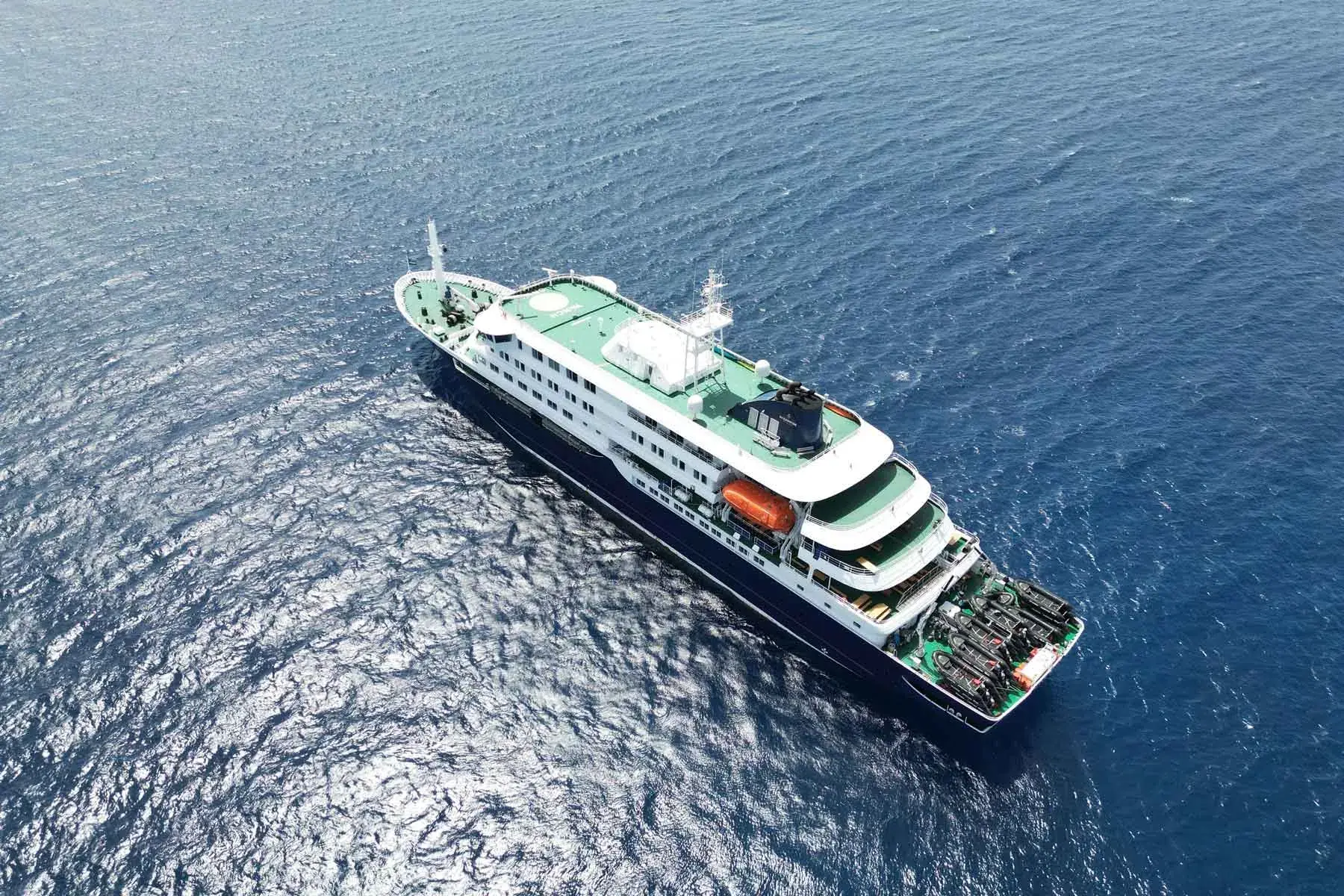
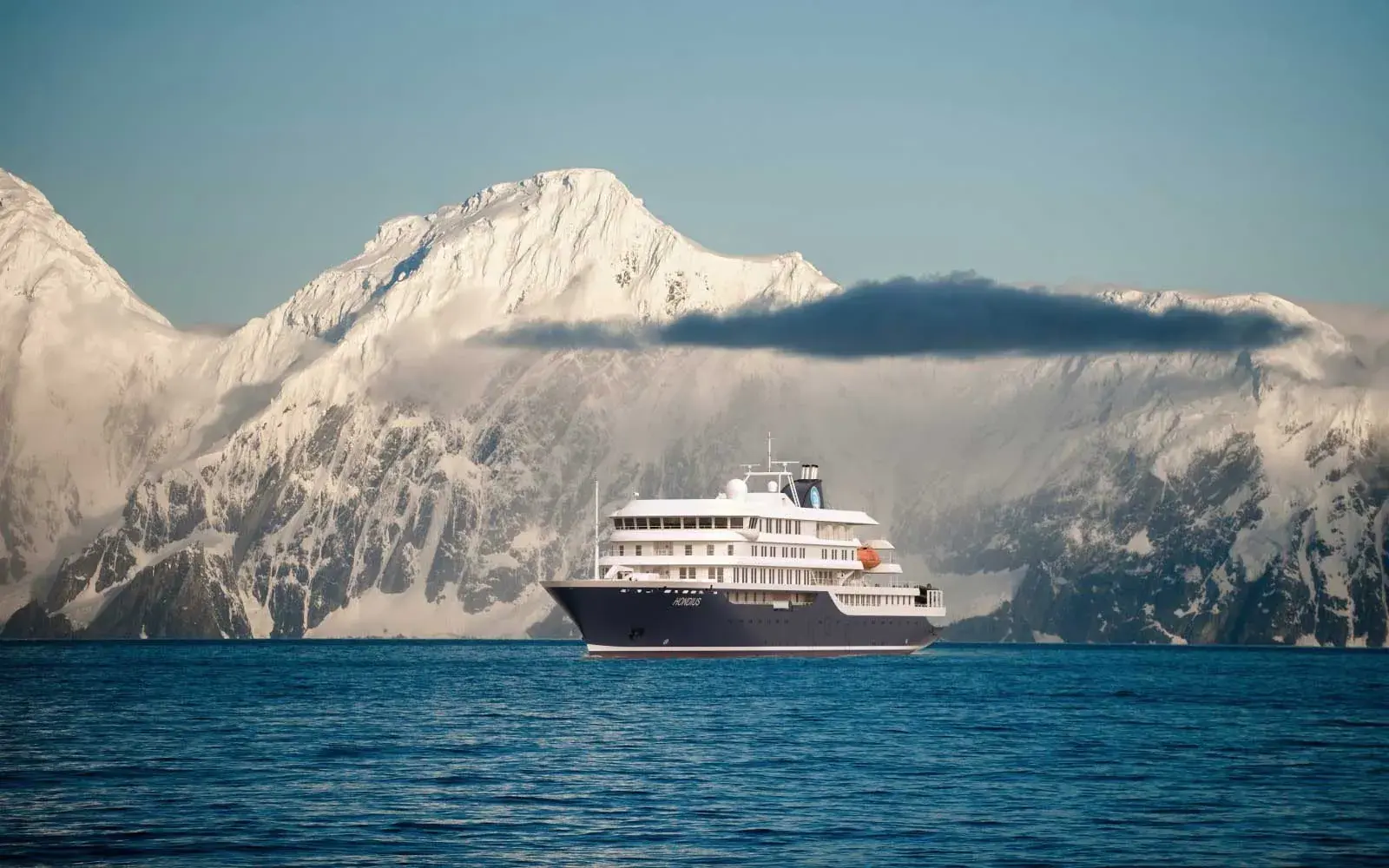
If you’re not deep in the expedition cruise world, Oceanwide Expeditions might be new to you. They’re a Dutch operator with serious Antarctic cred — one of the most experienced polar companies on the planet, with a fleet of purpose-built expedition vessels and decades of experience running voyages to the places most people only see on screensavers. The MV Hondius is one of their flagships — a vessel carrying around 150 passengers and crew of 23 nationalities, with berth prices ranging from €14,000 to €22,000. This isn’t a booze cruise. These are serious, vetted travelers going on serious, vetted expeditions.
We’ve had dealings with the Oceanwide team and genuinely respect them. They run tight ships (pun fully intended), and the people behind this brand care deeply about the traveler experience. So when this story broke, our first instinct wasn’t to pile on — it was to start reading the actual science.
The “Rat on the Ship” Theory Was Always Shaky
Here’s where the narrative started going sideways. Hantavirus is classically a rodent-borne illness — you get it from breathing in aerosolized droppings or saliva from infected rodents. So the public’s brain immediately went to: dirty ship, rat problem, heads must roll. It’s an intuitive jump. It’s also almost certainly wrong.
According to Argentine officials investigating the outbreak’s origins, the leading theory is that the Dutch couple — believed to be the index cases — contracted the virus during a bird-watching tour in Ushuaia before boarding the ship, during which they may have been exposed near a landfill. And here’s where it gets even more exculpatory for Oceanwide: Argentine health records show the index case — a 70-year-old Dutch man who was first to show symptoms — had completed a four-month road trip through Chile, Uruguay, and Argentina, returning to Ushuaia only four days before the ship departed on April 1. He brought the virus with him. The ship didn’t give it to him.
As the old saying goes: don’t blame the bus for where the passenger got on.
The Andes Strain Changes Everything
Most hantavirus strains are a one-and-done transmission situation: you touch infected rodent waste, you get sick, it stops there. Person-to-person spread just doesn’t happen with the typical strains. But the Andes strain — the specific variant identified in this outbreak — is the wild card. It’s the only known hantavirus strain capable of spreading from person to person, and transmission occurs through prolonged close contact.
This is critical context the early coverage largely missed. The fact that multiple passengers got sick doesn’t mean the ship was infested with rodents — it means the Andes strain did what the Andes strain does when someone carrying it is in close proximity to others for weeks at a time. The Andes strain was only recently understood to spread between people, and researchers note there is very limited experience handling this virus even in medical settings.
And then there’s the incubation window. With the Andes strain, the incubation period ranges from 9 to 40 days. Read that again: up to forty days. No pre-departure health screen, no temperature check, no questionnaire on earth is catching someone who was exposed four days before they boarded and is completely asymptomatic. This wasn’t negligence. It was a biological curveball that even the world’s top epidemiologists are still scrambling to fully understand.

Ships, Hotels, Planes, Malls… Welcome to Planet Earth
Let’s zoom out for a second, because the real assumption buried in this coverage isn’t just that cruise ships are risky — it’s that concentrated human proximity is uniquely a ship problem. It isn’t.
Every time you board a plane, you’re in a sealed metal tube with recycled air and 200 strangers who flew in from 200 different places before they got to your gate. Every hotel lobby, every restaurant, every shopping mall, every subway car, every church, every packed farmers market on a Saturday morning — these are all versions of the same thing: a bunch of humans, in close quarters, importing whatever they picked up wherever they’ve been. That’s not a flaw in the design. That’s just… civilization.
Travel, by its very nature, means proximity. To new places, new experiences, and yes — new people. The spirit of it is fundamentally incompatible with the kind of risk-zero thinking that flares up every time a headline drops. And when we start applying that thinking selectively to cruise ships while cheerfully booking a middle seat on a six-hour flight, we’re not being logical. We’re being dramatic.
Here’s the number that deserves more airtime than it’s getting: three deaths. Three. On a planet of eight billion people. That’s not a statistic we offer callously — those were real humans with families who are grieving right now, and that matters. But perspective matters too. Three people out of eight billion is such a vanishingly small fraction that if you tried to write it as a percentage, you’d run out of decimal places before you got to a meaningful number. And yet the coverage would have you believe expedition cruising is the new BASE jumping.
Meanwhile, roughly 430 people die every single day in the US alone from carbon monoxide poisoning — mostly in their own homes. We don’t see think pieces about whether staying home is worth the risk. As they say: the most dangerous part of any trip is usually the drive to the airport. The answer has never been to stop going places. The answer is to go smart, go informed, and go with people who know what they’re doing.
The people of Oceanwide know what they’re doing. They simply drew the short stick on this one.
What This Means for Expedition Travel
Here’s the honest take: the MV Hondius outbreak is a tragedy for the people who got sick and the families of those who didn’t make it home. The WHO has confirmed that the overall public health risk from hantavirus remains low, and officials have dismissed concern about hantavirus becoming a global pandemic threat. As of the latest reports, no one currently on the ship is showing new symptoms.
Oceanwide Expeditions didn’t create this situation. They didn’t have rats in the hold. They weren’t cutting corners on sanitation. They were carrying passengers on an extraordinary voyage to extraordinary places — and one of those passengers, through no fault of anyone on that ship, arrived already exposed to one of the rarest and most difficult-to-detect pathogens on the planet. No operator, no matter how experienced or well-run, can fully insulate a voyage from what their guests bring aboard. What they can do is respond well. And by all accounts, Oceanwide did.
We’re keeping a close eye on this story and will keep you updated. If you have questions about expedition cruising — what’s safe, what’s not, how to think about risk when you’re planning a bucket-list voyage — come talk to us at ABC Trips. That’s literally what we’re here for.
Watch
Episodes on this

Keep reading
September 22, 2026
The Ultimate Guide to HX (Hurtigruten Expeditions): Basecamp Ships, Real Science, and the Poles

September 18, 2026
Atlas Ocean Voyages Is Running a Travelzoo Sale. We'll Match It, and Make the Phone Call.

September 18, 2026