




Savvy Traveler · November 20, 2026
TSA PreCheck, CLEAR or Global Entry? Which Airport Shortcut Is Actually Worth Paying For
Erin and I have had Global Entry and CLEAR for three years and haven't paid for any of it. Here's what each program really does, which one we'd buy with our own money, what the kids can use, and the one note that keeps the whole thing straight.
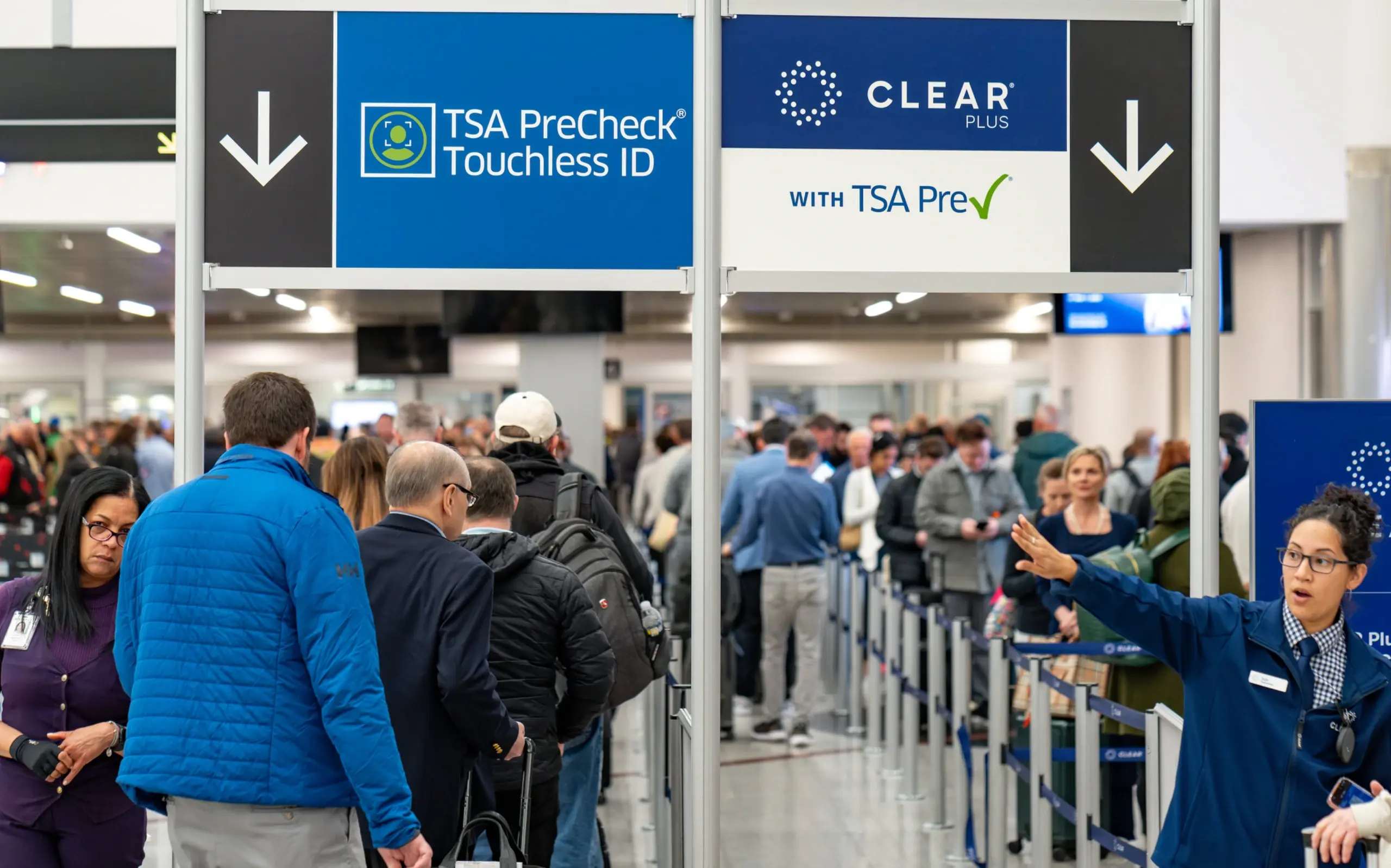
Five lines, one checkpoint, and a decision to make
Walk up to security at a big U.S. airport these days and you’re not choosing a line so much as reading a menu. Standard. PreCheck. PreCheck with Touchless ID. CLEAR. CLEAR plus PreCheck. And that’s before you land back from abroad and face the Global Entry kiosks at customs.
Erin and I have had Global Entry and CLEAR for the past three years. We’re a family of five, and for a long stretch we were in an airport more weeks than not, so we’ve stood in every one of those lines, often with kids and carry-ons in tow. Here’s what each program actually does, what it costs, what the kids get, and which ones we’d pay for with our own money. (Short version: not all of them.)
TSA PreCheck: the one almost everyone should have
TSA PreCheck has been around nationally since 2013. You apply online, go to a short in-person appointment for fingerprints and an ID check, and if you’re approved you get a Known Traveler Number (KTN). A five-year membership runs roughly $77 to $85, depending on which enrollment provider you use.
The KTN is the whole game. Add it to your airline profiles and loyalty accounts, and double-check it’s on every booking before you pay. If it’s missing, the PreCheck indicator won’t print on your boarding pass, and fixing that usually means a trip to the check-in counter you were trying to skip.
In the PreCheck lane, your laptop and your 3-1-1 liquids stay in your bag, and your belt and light jacket stay on. (Keeping your shoes on used to be the headline perk. TSA dropped the shoes-off rule for everyone in July 2025.) The bigger benefit is the company: a line full of people who know the drill moves faster than a line full of people discovering it.
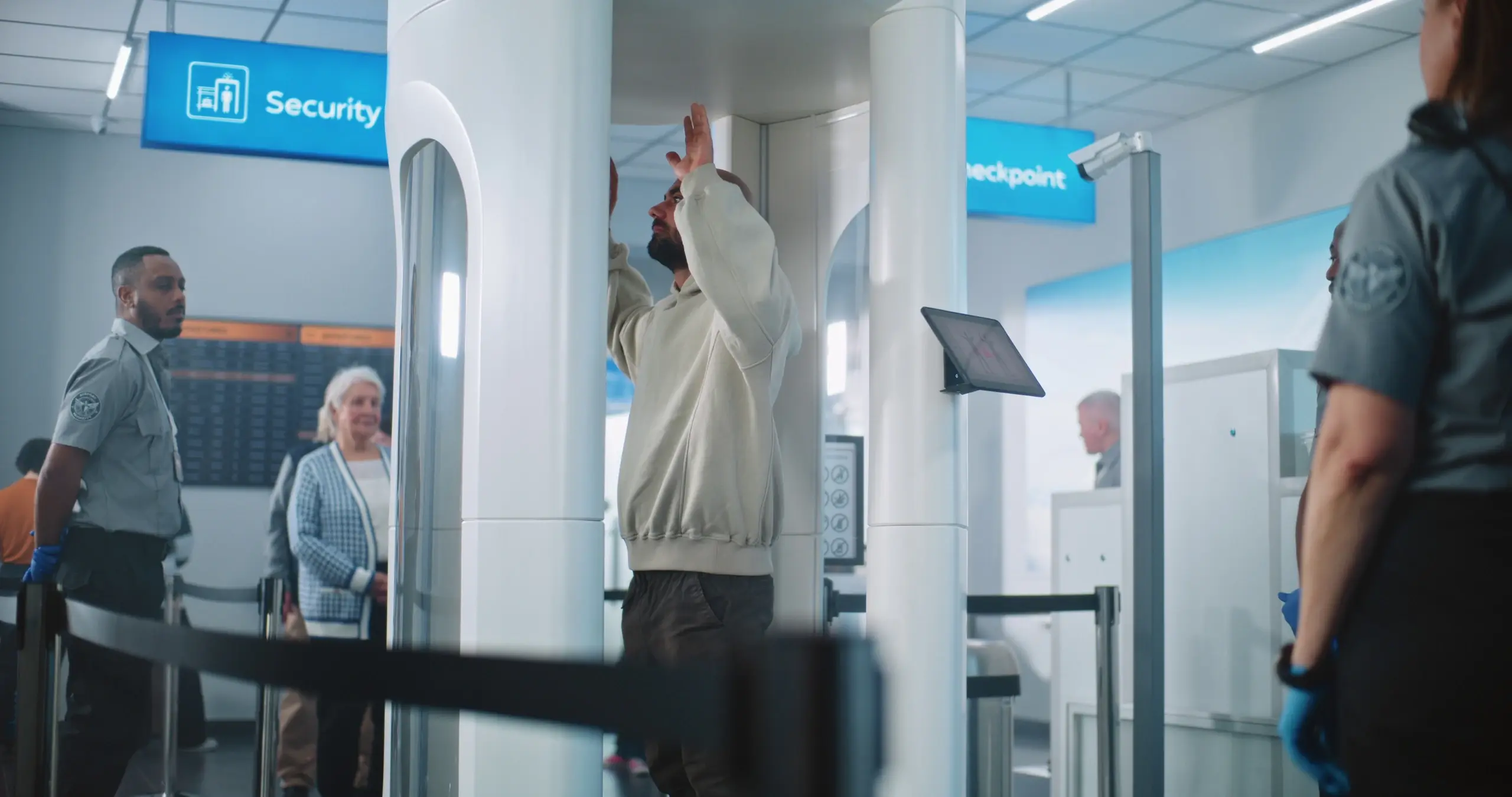
Touchless ID: PreCheck, minus the fumbling
Touchless ID is an upgrade inside PreCheck, and it’s free. Instead of handing over your ID and boarding pass, you look into a camera, it matches your face to the passport you have on file with the airline, and you walk on.
You opt in through each airline’s app, since it uses facial matching, and you need your KTN and passport details saved there. Once it’s on, a little “Touchless” mark shows up next to the PreCheck one on your boarding pass. As of this spring it was running at about 65 U.S. airports on Delta, United, American, Southwest, Alaska and Hawaiian. Where it exists, it’s often the shortest line in the building, because so few people have bothered to turn it on.
Our home airport, Denver, is on the list, and we’ve used it there several times. The face scan itself wasn’t new to us: airlines have been using it to board our international flights for years. If you have PreCheck and you’re comfortable with the camera, there’s no reason not to opt in.
CLEAR: the priciest lane, and the spottiest for us
CLEAR is a private company, not a government program. It uses your eyes or face to confirm who you are, then walks you to the front of the security line, where you still go through screening like everyone else. CLEAR+ is $219 a year at full price, and you can add other adults to your account for $125 each.
Here’s our honest take. We’ve never paid for it. Until May 2025, United gave a free CLEAR+ membership to 1K members just for holding the status. United ended that, though 1K still drops the price to $129 a year, and between our cards and our status, it’s been covered either way.
And it’s a good thing, because CLEAR has been spotty for us. The pitch is that you never pull out your ID. In about 30% of our trips through a CLEAR lane, we’ve been asked for ID anyway, as a “random” check. So for us, the real value of CLEAR comes down to having one more lane to choose from when the PreCheck line looks long.
If we had to pay for it ourselves, we wouldn’t.
The “best” line isn’t always the fastest
The holy grail is supposed to be the combined CLEAR plus PreCheck lane, where both programs stack. In our experience, it’s often the slowest of the expedited lines, because everyone who has both funnels into it.
So we don’t trust the signage. As we walk up, we scope every line: PreCheck only, CLEAR only, the combined one, Touchless ID if it’s there. Then we pick whichever is actually moving. How much any of these programs saves you varies wildly by airport, and at a small airport, or one where it seems like the whole city has PreCheck, the gap can shrink to almost nothing. Still, it’s rare for the standard line to win.
Global Entry: the one that’s really about coming home
Global Entry is run by U.S. Customs and Border Protection, and it’s built for the other end of the trip: getting back into the country after an international flight. Instead of joining the passport-control line, you use a kiosk or a camera portal and keep walking. After a long-haul flight home, that alone can be worth an hour.
It costs $120 for five years, and approval includes TSA PreCheck. That makes it the best value of the lot. If there’s even a decent chance you’ll fly internationally in the next five years, get Global Entry instead of PreCheck: it’s about $40 more and covers both. Renewals usually happen online, with no second appointment.
What about the kids?
Each program treats kids differently, and this is where a lot of families get tripped up at the checkpoint.
| Program | Kids |
|---|---|
| TSA PreCheck | Kids 12 and under can come through with you. Teens 13 to 17 can too, as long as they’re on the same reservation and PreCheck prints on their own boarding pass (TSA sometimes leaves it off at random). |
| CLEAR | Kids under 18 come through the CLEAR lane free with a member. |
| Global Entry | No family pass. Every person, including every child, needs their own membership. Since October 2024, the fee is waived for kids under 18 when a parent is a member or applies at the same time. |
That last row is why we only use the Global Entry lane when Erin and I travel without the kids. When we signed up, adding them meant paying for each one, so we didn’t. They’re not members, so when the whole family is together we all go through the regular passport line. Brooklyn and Colt still get PreCheck and CLEAR as minors, which covers the security end of every trip.
The fee waiver is news to us too, and it changes the math. Brooklyn and Colt are both under 18, so they’d qualify for free. Reagan is 19 and would pay the full $120, though Reagan rarely travels with us these days. If your kids are under 18 and you already have Global Entry, there’s no longer a cost reason to skip it. It does still mean an application and an interview for each kid.
Check your wallet before you pay anyone
Before you spend a dollar on any of this, look at your credit cards and your airline status. Plenty of travel cards reimburse the Global Entry or PreCheck fee every few years, and some, like the Amex Platinum cards, also carry a CLEAR+ credit. Between our Amex Business Platinum, our United Club Infinite card from Chase and our United 1K status, we’ve never paid for any of these programs out of pocket.
If you’re weighing whether one of those cards earns its fee, I did the math on ours in are premium travel credit cards worth it?
The note that saves you an hour of detective work
My least favorite part of all this is remembering which card, or which status, is paying for which program for which person. The credits renew on different schedules, they’re tied to different cards, and none of them send you a friendly reminder.
So keep a note in your favorite notes app. One line per person, per program: who has it, when it renews, and which card or program reimburses the cost. Then when you change credit cards, lose a status tier, or shuffle which programs you keep, you’ll know right away what needs a new home, instead of digging through statements to work it out. I’ll be glad of ours eventually: the United card is one I plan to cancel, maybe next year, maybe the year after, and part of its job has been paying for these memberships.
Our take
- You fly internationally, even occasionally: get Global Entry. It includes PreCheck.
- You only fly domestically: get PreCheck.
- You have PreCheck: opt in to Touchless ID in each airline app. It’s free.
- CLEAR: take it if a card or status pays for it. Pay full price only if your home airport’s PreCheck line is reliably a mess.
And whatever you have, look at every lane before you pick one.
The security line is the smallest part of a trip, but it’s the part that sets the mood. If you’d like the rest of the trip to run that smoothly, tell us where you’re headed and request a quote, or if you’d rather talk it through first, start here.
Watch
Episodes on this



Keep reading

May 13, 2025
United Airlines Introduces Polaris Studio: An Upgrade to Business Class

October 9, 2026
Are Premium Travel Credit Cards Worth It? Twenty Years of Amex Platinum Math, and the Bill That Could Change It
November 7, 2025