Savvy Traveler · February 24, 2026
The No-BS Guide to Luxury Kimberley Expedition Cruises (From Someone Who's Actually Done the Homework)
Australia's Kimberley coast is the next frontier for expedition cruise travelers. Our insider guide breaks down the best ships, optimal timing, tidal secrets, and common mistakes — no fluff, just the stuff that actually matters.
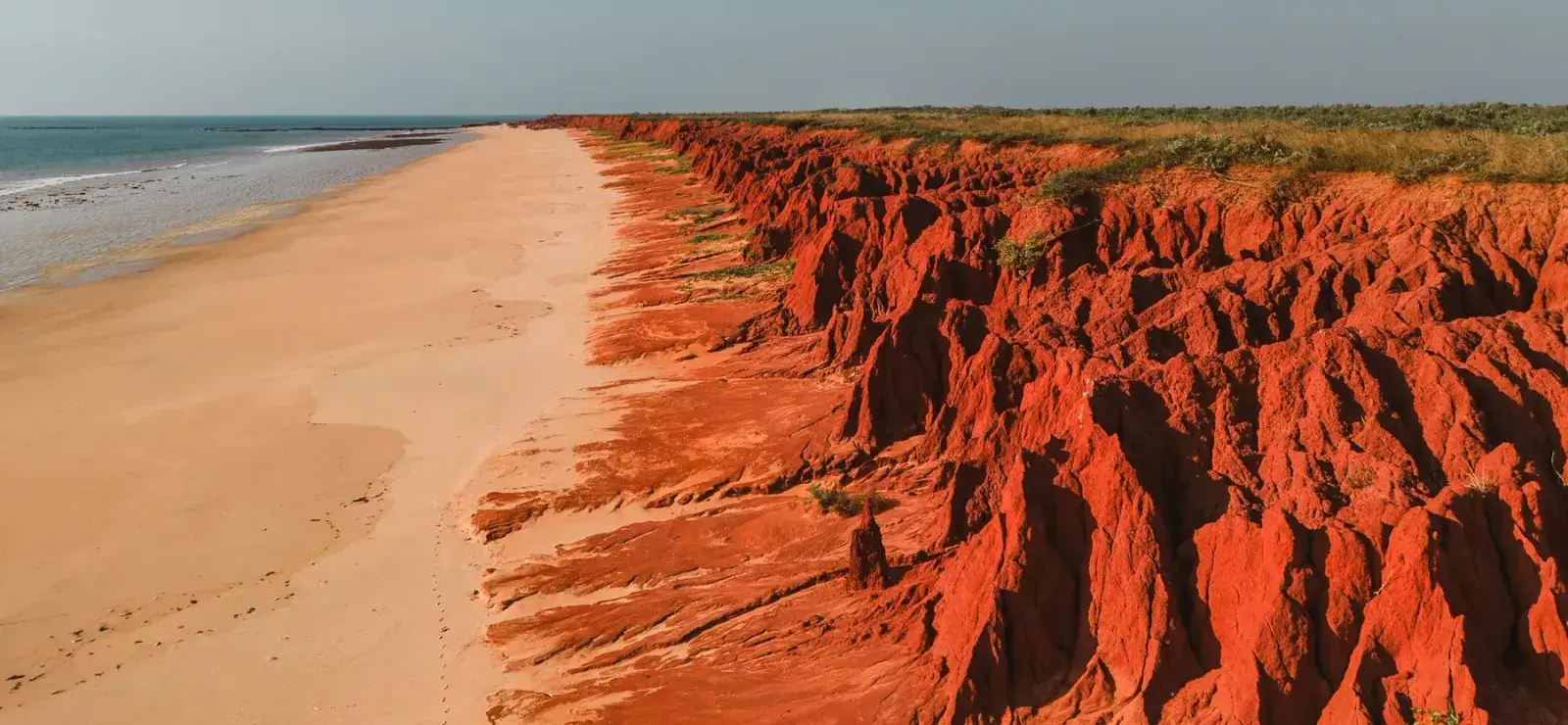
Australia’s Kimberley coast is one of those places that makes you wonder how it stayed off everyone’s radar for so long. Three times the size of England, home to maybe 30,000 people, and lined with two-billion-year-old sandstone cliffs that make the Grand Canyon look like a starter course. It’s remote. It’s raw. And it’s quickly becoming the next “it” destination for expedition cruise travelers who’ve already ticked Antarctica and the Galápagos off their list.
But here’s the thing — and I say this as someone who’s spent years scouting luxury expedition cruises across polar regions, the Pacific, and beyond — the Kimberley is a fundamentally different beast. The logistics are trickier. The timing matters more. And the gap between a great Kimberley cruise and a mediocre one is wider than the 10-meter tides that govern the entire region.
So let’s get into it. No fluff. No recycled brochure copy. Just the stuff that actually matters when you’re trying to decide whether to book, when to go, and which ship deserves your money.
What Exactly Is “The Kimberley”?
If you just pictured red dirt and kangaroos, I respect the instinct, but let me paint a more accurate picture. The Kimberley is the vast, largely uninhabited northwest corner of Western Australia — a region so remote that most of its iconic landmarks are completely inaccessible by road. We’re talking about a coastline where ancient iron-red cliffs plunge directly into turquoise water, where horizontal waterfalls surge sideways through narrow gorges, and where Aboriginal rock art older than the Egyptian pyramids hides in sandstone overhangs.
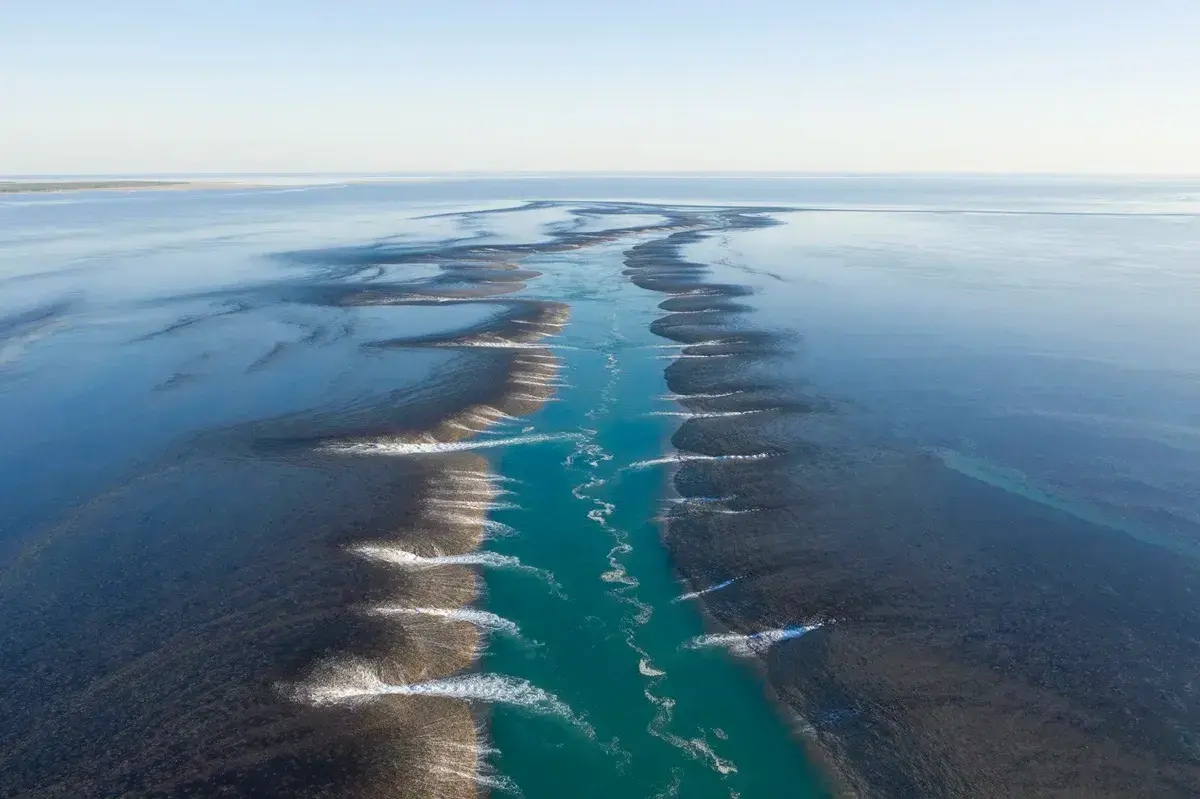
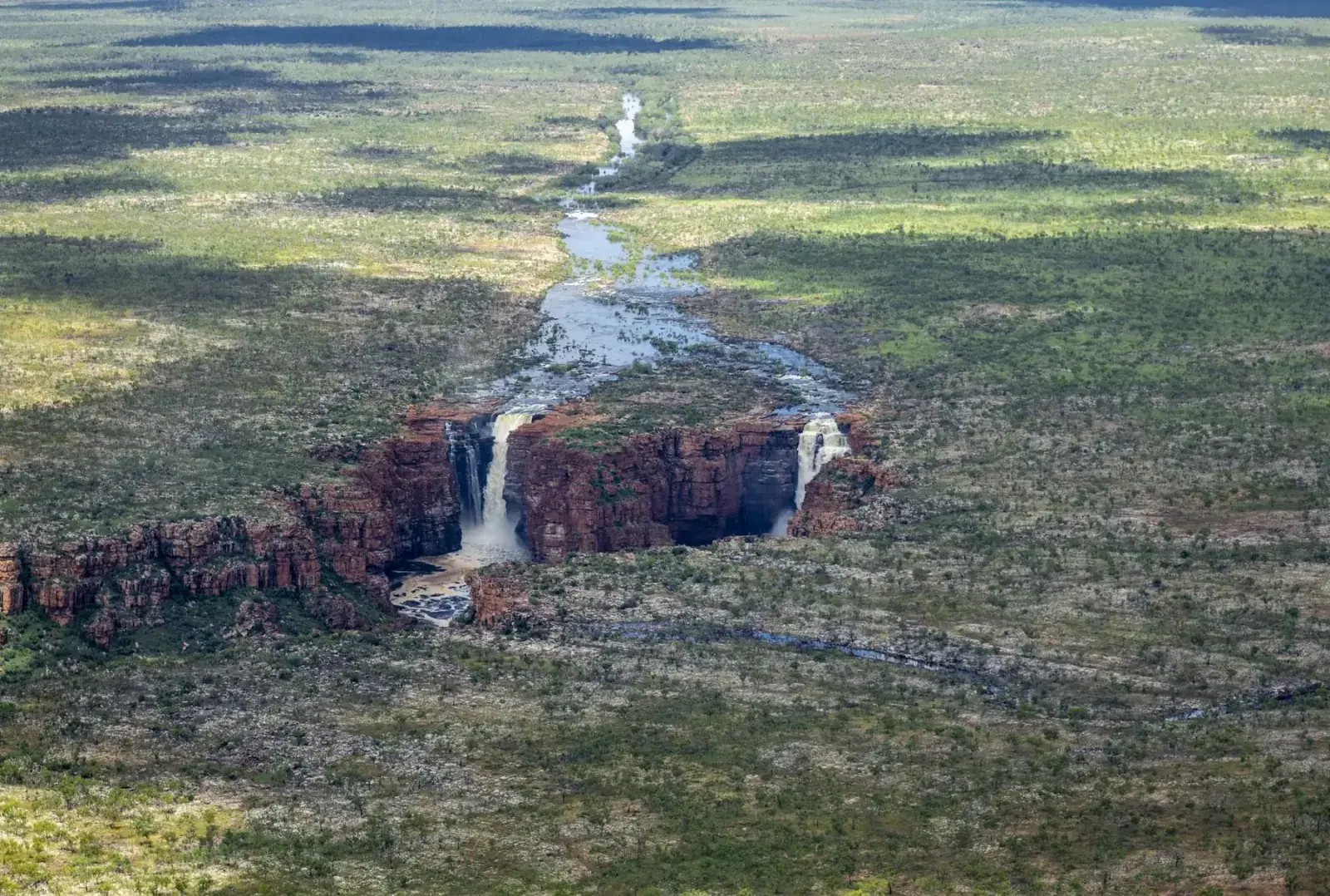
The key highlights that every quality Kimberley expedition covers include the Horizontal Falls (which David Attenborough once called one of the greatest natural wonders of the world), the twin King George Falls (the tallest in Western Australia at 80 meters), Montgomery Reef (a 140-square-mile living reef that literally rises from the ocean as the tide drops), and sacred Wandjina and Gwion Gwion rock art sites that date back tens of thousands of years.
As the old proverb goes, “you can’t judge a book by its cover” — and you absolutely cannot judge the Kimberley by looking at it on a map. It reads as empty. In reality, it’s one of the most geologically dramatic and culturally significant landscapes on the planet.
Why an Expedition Cruise Is the Only Way to Do This
I’m not being dramatic here. Unlike, say, the Mediterranean, where you could rent a car and hit every coastal town on your own schedule, the Kimberley coast is genuinely inaccessible without a ship. The roads don’t go where the good stuff is. The distances are absurd. And half of the region’s most jaw-dropping sights — Montgomery Reef, the Hunter River system, Vansittart Bay — only reveal themselves to vessels nimble enough to navigate shallow tidal waterways and deploy Zodiacs into narrow river gorges.
This is expedition cruising in its purest form. You’re not docking at a port town and shopping for souvenirs. You’re waking up anchored in a bay that maybe a few hundred people visit per year, climbing into a Zodiac before breakfast, and being guided through rock art galleries by an onboard naturalist who’s been working this coastline for decades.
If you’ve been researching expedition cruise lines for polar or Galápagos voyages, the Kimberley sits in that same wheelhouse — but with a tropical twist. Think 30°C days, saltwater crocodiles instead of penguins, and sunsets that look like someone set the sky on fire.
When to Go (This Part Is Non-Negotiable)
The Kimberley cruise season runs roughly from April through October, which is the dry season in tropical northwest Australia. Within that window, timing your visit correctly is the difference between “life-changing” and “eh, it was nice.”
April through June is prime time. The wet season has just ended, which means the waterfalls are absolutely thundering. King George Falls, King Cascade, Mitchell Falls — they’re all at peak flow. The landscape is lush, the rivers are full, and the wildlife is active. This is the sweet spot. If you’re booking your first Kimberley expedition, this is the window I’d push you toward.
July and August are still excellent, though waterfalls start to taper. The tradeoff is that whale season begins — humpback whales migrate through the Kimberley coast starting in July, and the sighting opportunities are remarkable. Also, temperatures are slightly more moderate (by “moderate,” I mean mid-20s Celsius instead of low-30s — this is tropical Australia, not Switzerland).
September and October mark the tail end of the season. Waterfalls slow to a trickle, and the heat starts creeping back up. But Montgomery Reef is still spectacular, the rock art hasn’t gone anywhere, and you’ll often find better availability and pricing.
Here’s the insider nugget that separates the rookies from the pros: tides matter more than anything. The Kimberley has some of the most extreme tidal ranges on Earth — up to 11 meters in some areas. Montgomery Reef only “rises” when the tide drops. The Horizontal Falls only work their magic when massive volumes of water are forced through narrow gaps. A good expedition operator builds their entire itinerary around the lunar cycle and tidal charts. A mediocre one just follows a fixed schedule and hopes for the best. As they say, “timing is everything” — and in the Kimberley, that’s literal.
The Ship Landscape: Who’s Actually Sailing the Kimberley?
The Kimberley isn’t like Antarctica, where you’ve got twenty-something operators jockeying for position. The operator list here is more curated, which is actually a good thing — fewer ships means less crowding at anchorages and a more exclusive feel at every stop.
Here’s the lay of the land:
The Ultra-Luxury Tier
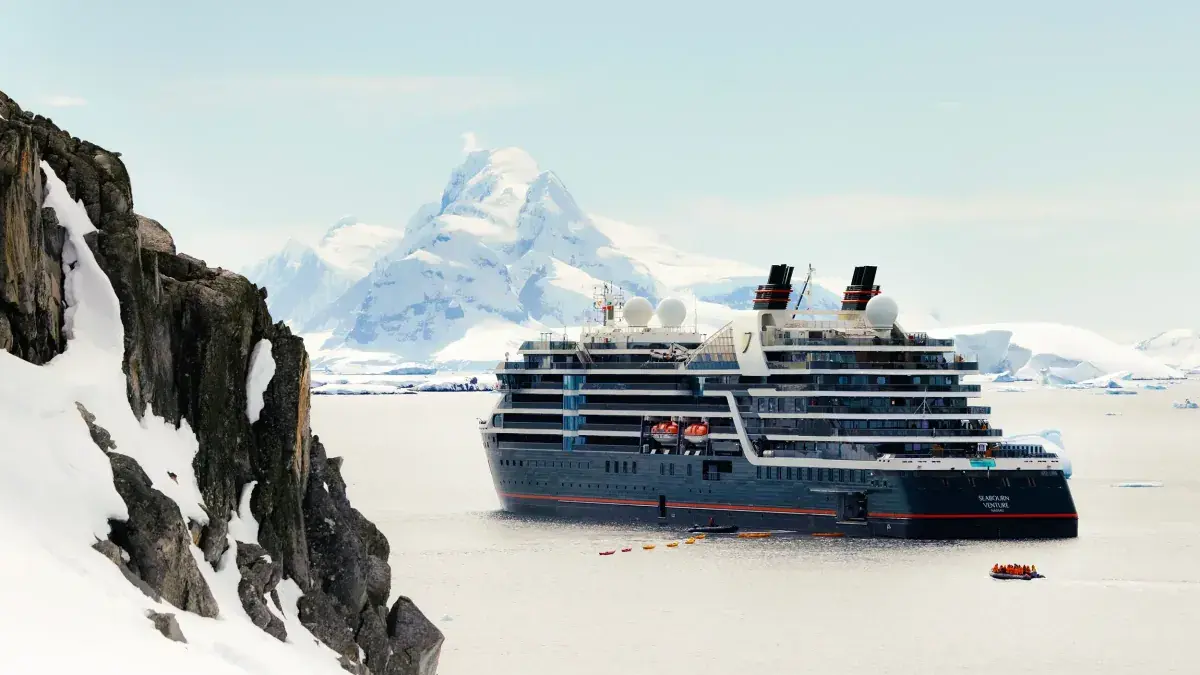
Seabourn is the standout here. Their purpose-built expedition ship, the Seabourn Pursuit (264 guests), runs 10-night Kimberley itineraries between Broome and Darwin, and it’s the sweet spot between genuine expedition capability and the kind of refined luxury where your suite has a veranda and your dinner involves multiple wine pairings. Seabourn has also built a meaningful partnership with the Wunambal Gaambera people — the Traditional Owners of a significant portion of the Kimberley coast — who are actually the godparents of the Seabourn Pursuit. That’s not a marketing gimmick; it translates to exclusive cultural access that you won’t get on most other ships. We’ve scouted this itinerary in detail, and it’s the real deal.
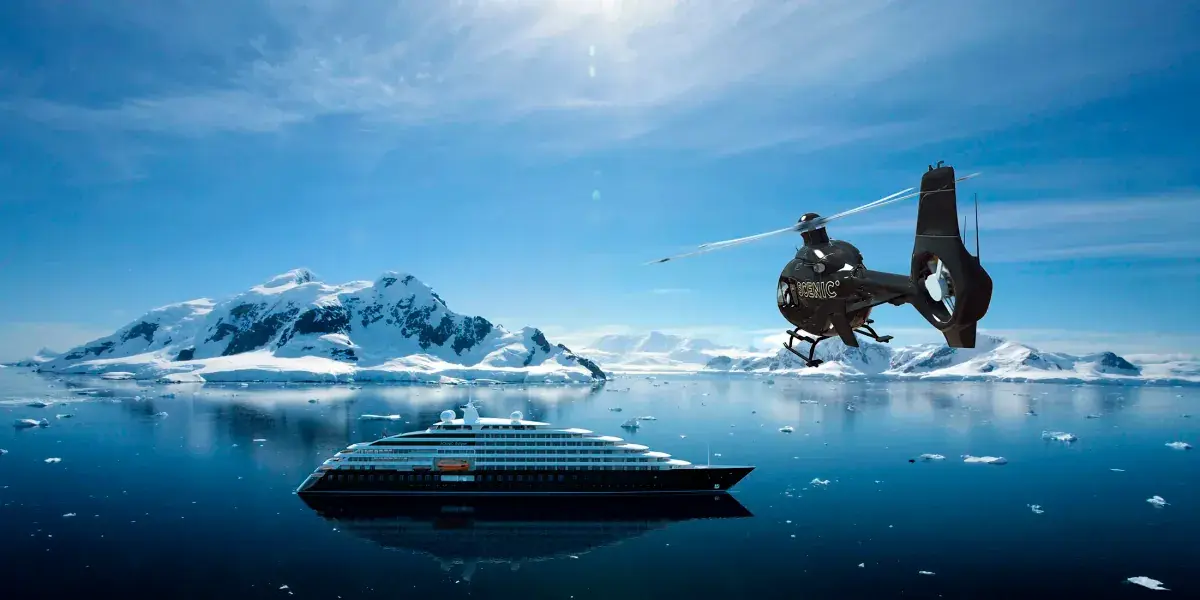
Scenic Eclipse II brought its “discovery yacht” concept to the Kimberley in 2025 and was a revelation — the only ship in the region with two onboard helicopters, giving guests aerial access to places like Mitchell Falls and the Bungle Bungles that no Zodiac can reach. Scenic has announced a return to Australia in 2028, so there’s a gap year to be aware of. If you’ve been eyeing Scenic’s ultra-luxury approach, the Kimberley is one of their strongest deployments.
The Expedition-First Tier
Coral Expeditions is the OG of Kimberley cruising — they literally pioneered expedition cruises in this region back in 1996. Their Australian-flagged ships (Coral Discoverer, Coral Adventurer, Coral Geographer) carry 72–120 guests and offer the deepest local expertise of any operator. They just completed a major refurbishment of the Coral Discoverer in late 2025, and they run 40 departures per season. If “authenticity” is your primary filter, Coral is hard to beat.
Heritage Expeditions, a family-owned New Zealand outfit, brings the 140-guest Heritage Adventurer to the Kimberley for three sailings per season. Strong naturalist program, fleet of 14 Zodiacs, and a proven track record in expedition cruising across the Subantarctic and beyond.
True North Adventure Cruises is the boutique operator that locals rave about. Two small ships (36 and 20 guests), an onboard helicopter, and activity-based itineraries that include fishing, heli-tours, and genuinely off-the-beaten-path stops. If you want something that feels more like a private yacht charter than a traditional cruise, True North is the vibe.
The Value Tier
Operators like APT, Kimberley Quest (18 guests), Eco Abrolhos (32 guests), and Kimberley Expeditions offer more accessible price points on smaller, locally operated vessels. They lack the luxury polish of Seabourn or Scenic, but they trade on intimacy, local knowledge, and the kind of casual Aussie hospitality that makes you feel like you’re on a mate’s boat — if your mate happened to have a chef and a helicopter pad.
What a Typical Day Actually Looks Like
Let me paint the picture, because “expedition cruise” can mean a lot of things depending on where you’re sailing.
Your day starts early — this is not a sleep-until-noon sitch. You’re up around 6 AM because the light is magic at dawn and the expedition team has already been on the bridge mapping out the day’s plan based on conditions. Before breakfast, you might jump in a Zodiac for a cruise up the Hunter River, scanning the mangrove-lined banks for saltwater crocodiles (you will see them — this isn’t a “maybe” situation).
After breakfast, the ship repositions to the day’s main event — maybe it’s a landing at Vansittart Bay to view Gwion Gwion rock art under the guidance of a Traditional Owner, or a high-speed Zodiac run through the Horizontal Falls at peak tidal flow. Midday typically involves lunch on the ship while cruising to the next anchorage, often with an onboard lecture from the resident naturalist or geologist.
Afternoons might include snorkeling at Ashmore Reef, a helicopter flight over the Mitchell Plateau, or a beach landing on a stretch of sand that genuinely has no human footprints on it. The day winds down with sundowners on deck — watching the Kimberley sunset paint those red cliffs in about fifteen different shades of orange and gold.
As the saying goes, “the early bird catches the worm” — but on a Kimberley expedition, the early bird catches the flat-water Zodiac ride, the prime croc-spotting light, and the full tidal drama at Montgomery Reef. Trust me, you want to be that bird.
How Much Does a Kimberley Cruise Cost?
Let’s talk numbers, because this question always comes up — and the answer is “it depends wildly on the ship.”
At the ultra-luxury end (Seabourn), you’re looking at roughly $10,000–$15,000+ per person for a 10-night Kimberley itinerary, though we regularly access covert rates and partner pricing that can bring those numbers down significantly. The Scenic Eclipse tier was comparable. Both include virtually everything — excursions, dining, drinks, gratuities, and Zodiac operations.
Mid-range operators like Coral Expeditions and Heritage Expeditions fall in the $7,000–$12,000 range per person, with most inclusions but sometimes with add-ons for helicopter flights or premium beverage packages.
Boutique operators like True North and Kimberley Quest span a wide range — from $6,000 for shorter itineraries on more modest vessels up to $20,000+ for True North’s premium 13-night Ultimate itinerary with helicopter access.
Whatever you’re budgeting, remember this: getting to the Kimberley is itself an investment. You’ll need flights to either Broome or Darwin (and sometimes both, since many itineraries are one-way), plus potentially a night or two of pre/post-cruise accommodation. Don’t forget travel insurance — it’s not optional on a trip this remote. If something goes sideways, medevac logistics from the middle of the Kimberley coast are not cheap, and you want that covered.
Here’s some real talk from someone who plans these trips daily: working with a travel advisor on a Kimberley booking isn’t just a nice-to-have — it’s how you access pricing that the cruise lines can’t publish online, and it’s how you avoid the common pitfalls (wrong timing, wrong cabin category, missed pre-cruise logistics) that turn a dream trip into a headache.
The Kimberley vs. Other Expedition Destinations
If you’re the kind of traveler who’s weighing the Kimberley against other bucket-list expedition destinations, here’s my honest take:
Vs. Antarctica: Totally different energy. Antarctica is silence, ice, and penguins — a meditative, otherworldly experience. The Kimberley is warmth, color, and ancient human presence. They complement each other beautifully; they don’t compete. If you’ve done Antarctica, the Kimberley is its tropical counterpart. (And if polar cruising is also on your radar, we’ve written extensively about what you actually get with a luxury Antarctica cruise — worth a read if you’re weighing both.)
Vs. Galápagos: Both are remote, wildlife-rich, and best explored by small ship. But the Galápagos is primarily a wildlife destination, while the Kimberley is geological and cultural first, with wildlife as a strong supporting cast. The Kimberley also feels more “frontier” — there’s no visitor infrastructure, no national park gift shop, no port town to wander. It’s just you and the wilderness.
Vs. Norway/Arctic fjords: If you love dramatic coastlines and expedition-style cruising but want tropical instead of polar, the Kimberley is your answer. The geological drama is comparable — towering cliffs, narrow waterways, waterfalls — but you’re doing it in shorts and a t-shirt instead of six layers and a parka.
The Mistakes People Make (and How to Avoid Them)
Booking the wrong month. I can’t stress this enough. If waterfalls are important to you (and they should be — they’re legit the Kimberley’s signature), book April through June. Booking September for convenience and then wondering why King George Falls is a trickle is a bummer you don’t need.
Ignoring the tidal calendar. The best operators build their itinerary around the tides. The mediocre ones print a fixed schedule and call it a day. Before you book, ask your operator or advisor how tidal planning factors into the voyage. If they can’t give you a clear answer, that tells you everything.
Underestimating the heat. This is tropical Australia. Daytime temps in the dry season hover around 30°C (86°F), and there’s little shade when you’re on a Zodiac or doing a bush walk. Pack accordingly: lightweight, breathable layers, a wide-brimmed hat, reef-safe sunscreen, and proper hydration gear.
Skipping the helicopter option. If your ship offers helicopter excursions (Seabourn, Scenic, and True North all do), book them. The aerial perspective of the Kimberley — seeing the red rock coastline from 1,000 feet, landing on the Mitchell Plateau to view the four-tiered Mitchell Falls — is genuinely transformational. This is not a “splurge for fun” add-on. It fundamentally changes how you experience the region.
Trying to DIY the logistics. The Kimberley is not the place to freelance your travel planning. Flights to Broome and Darwin sell out. One-way cruise itineraries require careful pre/post coordination. And accessing the best rates requires partner-level relationships with the cruise lines that the average traveler simply doesn’t have. As the proverb says, “a penny wise is a pound foolish” — and trying to save a few bucks by skipping a travel advisor on a five-figure Kimberley trip is the textbook example.
Ready to Start Planning?
If the Kimberley just jumped from your “someday” list to your “okay, let’s actually do this” list, we’ve got you covered. We put together a free 32-page PDF guide that goes even deeper — covering everything from cabin selection and packing lists to the specific itinerary differences between operators. It’s the resource I wish existed when I first started scouting this region.
And when you’re ready to get serious about dates and pricing, reach out to our team. We work directly with every major Kimberley operator, we have access to pricing that doesn’t show up on any website, and we’ll make sure the timing, the ship, and the logistics all line up so you can focus on the part that actually matters: being out there, watching a two-billion-year-old reef rise from the ocean at dawn, and wondering how you didn’t know about this place sooner.
Because as the Aussies say — no worries, mate. We’ll handle the hard part.
Watch
Episodes on this


Keep reading